Address
304 North Cardinal
St. Dorchester Center, MA 02124
Work Hours
Monday to Friday: 7AM - 7PM
Weekend: 10AM - 5PM
Address
304 North Cardinal
St. Dorchester Center, MA 02124
Work Hours
Monday to Friday: 7AM - 7PM
Weekend: 10AM - 5PM
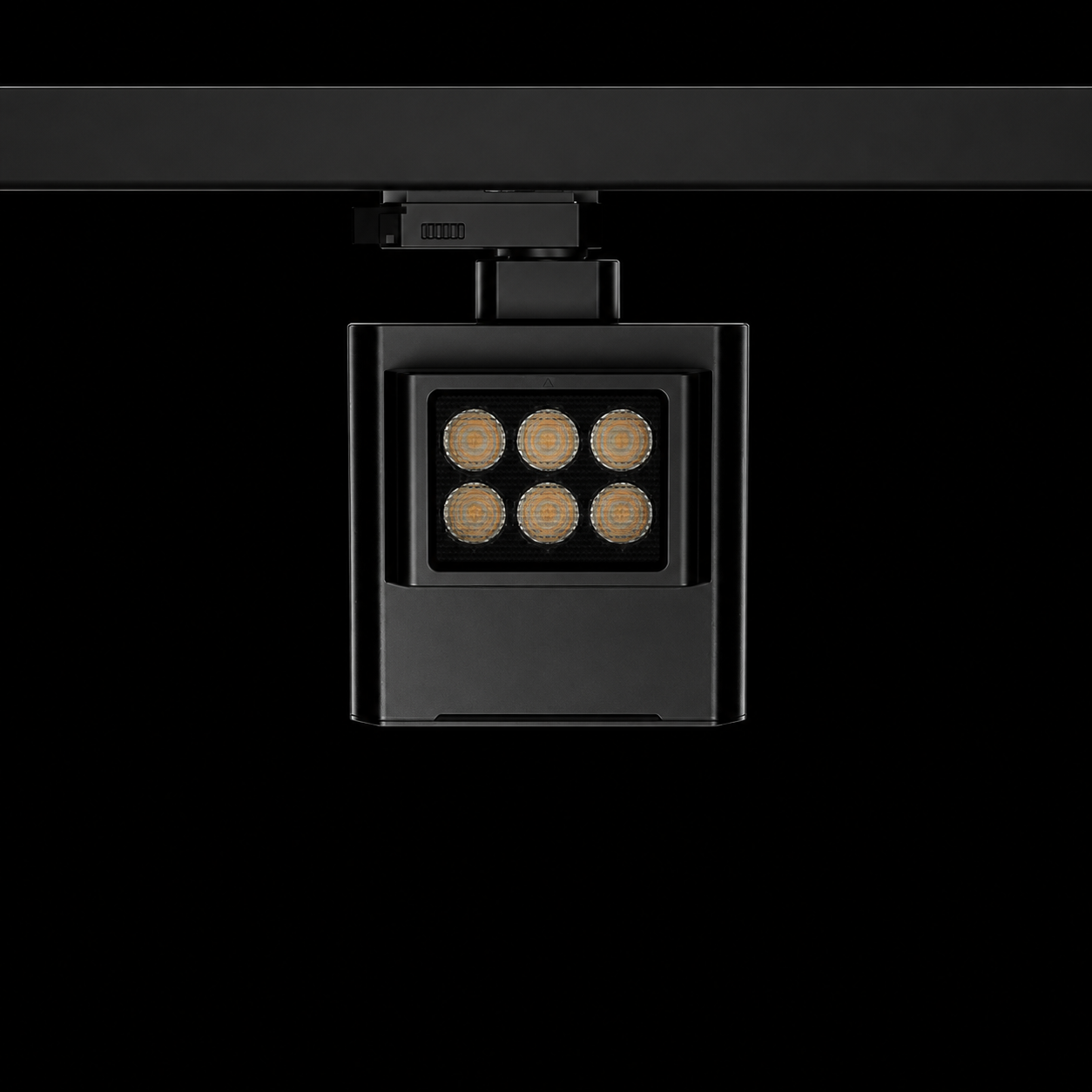
If you are specifying LED track lighting for a project, the dimming protocol you choose will shape everything downstream: the cost of the fixtures, the wiring on site, the control panel your client touches every day, and whether the system can grow into smart building automation later. Three protocols dominate the market — 0-10V, DALI and Triac (phase-cut) — and each answers a different question. For design guidance and dimming recommendations, the Illuminating Engineering Society (IES) publishes the leading reference on lighting control in commercial spaces.
This guide compares them specifically for DALI track lighting projects and every alternative, with a side-by-side breakdown of cost, control capability, wiring, dimming quality, and a practical decision framework by project type. By the end you will know exactly which dimming protocol to spec, and which common mistakes to avoid on your next track lighting installation.
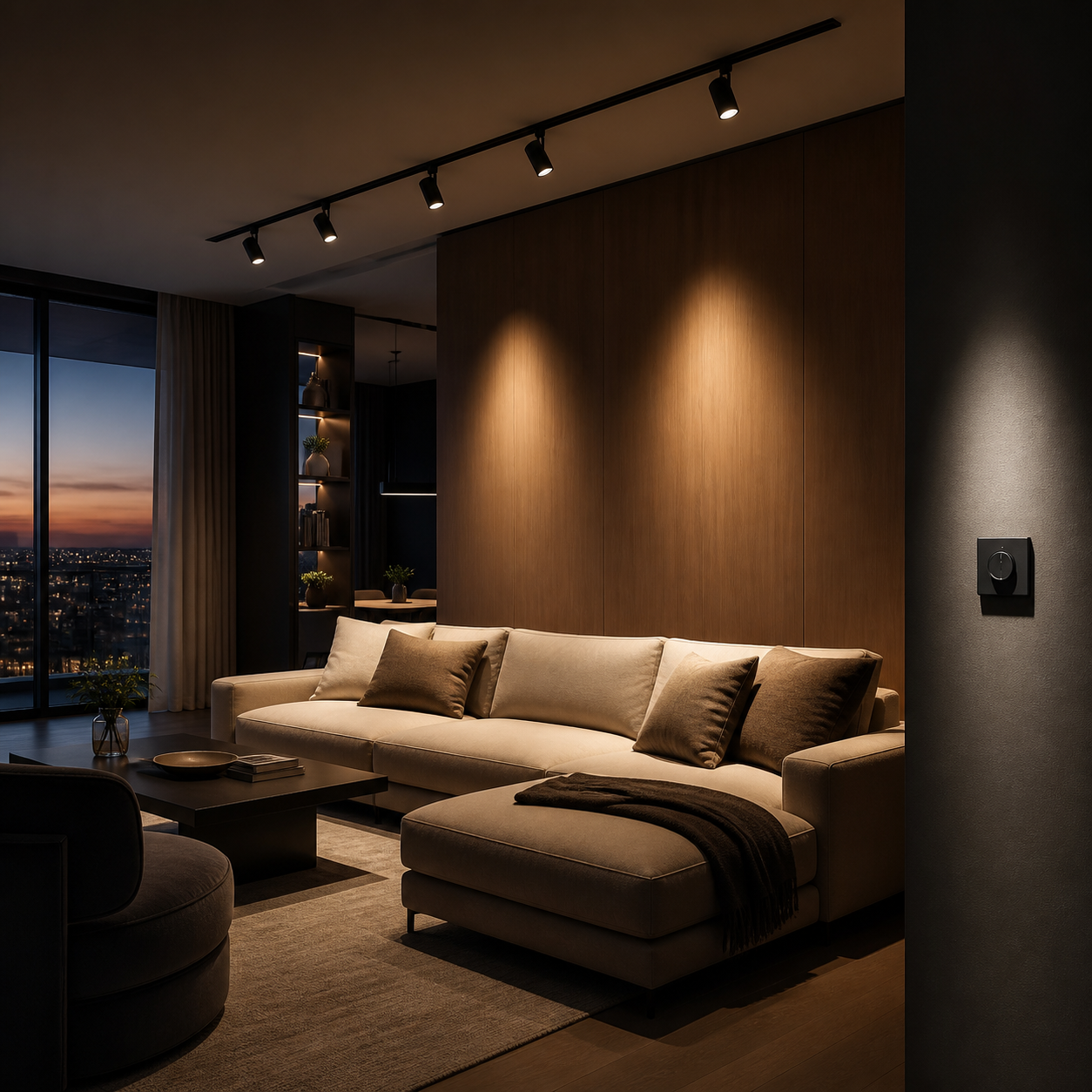
Before diving into details, here is the mental model. Triac is the analog dimmer you already know from home lighting. 0-10V is the simple analog control standard that commercial fixtures have used for decades. DALI is a digital, two-way communication standard purpose-built for lighting — and DALI-2 is its modern, certified version. The table below summarizes the differences you will care about on a real project.
| Feature | Triac (Phase-Cut) | 0-10V | DALI / DALI-2 |
|---|---|---|---|
| Signal type | Analog, mains-voltage phase cutting | Analog, low-voltage control wires | Digital, two-way communication |
| Control wires | None (uses the power line) | 2 extra wires (purple/gray) | 2 extra wires (DALI bus, polarity-free) |
| Individual addressing | No | No (whole group dims together) | Yes (up to 64 devices per bus) |
| Status feedback | No | No | Yes (lamp failure, power-on status) |
| Scenes & groups | No scenes | Basic groups via wiring | Yes (16 groups, 16 scenes per device) |
| Typical dim range | 5-100% (depends on driver) | 1-100% | 0.1-100% (DALI-2 drivers) |
| Relative cost | Lowest | Low | Highest |
| Best for | Homes, small retrofits | Offices, warehouses, value projects | Retail, hotels, museums, smart buildings |
Now let us unpack each protocol, because the real differences live in the details.
Triac dimming, also called phase-cut dimming, is the technology inside most residential dimmer switches. The dimmer “chops” a portion of the mains sine wave — leading edge for forward-phase (Triac/MLV) dimmers, trailing edge for reverse-phase (ELV) dimmers — and the LED driver reads the shortened wave as a dimming command.
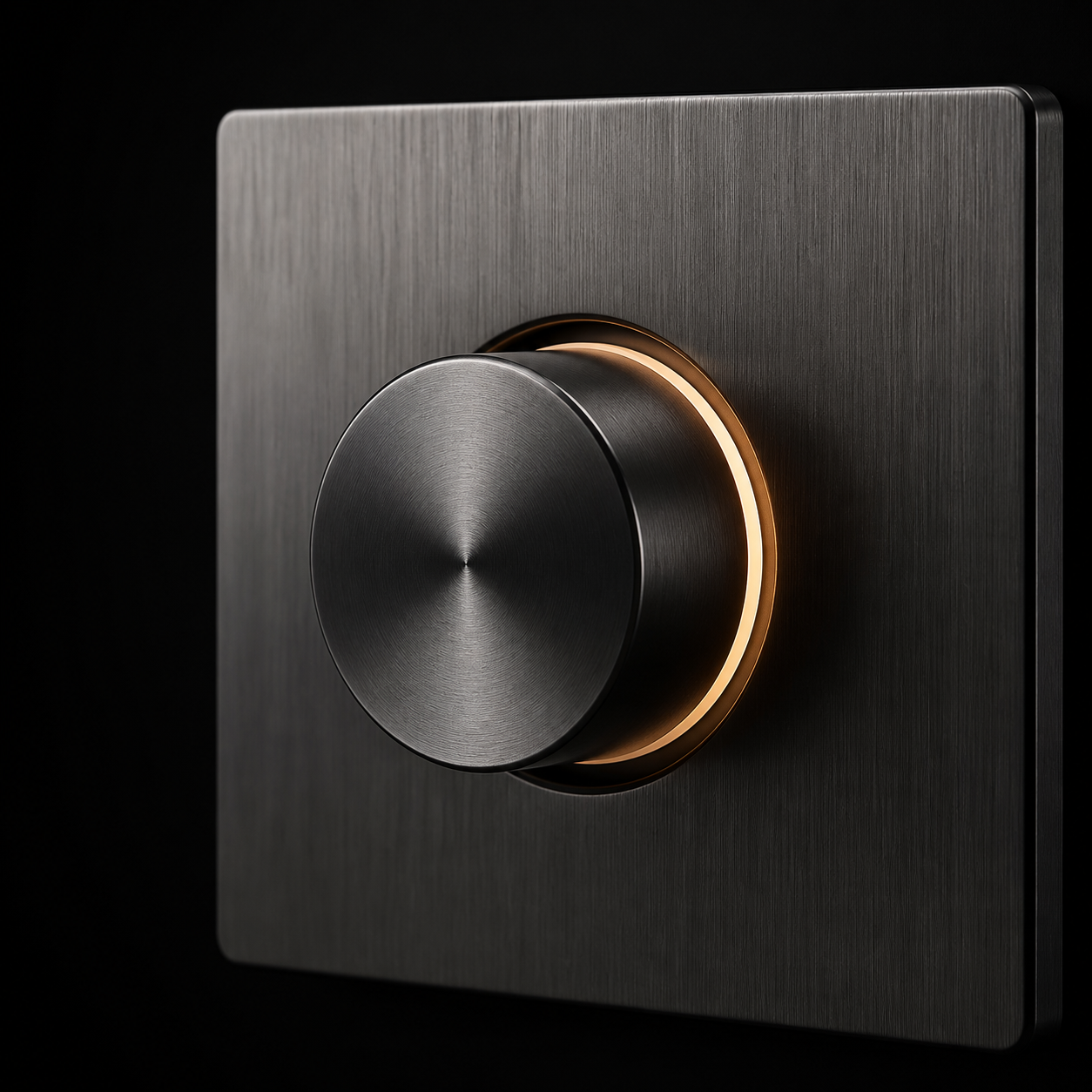
Triac is the right choice when the project is a home, a small boutique, or a retrofit where running extra control wires is impractical. It uses the existing mains wiring — the dimmer replaces a standard wall switch and nothing else changes. That makes it the lowest-cost path to dimmable track lighting, and it is fully compatible with mainstream smart-home systems through smart dimmer switches.
Three limitations matter. First, Triac dims the whole circuit together — every head on the branch dims as one, with no individual control. Second, compatibility is not guaranteed: LED drivers vary in how they handle phase-cut waveforms, and a mismatched driver/dimmer pair can buzz, flicker, or refuse to dim below 20-30%. Always verify the driver’s listed compatible dimmers. Third, minimum load matters — most Triac dimmers need a minimum wattage, and low-wattage LED track heads can fall below it, causing ghosting or flashing when “off.”
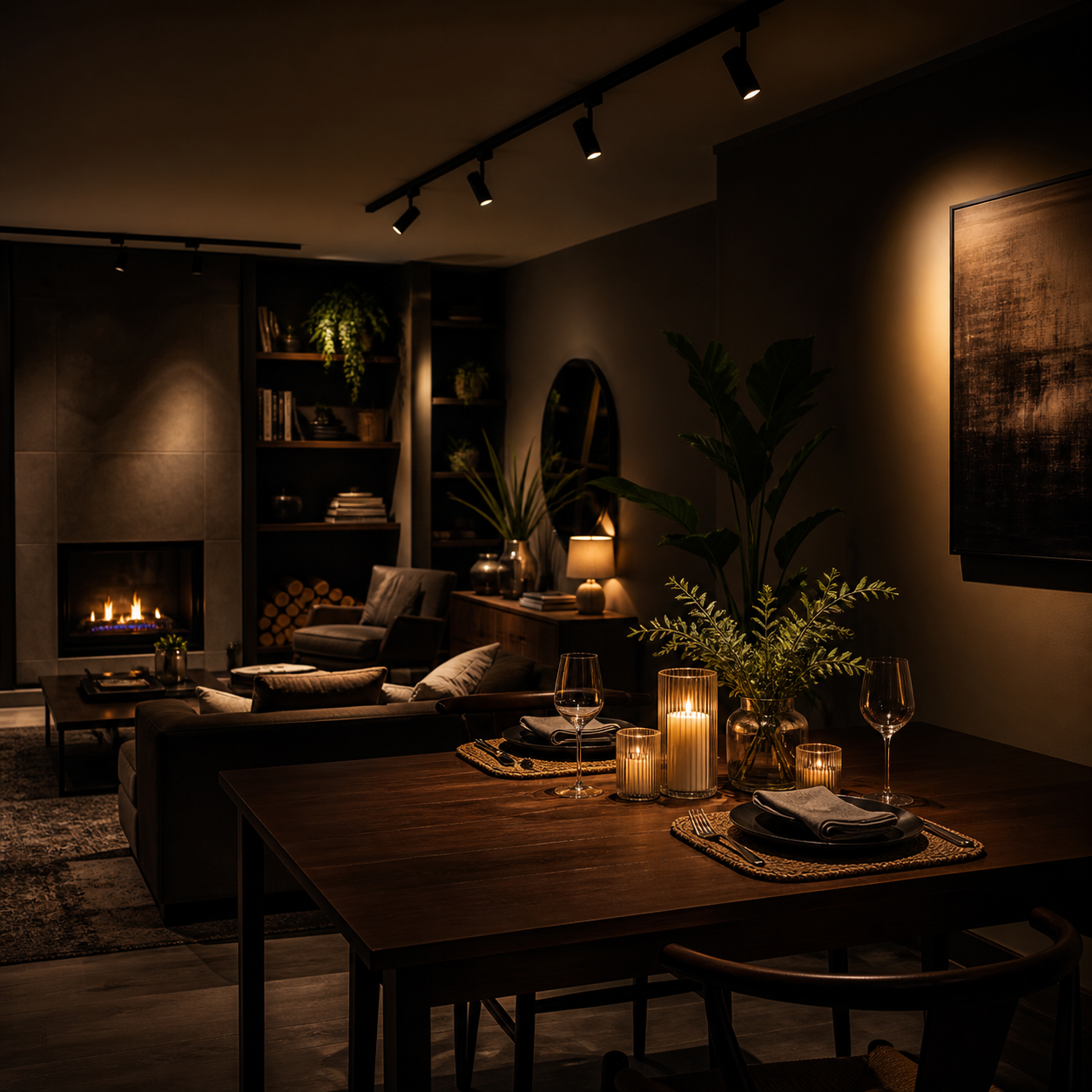
0-10V dimming is an analog standard: two low-voltage control wires (typically purple and gray) carry a 0-10 volt signal from the dimmer or control system to the LED driver. At 10V the fixture is at full brightness; at lower voltages it dims proportionally, and below roughly 1V most drivers switch off. It is simple, cheap, and has been installed in commercial buildings for decades.
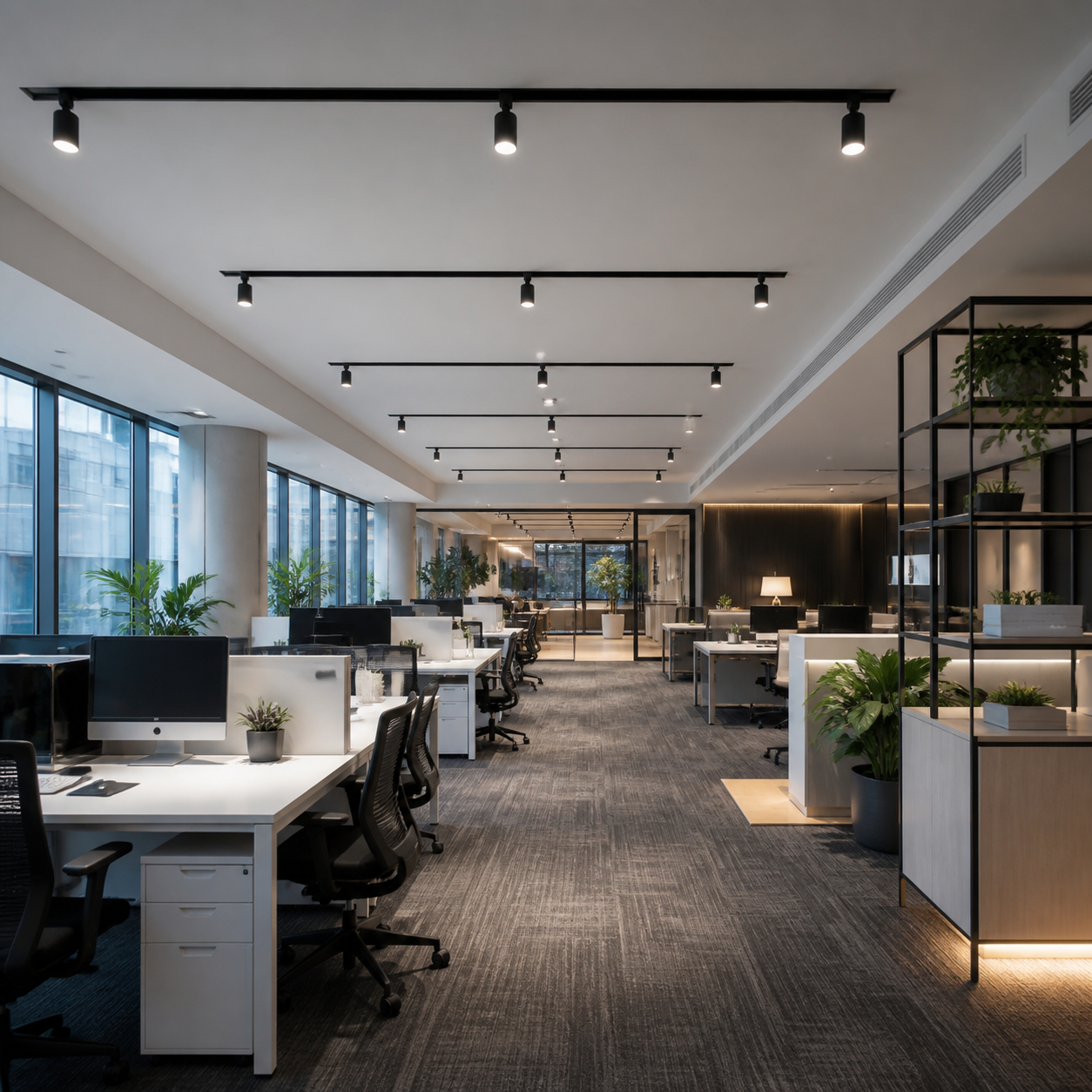
0-10V shines in value-driven commercial projects: offices, warehouses, classrooms, and any space where you need reliable dimming for many fixtures without paying for individual addressability. Drivers are inexpensive, the wiring concept is simple enough for any electrician, and it integrates easily with occupancy sensors, daylight sensors, and simple relay/analog control panels. For track lighting in an office fit-out where all heads on a zone dim together, 0-10V is often the most cost-effective specification.
The signal is one-way: the controller tells the driver what to do, but the driver never reports back, so you get no lamp-failure or status feedback. There is no individual addressing — 0-10V controls a zone as a whole, and creating sub-zones means adding control channels and wiring. Voltage drop on long control-wire runs can also cause uneven dimming between the first and last fixture, so keep runs short and use the correct wire gauge.
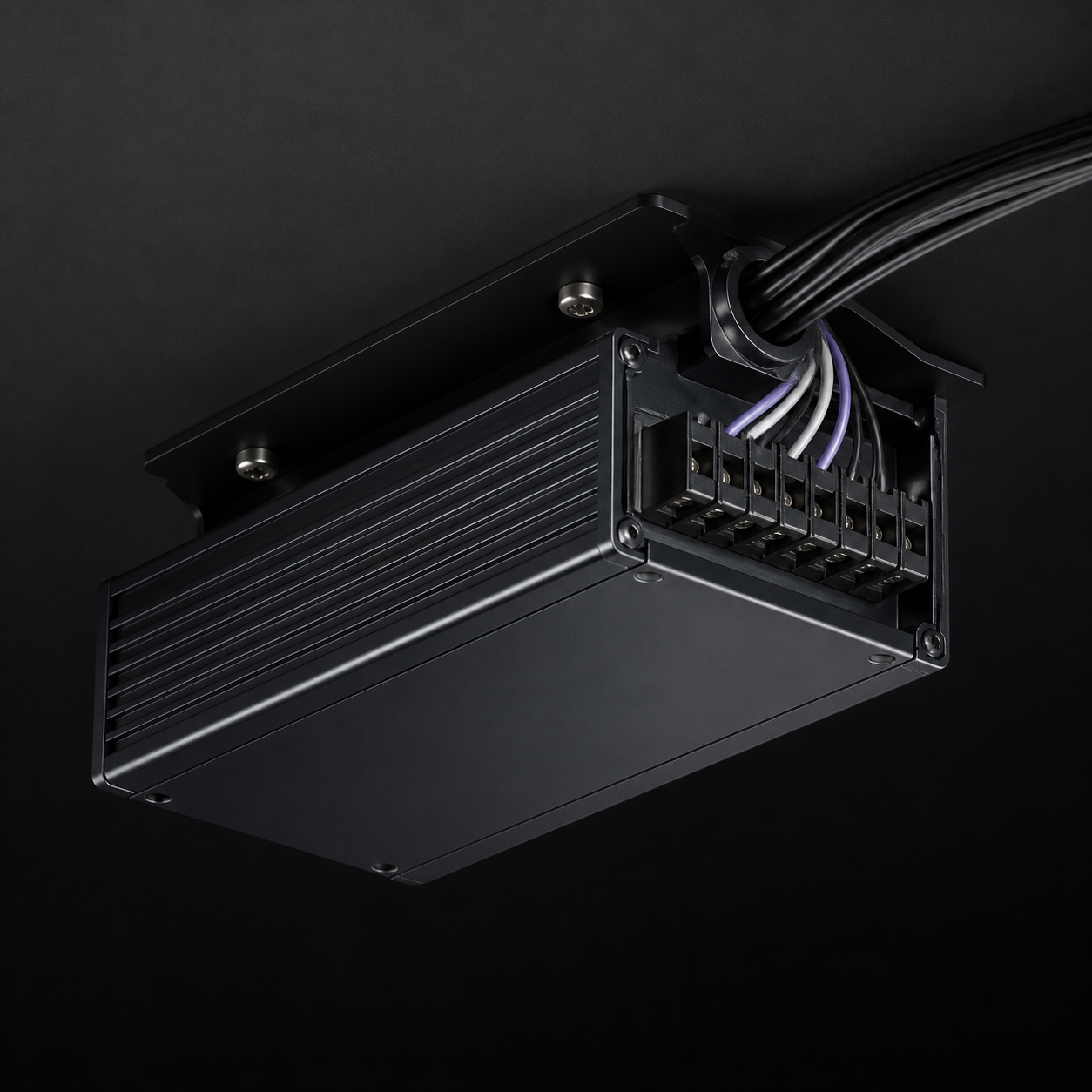
DALI stands for Digital Addressable Lighting Interface. It is a digital, two-way protocol in which every driver has a unique address on a two-wire bus, and the controller can talk to each device individually — or to groups and scenes — while each device reports its status back. DALI-2 is the current generation, with certification covering not just drivers but also control devices (sensors, push-buttons, and application controllers), which guarantees genuine interoperability.

DALI is the protocol of choice wherever lighting needs to be individual, flexible, and connected:
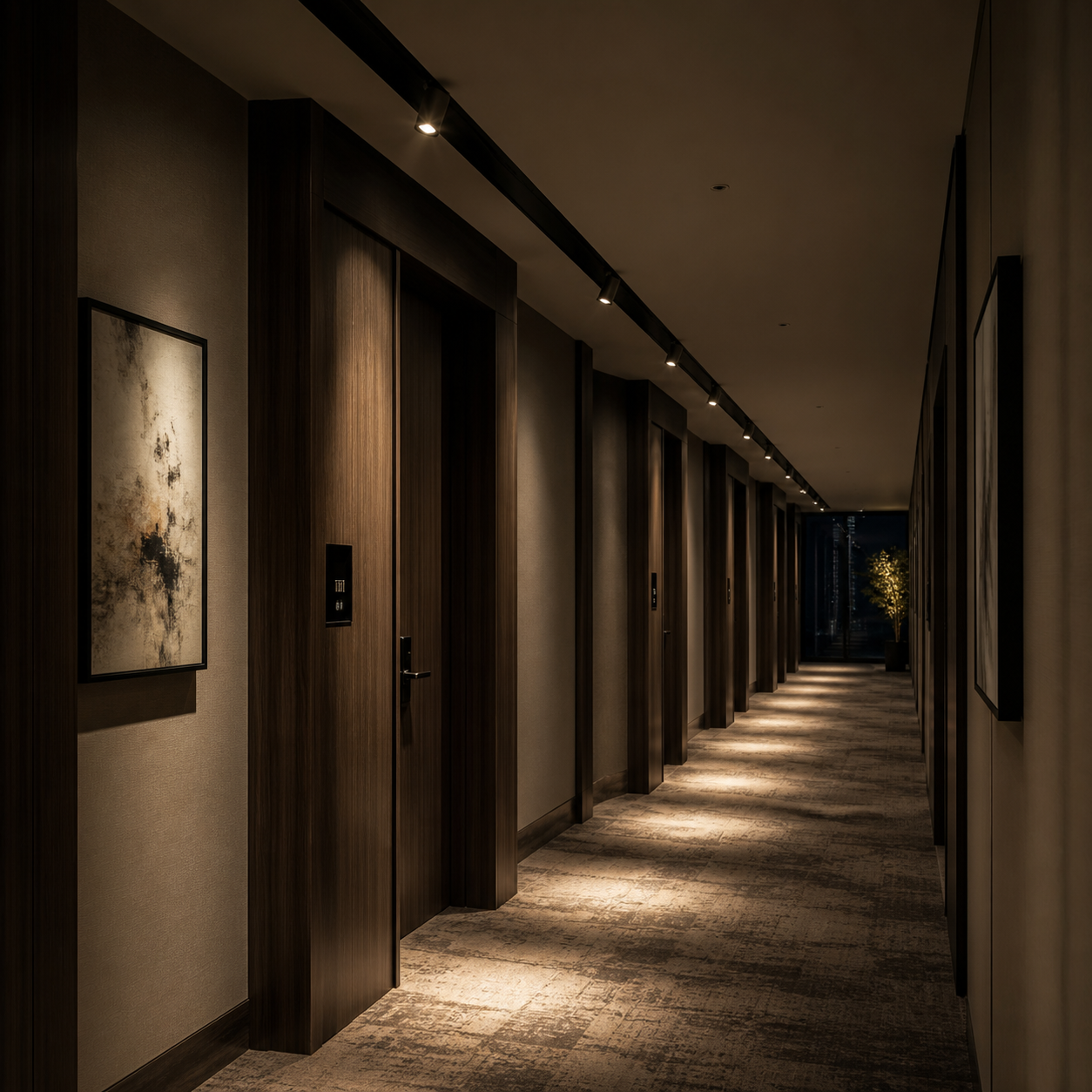

DALI costs more: certified DALI-2 drivers, a bus power supply, and a controller or gateway add up, and commissioning requires someone who understands the protocol — every device must be addressed, grouped and programmed. A DALI bus supports 64 addresses, so large installations need multiple buses. For a single-room residential fit-out or a small shop with one zone, DALI is overkill; for anything with many zones, changing displays, or building automation, it pays for itself quickly.
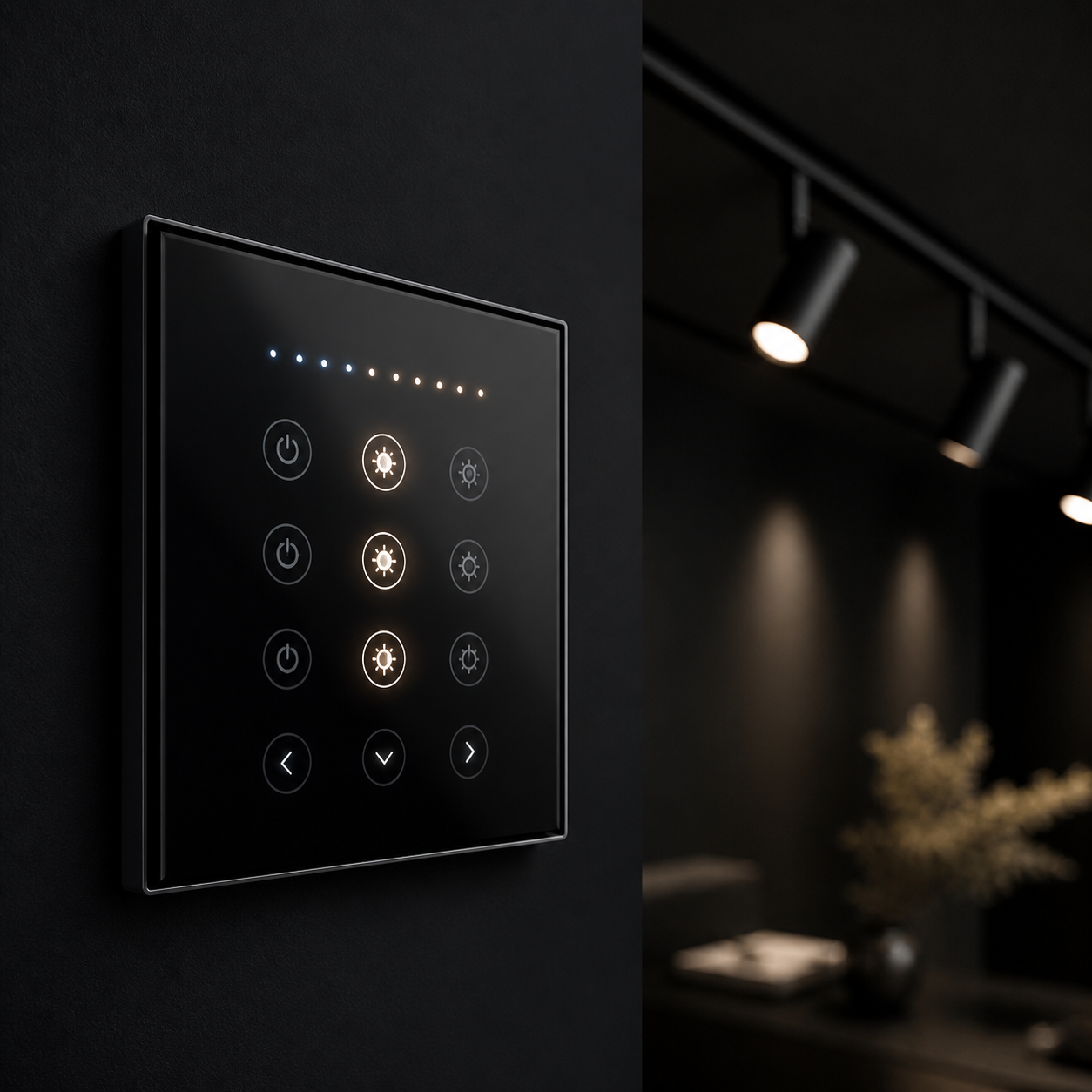
Stop comparing spec sheets and answer one question instead: what does the lighting need to do, and who needs to control it? The framework below covers the common project types for LED track lighting.
| Project type | Recommended protocol | Why |
|---|---|---|
| Home / apartment (1-3 rooms) | Triac | Lowest cost, no extra wiring, smart-dimmer compatible |
| Home with smart home system | Triac or DALI-2 | Triac for simplicity; DALI-2 if you want per-fixture scenes |
| Small boutique / café | Triac or 0-10V | One or two zones; keep cost low |
| Office fit-out | 0-10V | Reliable zone dimming, sensor integration, low cost |
| Retail chain / flagship store | DALI-2 | Per-display control, scene changes, central monitoring |
| Hotel / hospitality | DALI-2 | Scenes, corridors, BMS integration, failure reporting |
| Museum / gallery | DALI-2 | Precise repeatable levels, conservation lighting control |
| Mixed-use / smart building | DALI-2 | Daylight harvesting, presence control, energy reporting |
Two more rules of thumb. First, if you only need a dimmer switch on the wall, choose Triac. Second, if you can already name more than one lighting scene your client will use daily — retail display changes, hotel day/night moods, gallery exhibitions — choose DALI-2; the scene and addressing features are exactly what you are paying for.
The protocol is only half the decision — it must match the track hardware and the rest of the lighting controls:
DALI is a digital two-way protocol: every fixture has its own address, can be controlled individually or in groups and scenes, and reports status back. 0-10V is analog and one-way: it dims a whole zone together with no feedback and no individual addressing. DALI costs more but offers far more control; 0-10V is cheaper and simpler for zone-based dimming.
No. Triac dimming requires a phase-cut (Triac/ELV) driver, while DALI track lights contain DALI drivers that communicate digitally. The driver types are not interchangeable. Choose the protocol first, then order fixtures with the matching driver.
Usually not, unless you are building a smart home and want per-fixture scenes or integration with home automation and building systems. For a typical home, Triac dimming with smart dimmer switches delivers the same user experience at a fraction of the cost.
A single DALI bus supports up to 64 device addresses. Larger installations use multiple buses, each with its own power supply, coordinated by a central controller or gateway.
DALI-2 adds certification for control devices such as sensors, push-buttons and application controllers, not just drivers. It also standardizes more commands and improves interoperability, so devices from different certified manufacturers work together reliably.
Choose Triac for homes and simple retrofits, 0-10V for value-driven commercial zones, and DALI track lighting for retail, hospitality, museums and smart buildings where individual control, scenes and monitoring pay for themselves. Whatever the protocol, buy fixtures with certified drivers that dim smoothly to low levels — that is where the quality difference between a premium track system and a cheap one becomes visible every single evening.
ENCORE offers LED track lighting with Triac, 0-10V and DALI-2 driver options across its track and magnetic track ranges, including certified DALI-2 drivers, smooth low-level dimming, CRI 90+ (≥95 with R9 > 90 on the IMAX series), and 2700K-4000K CCT options. We also provide photometric data and wiring guidance so your dimming protocol integrates cleanly from day one.
Ready to spec your project? Contact our lighting team for a free layout, dimming compatibility check and photometric calculation, or explore the LED track lighting range. For related guidance, see our beam angle guide, CRI guide, and track vs recessed comparison.