Address
304 North Cardinal
St. Dorchester Center, MA 02124
Work Hours
Monday to Friday: 7AM - 7PM
Weekend: 10AM - 5PM
Address
304 North Cardinal
St. Dorchester Center, MA 02124
Work Hours
Monday to Friday: 7AM - 7PM
Weekend: 10AM - 5PM
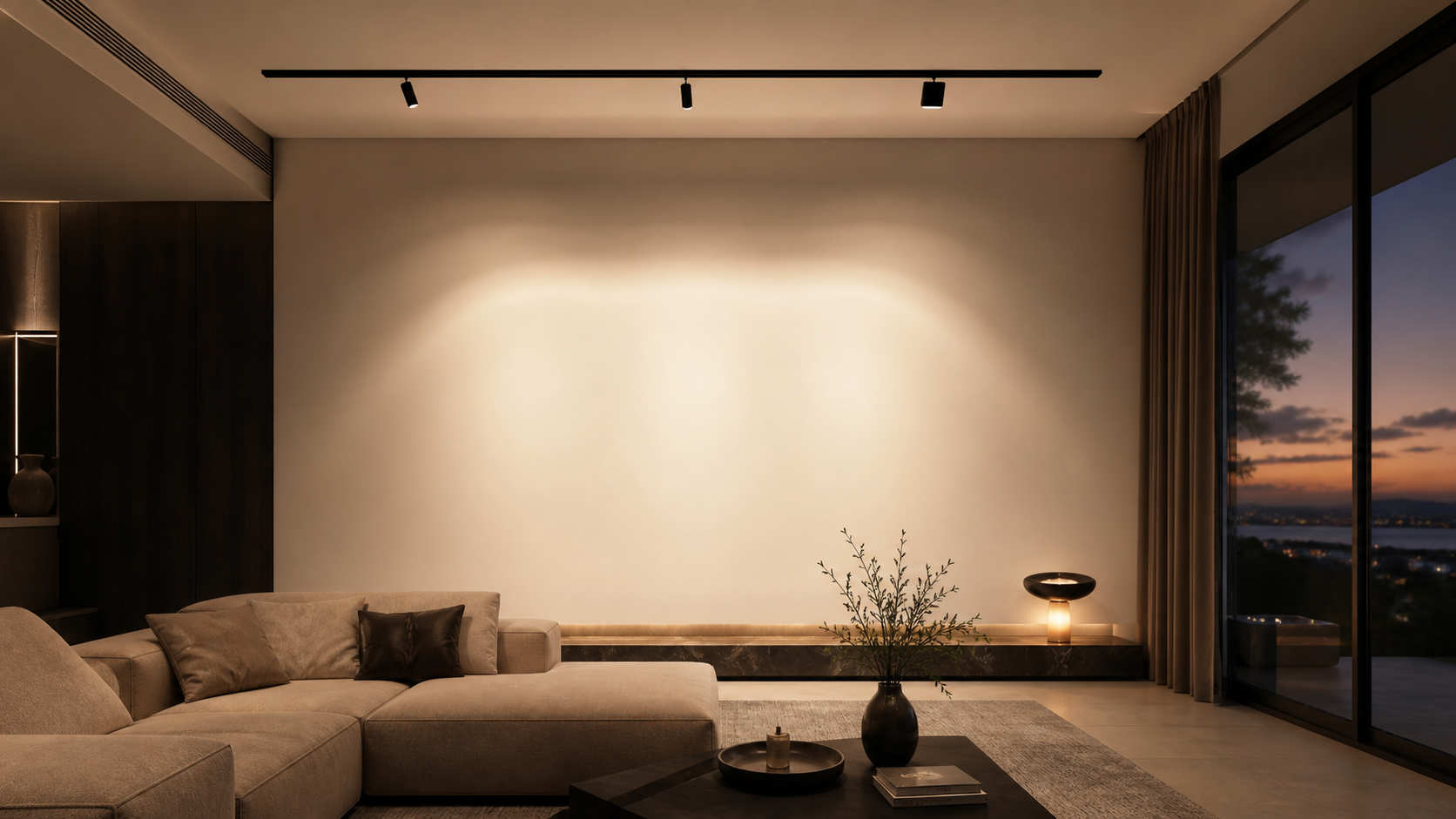
Beam angle is the single setting that decides whether a track light makes a room look like a gallery or a spotlight interrogation. Pick too narrow and your wall looks dotted with harsh pools; too wide and your hero artwork loses all focus. This guide breaks down the four standard track lighting beam angles — 15°, 24°, 36° and 60° — and shows exactly when to use each, with a simple formula for any ceiling height.
The beam angle is the angle at which light spreads from a track head, measured where brightness falls to 50% of its centre value (the standard “full width at half maximum” definition used across the lighting industry). A narrow beam angle concentrates light into a tight, bright pool; a wide beam angle spreads the same lumens over a larger area, so each point is dimmer but coverage is broader. Most LED track lights ship in the four angles below, and many premium fixtures are zoomable — adjustable from roughly 15° to 60° on the same head.
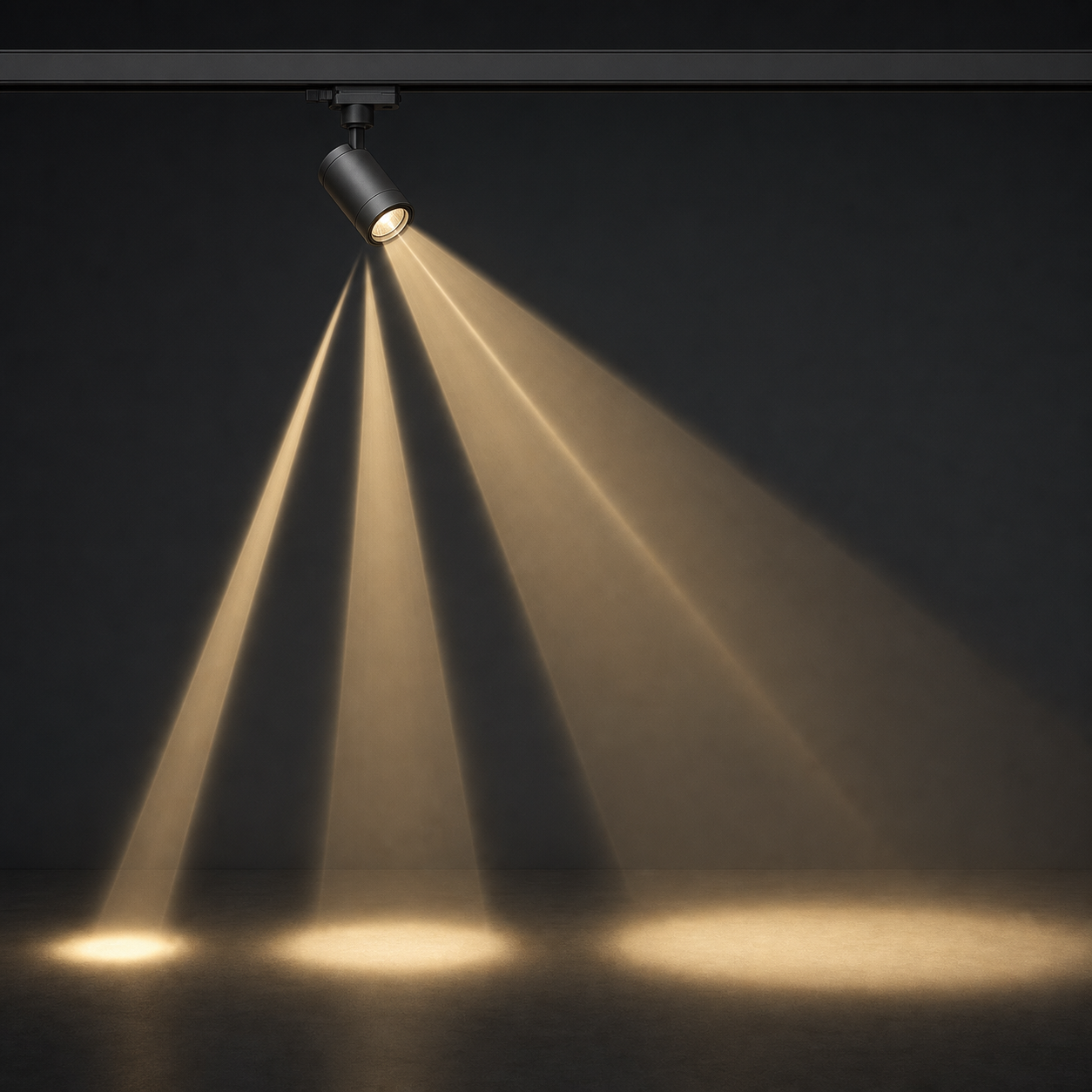
The tightest common beam. At 3 metres it throws a pool only about 0.8 m wide, so it is perfect for small, precious objects: a sculpture, a piece of jewelry, a trophy, or a single focal product. Use it when you want the eye pulled to one exact point.
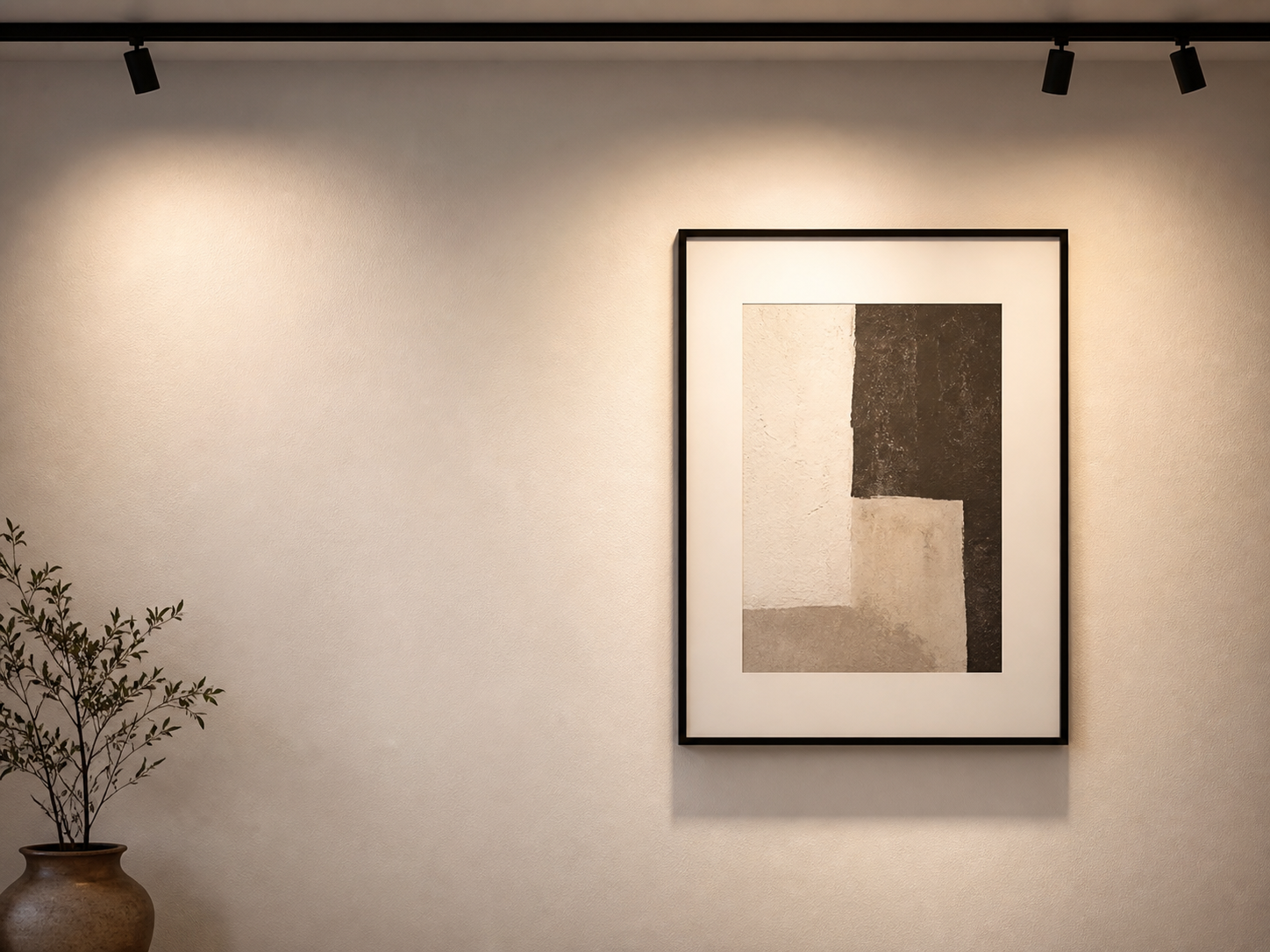
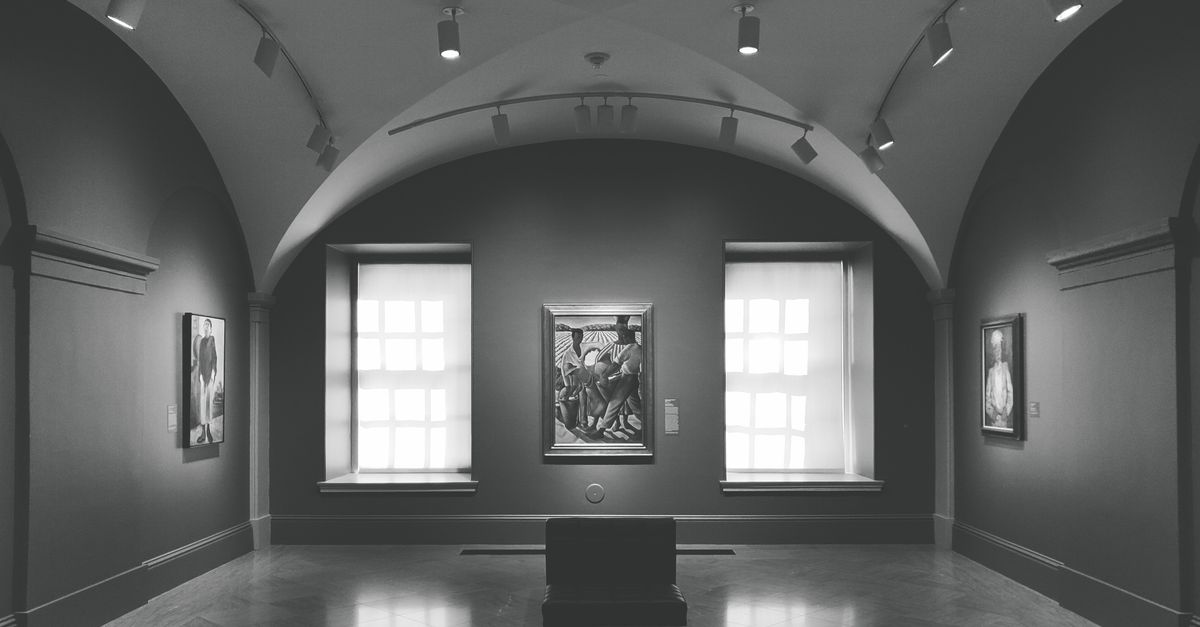
The workhorse of museum and gallery track lighting. A 24° beam covers a single framed artwork 60–100 cm tall with a clean, even pool and minimal spill onto the wall around it. This is the angle most curators reach for first.
A balanced beam that suits retail shelves, medium walls and general accent lighting. It bridges “highlight one thing” and “light a whole zone”, which is why it appears so often in luxury retail lighting schemes.
The widest standard beam. Instead of a round pool it lays a soft, even wash across a large surface — ideal for feature walls, textured stone, or filling a room with ambient glow. See the Sanxingdui Museum lighting case study for how wide beams reveal large artefacts without glare.
| Beam Angle | Pool Width @ 2.5 m | Pool Width @ 3 m | Best Used For |
|---|---|---|---|
| 15° Narrow Spot | ~0.66 m | ~0.80 m | Small objects, focal points, jewelry |
| 24° Spot | ~1.05 m | ~1.26 m | Single artworks, product heroes, vitrines |
| 36° Flood | ~1.60 m | ~1.92 m | Retail shelves, medium walls, accent zones |
| 60° Wide Flood | ~2.89 m | ~3.46 m | Wall wash, large feature walls, ambient fill |
Pool width is calculated with the rule: spread = 2 × distance × tan(angle ÷ 2). Double the distance and you double the pool; halve the angle and the pool shrinks fast.
Two inputs drive the decision: how far the track head sits from the surface, and how big the thing you are lighting is.
Work backwards from the pool size you want. If a painting is 1 m tall and sits 3 m below the track, a 24° beam (pool ~1.26 m) frames it perfectly; a 60° beam would wash the whole wall and flatten the picture.
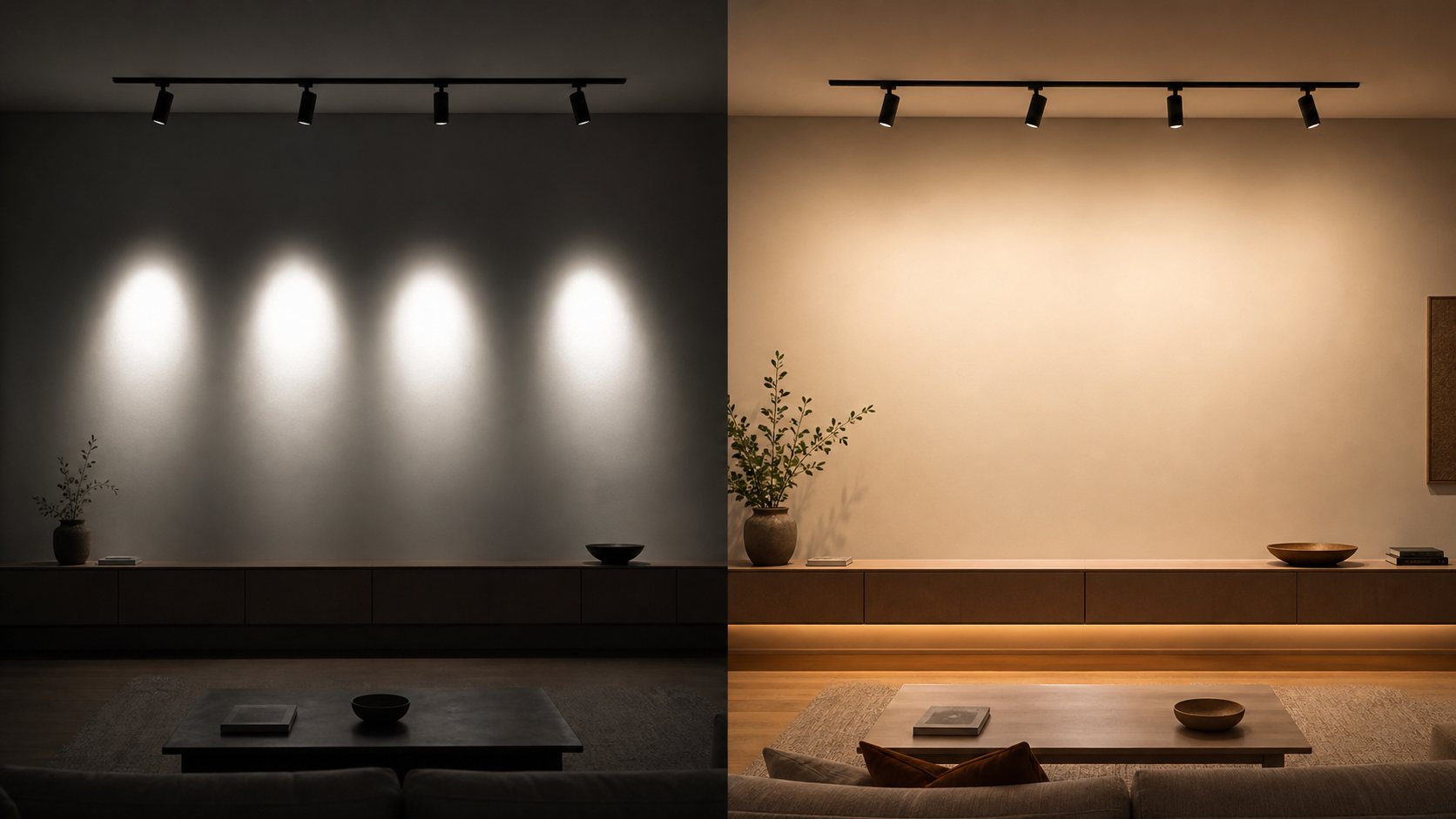
A common mistake is aiming a spotlight straight at a wall. That creates a bright hotspot with dark edges. For an even wall wash, place the track roughly one-third of the ceiling height out from the wall and tilt the head so the beam centre lands about two-thirds of the way up the surface. Wide 60° beams are the natural choice; the diagram above shows the right-versus-wrong difference side by side.
If you are not sure which angle you will need, specify zoomable track heads (typically 15°–60° on the same fixture) or at least heads with full 350° rotation and 90° tilt. That flexibility lets you re-aim and re-shape the beam as the space changes — without swapping hardware.
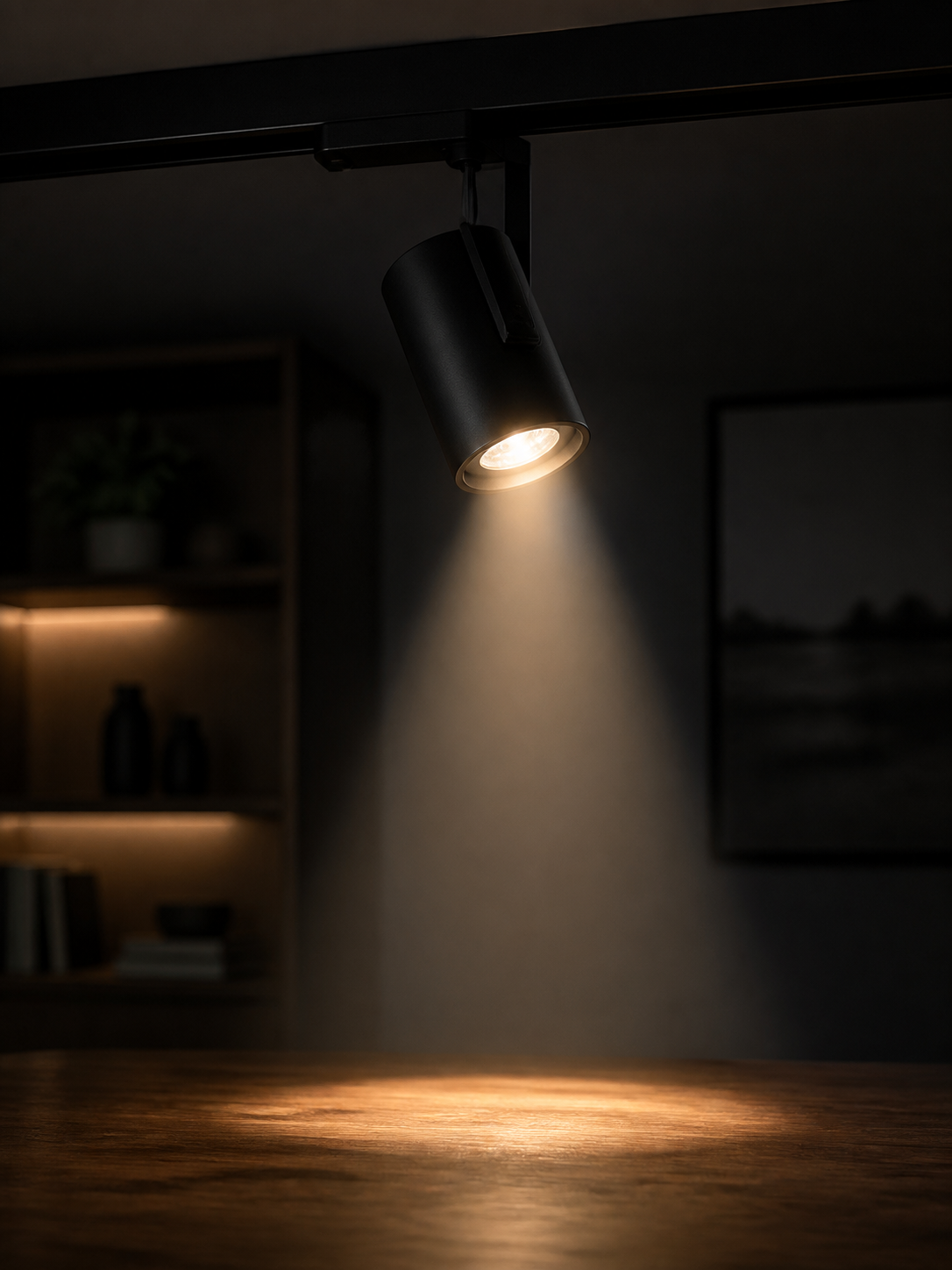
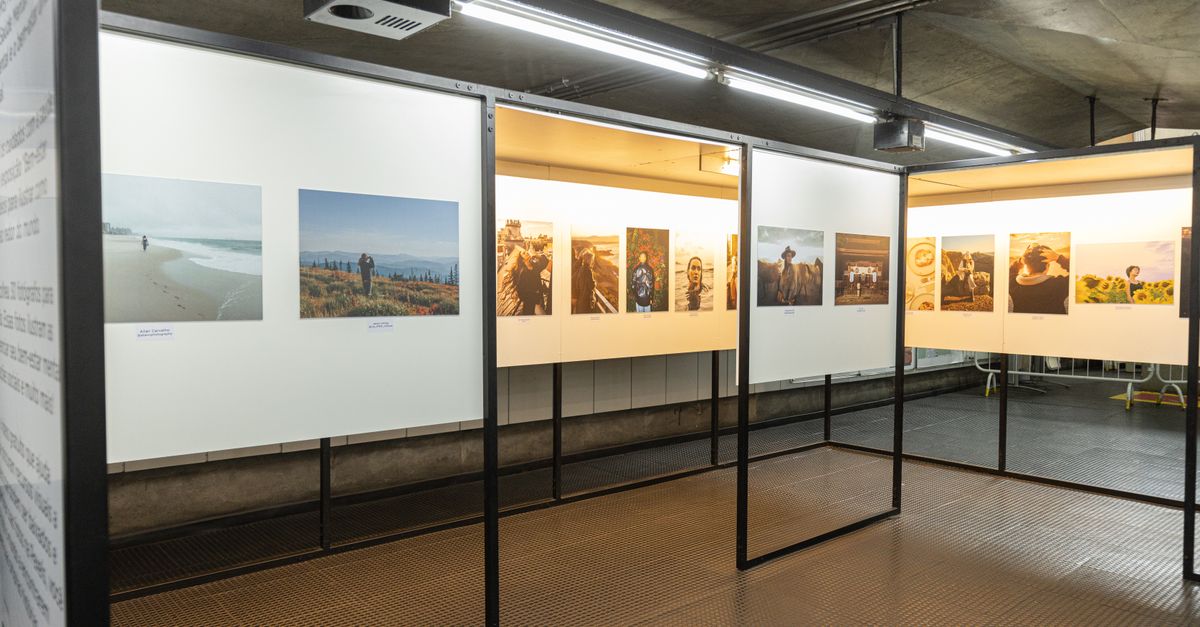
The same four angles solve very different briefs:
These are not abstract numbers — they are the difference between a space that feels designed and one that feels lit by accident.
For a single framed piece, 24° is the safe default; go to 36° for larger works and 15° only for very small or distant objects. Keep the beam centred on the art, not the wall.
Yes — and you should, when the track spans different objects. Just group similar angles together so the ceiling line looks intentional rather than random.
24°–36° for accenting objects 3 m below; choose 60° when the goal is an even wall wash rather than a spotlight pool.
They solve different problems. Beam angle shapes where light goes; high CRI (95+) controls how true colours look. For galleries and retail you want both — a tight beam with poor colour rendition still makes art look wrong.
Beam angle is only one line on a specification sheet. If you are planning a project — a gallery, a flagship store, a hospitality fit-out — our complete B2B track lighting manufacturer checklist walks through CRI, dimming, glare control and factory vetting so you can brief a supplier with confidence.