Address
304 North Cardinal
St. Dorchester Center, MA 02124
Work Hours
Monday to Friday: 7AM - 7PM
Weekend: 10AM - 5PM
Address
304 North Cardinal
St. Dorchester Center, MA 02124
Work Hours
Monday to Friday: 7AM - 7PM
Weekend: 10AM - 5PM
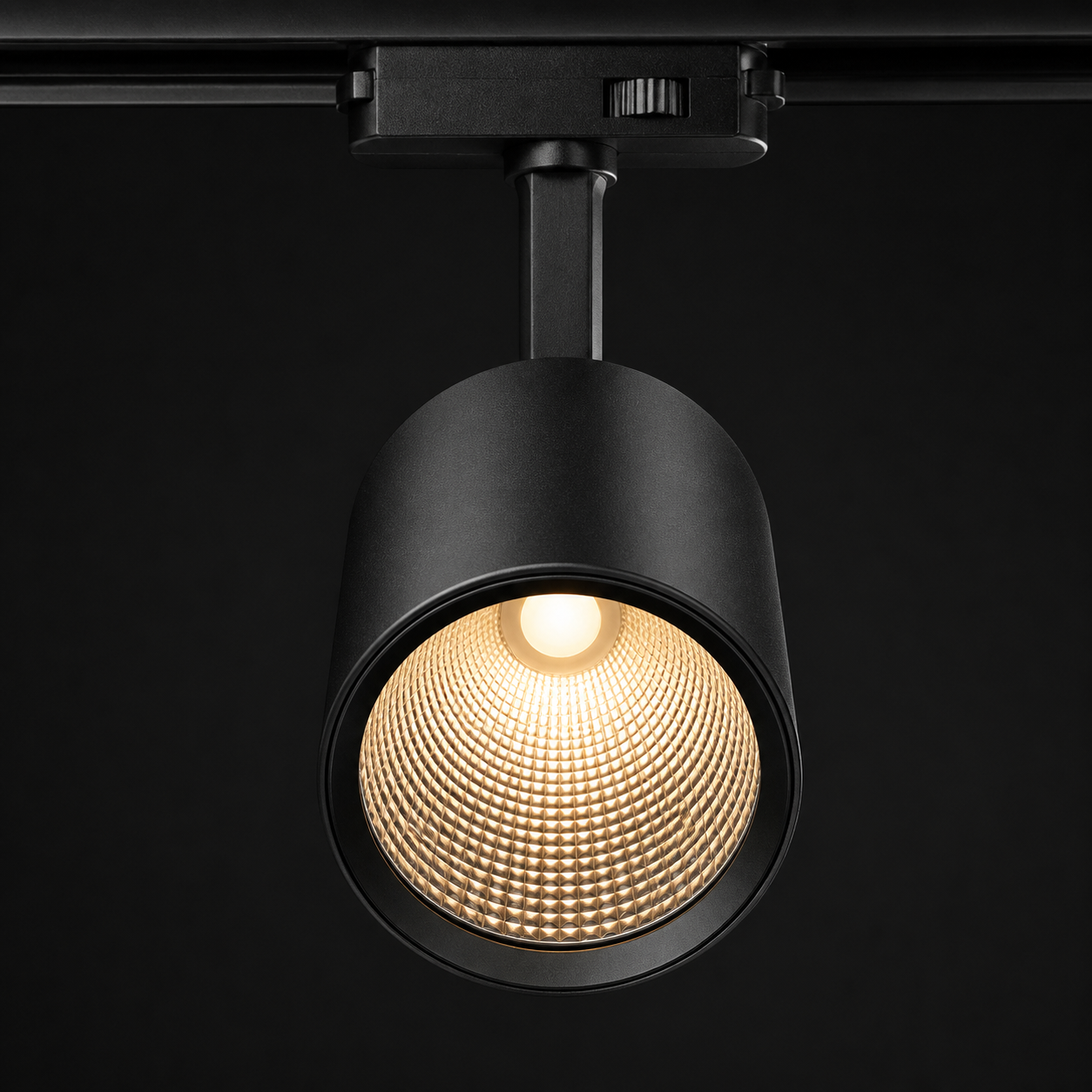
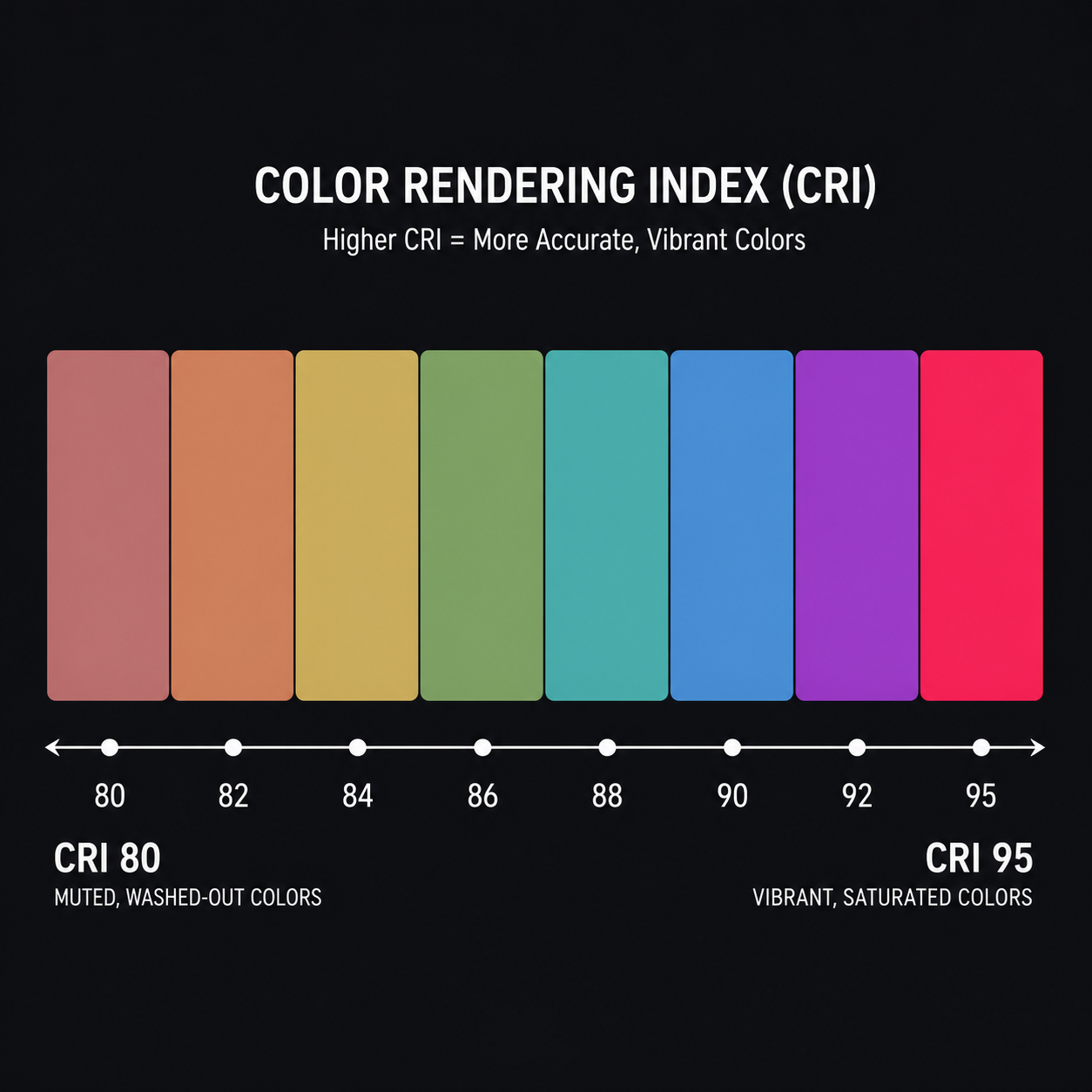
When you walk into a high-end gallery and the artwork looks stunningly real — rich reds, deep blues, natural skin tones — that is not just the lighting level. It is the Color Rendering Index (CRI) at work. For LED track lighting systems, choosing the right CRI rating is one of the most consequential decisions architects, designers, and specifiers make.
This guide cuts through the confusion: CRI 80 vs 90 vs 95, explained plainly, with clear guidance on where each rating belongs, aligned with Illuminating Engineering Society (IES) recommendations.
CRI measures how accurately a light source reveals the colors of objects compared to natural sunlight. It is scored 0–100, where 100 represents perfect color matching under a reference illuminant. The standard test uses eight pastel color swatches (R1–R8), with an extended set (R1–R14) used in more rigorous assessments.
For track lighting, CRI matters for three reasons:
Even a 5-point difference in CRI — say from 85 to 90 — is visually noticeable under controlled comparison. In real environments, the gap becomes more pronounced as CRI drops below 90.
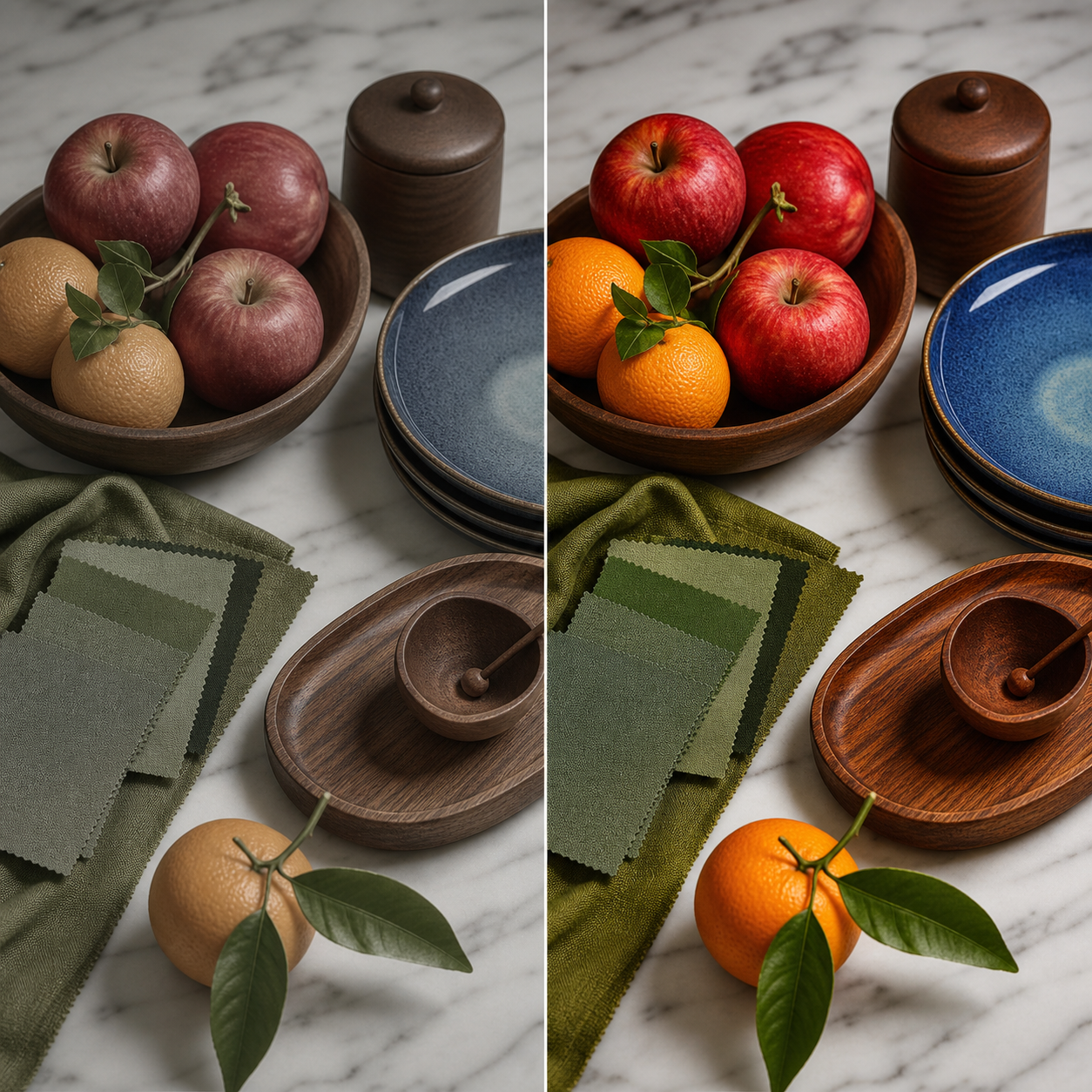
Here is how the three most common CRI tiers stack up for LED track lighting applications.
CRI 80 is the baseline for general commercial lighting. It passes the Energy Star threshold and is common in budget LED products. Under CRI 80:
Acceptable for: Warehouses, corridors, utility areas, outdoor flood lighting where color accuracy is irrelevant.
Avoid for: Art galleries, fashion retail, hospitality, or any space where people or products need to look their best.
CRI 90 is where quality lighting begins. It is the minimum recommended rating for professional photography studios, mid-to-high-end retail, and hospitality spaces. Under CRI 90:
Best for: Fashion boutiques, supermarkets (especially produce and bakery), salons, restaurants, and premium office spaces. ENCORE’s EVO and CADIO track lighting series both offer CRI 90+ options, making them ideal for commercial interiors where color quality matters.
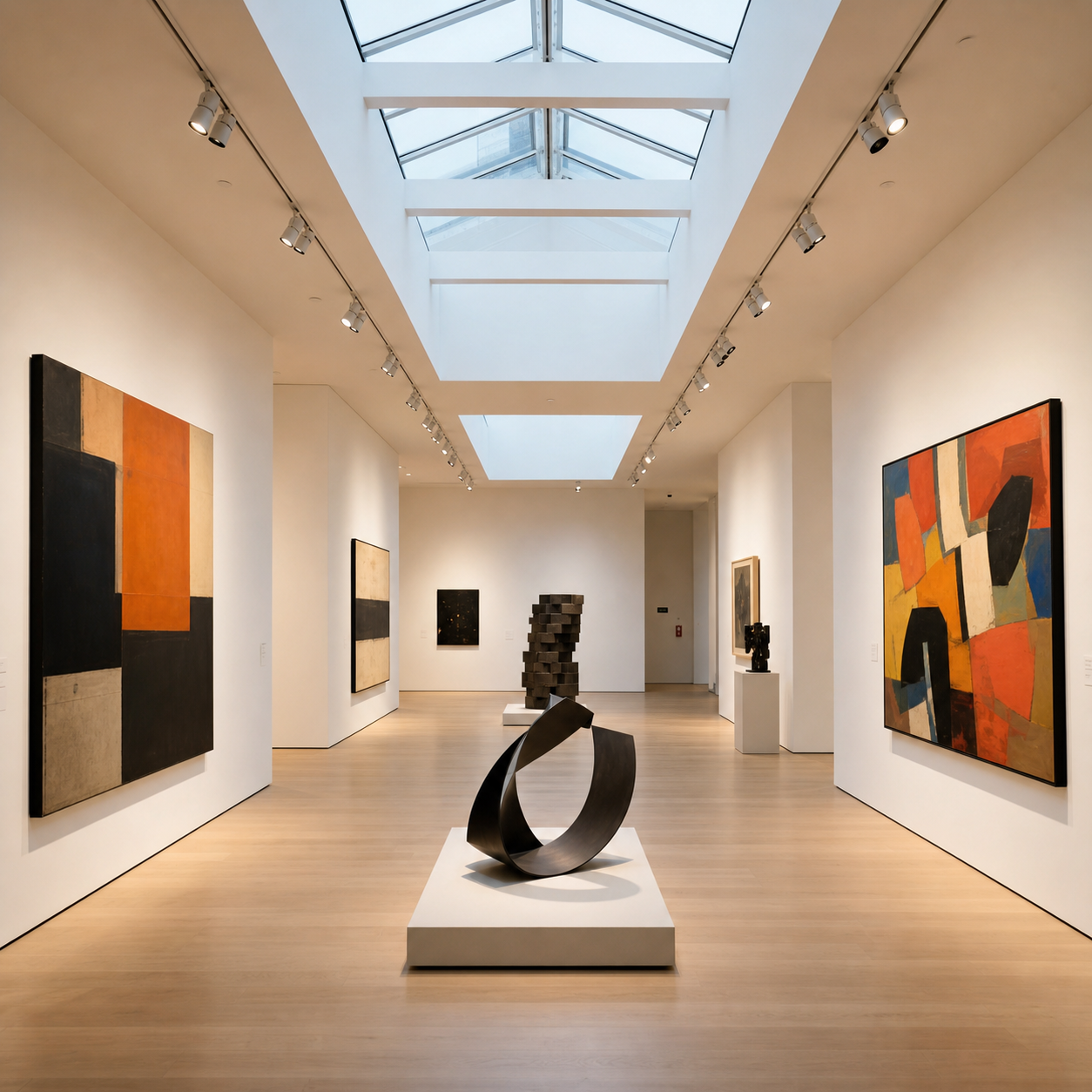
CRI 95 represents the pinnacle of color rendering for architectural and museum applications. Only premium LED chips achieve this rating consistently. Under CRI 95:
Essential for: Art museums, galleries, auction houses, jewelry stores, luxury fashion, photography studios, and healthcare environments where diagnostic color accuracy matters. ENCORE’s VEGA and IMAX series feature CRI 95+ emitters, engineered specifically for museum and gallery track lighting installations.
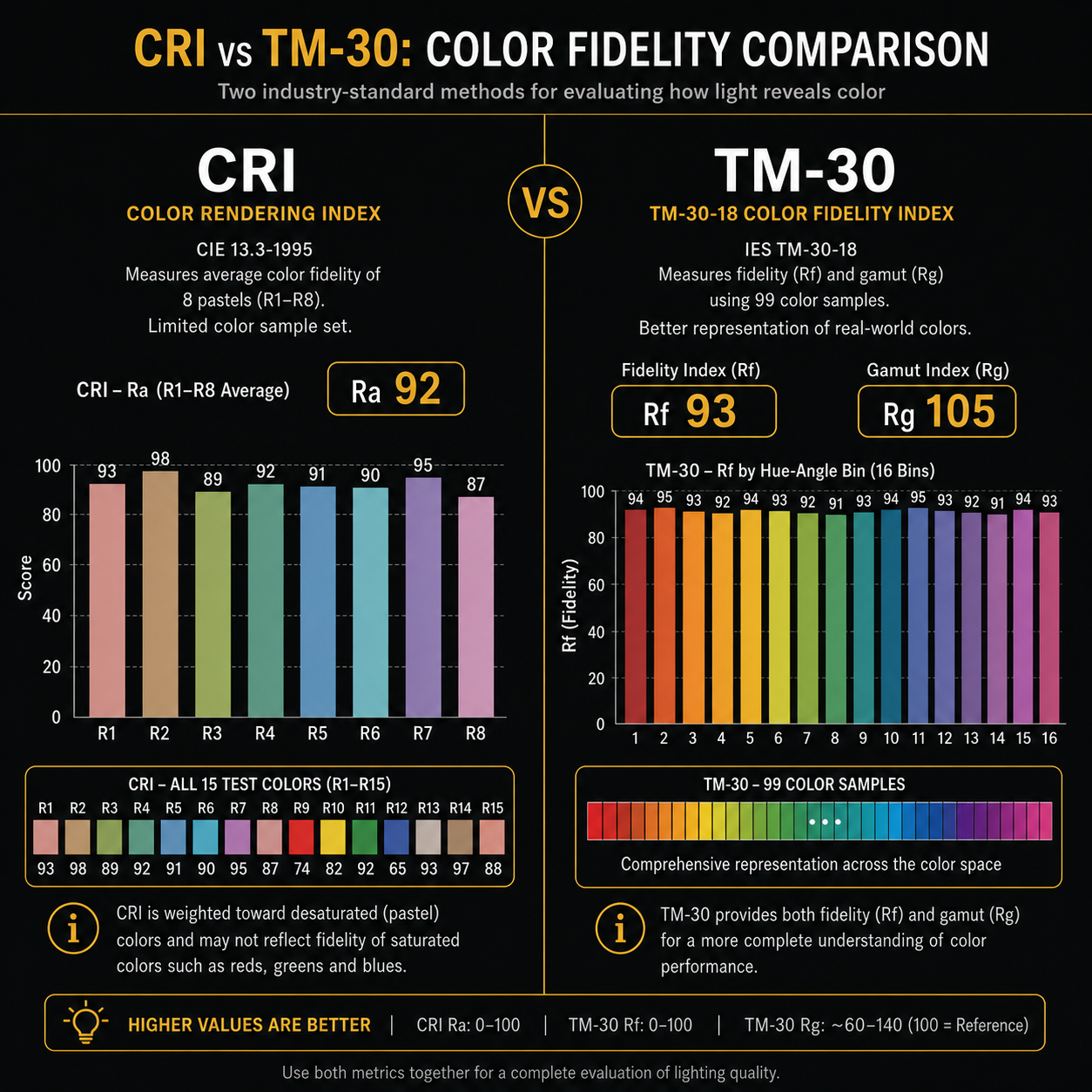
CRI was developed in the 1960s and has known limitations. It tests only eight color samples, none of which are strongly saturated red — the most critical color for human perception. This is why CRI 90 lights can sometimes render reds poorly.
The IES TM-30 standard (published 2015) addresses these gaps:
For specifiers who want the most precise color quality data, request both CRI and TM-30 scores from your LED track lighting manufacturer. ENCORE provides full TM-30 reports for its VEGA and IMAX series upon request.

Use this decision framework to select the right CRI tier for your track lighting project.
| Space Type | Recommended CRI | Notes |
|---|---|---|
| Art Museum / Gallery | CRI 95+ | Non-negotiable for accurate artwork presentation. |
| Jewelry / Luxury Fashion | CRI 95+ | Gemstone and fabric color accuracy drives purchase decisions. |
| Fine Dining / Hospitality | CRI 90–95 | Food presentation and skin tones are central to the experience. |
| Mid-to-High Retail | CRI 90 | Better merchandise appearance increases dwell time and sales. |
| Supermarket / Food Retail | CRI 90 | Fresh produce and baked goods look significantly more appealing. |
| Office / Workspace | CRI 85–90 | Comfortable for extended screen and paper work. |
| Warehouse / Utility | CRI 80 | Color accuracy is irrelevant; prioritize efficacy and cost. |
For mixed-use spaces — such as a retail gallery with a café — consider zoned track lighting: CRI 95 for the gallery zone and CRI 90 for the café.
CRI measures only color fidelity, not light distribution. Yet the two interact: a narrow beam angle concentrates light on a smaller surface, intensifying both the illumination level (lux) and the apparent color saturation. A wide flood beam spreads the same lumens over a larger area, reducing lux and making colors appear flatter.
For high-CRI track lighting to achieve its full visual impact:
For a full breakdown of beam angles and their applications, see our Track Lighting Beam Angles Explained guide.
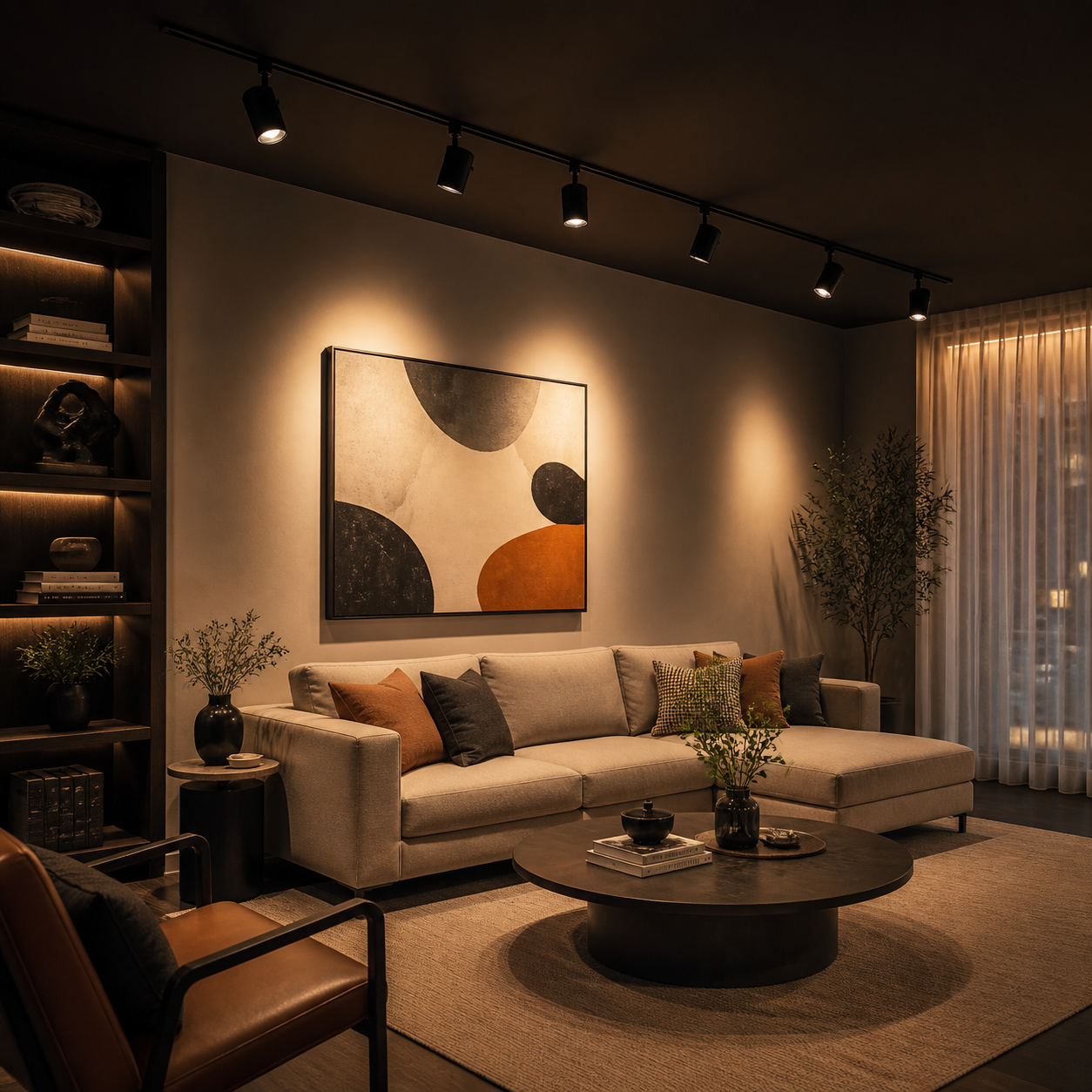
Yes, the difference is clearly visible in controlled side-by-side comparison. CRI 90 renders reds, oranges, and skin tones more naturally. In spaces where people or products are the focal point, CRI 90 is the minimum professional standard.
CRI 95 provides near-perfect color accuracy. The improvement over CRI 90 is most noticeable in saturated reds (R9) and complex gradients in artwork and photography. For museum and gallery applications, CRI 95 is the industry standard. For general retail and hospitality, CRI 90 is sufficient.
Not necessarily. Modern high-CRI LEDs (CRI 90–95) achieve efficacy of 100+ lm/W, comparable to standard CRI 80 LEDs. You do not sacrifice energy efficiency by choosing high-CRI track lighting from a quality manufacturer.
R9 is the ninth test color sample — a saturated red. It is excluded from the standard CRI calculation but is critical for rendering skin tones, red fabrics, and warm materials. Always ask for the R9 value: a CRI 90 light with R9 < 50 will render reds poorly despite its high overall score. ENCORE’s VEGA series maintains R9 ≥ 90.
Yes. ENCORE track lighting systems support mixing fixtures with different CRI ratings on the same track. This is ideal for zoned installations where different areas require different color accuracy levels.
CRI and color temperature (CCT) are independent specifications. A 4000K LED at CRI 95 renders colors more accurately than a 4000K LED at CRI 80. However, warm CCTs (2700K–3000K) tend to flatter skin tones more naturally than cool CCTs, which can make low-CRI artifacts more obvious. For more on CCT selection, see our Track Lighting Color Temperature Guide.
For any space where color accuracy is part of the experience — and that includes most retail, hospitality, gallery, and residential interiors — start at CRI 90 as your minimum standard. The visual improvement over CRI 80 is immediate and significant.
If you are lighting artwork, jewelry, luxury goods, or any space where color fidelity is the primary function of the lighting, specify CRI 95. The premium is justified by the result.
ENCORE offers a complete range of CRI 90+ and CRI 95+ LED track lighting fixtures across the VEGA, IMAX, EVO, and CADIO series. Each fixture is binned for color consistency and tested for TM-30 compliance.
Need help selecting the right track lighting for your project? Contact our lighting specification team for a free consultation and project-specific recommendations.