Address
304 North Cardinal
St. Dorchester Center, MA 02124
Work Hours
Monday to Friday: 7AM - 7PM
Weekend: 10AM - 5PM
Address
304 North Cardinal
St. Dorchester Center, MA 02124
Work Hours
Monday to Friday: 7AM - 7PM
Weekend: 10AM - 5PM
Updated 2026-07-28 18:10
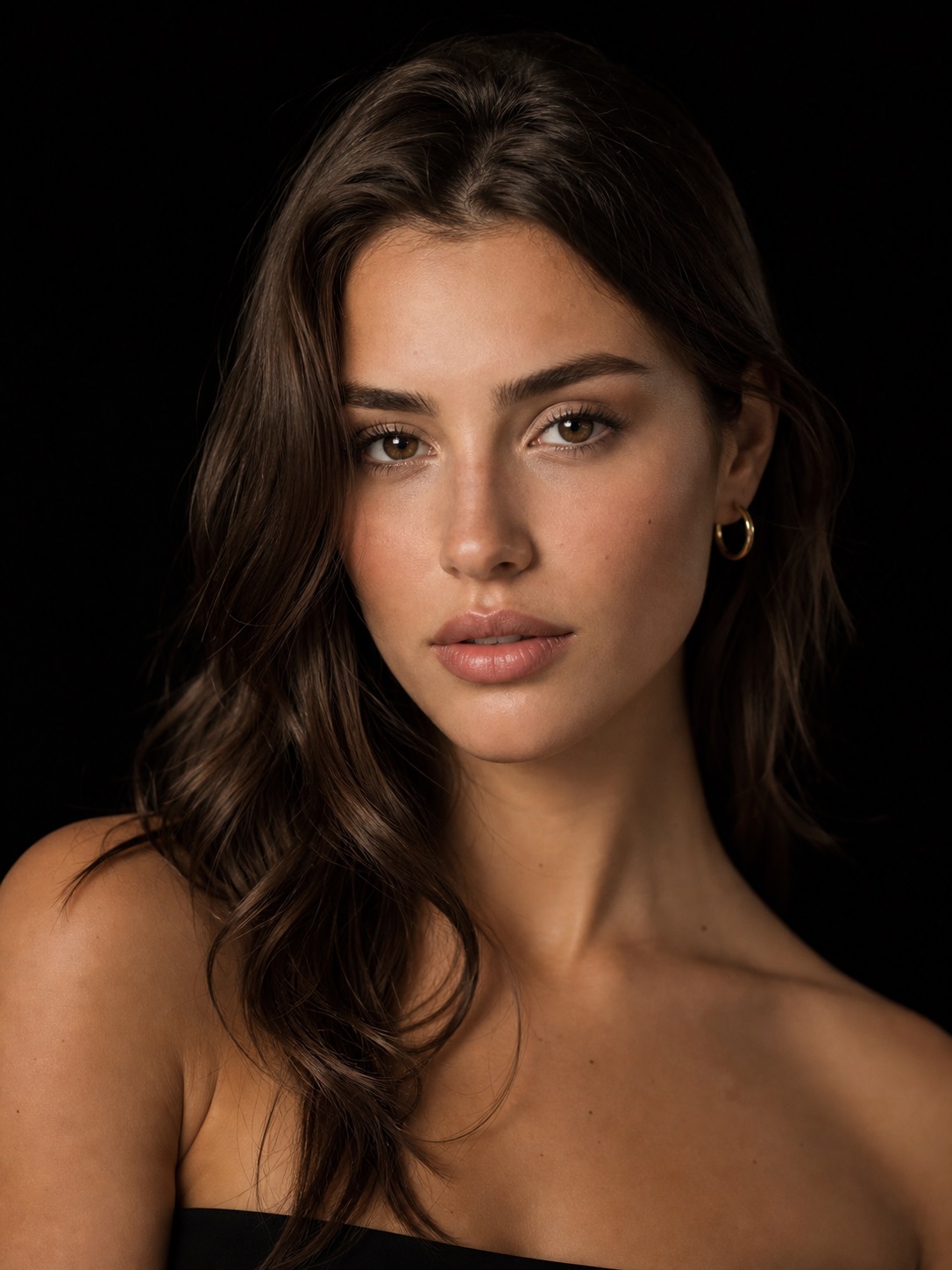
Getting the lighting right on a human face can make or break a portrait. Whether you are an artist painting from reference, a photographer setting up studio lights, or a 3D modeler adjusting digital shaders, understanding how light falls on facial features is essential. Professional lighting references from the Illuminating Engineering Society (IES) document how beam angles and light quality shape three-dimensional rendering.
This guide covers the most practical face lighting angles, how lighting interacts with different face shapes and genders, and how professional studio tools —including ENCORE track lighting systems —can help you achieve precise, repeatable lighting setups.
A face lighting reference is a visual guide —a photo, diagram, or live setup —that shows how light behaves on a human face from different angles. Artists use them to understand shadow placement. Photographers use them to plan studio configurations. 3D artists use them to replicate realistic shading. And lighting designers use them to specify fixture positioning for portrait studios, galleries, and performance venues.
At ENCORE, we manufacture professional-grade track lighting that gives you the flexibility to position, angle, and dim light sources with surgical precision. A well-designed track system lets you switch between face lighting setups in seconds, which is why many portrait studios install our FLEX series track lights on ceiling grids.
Good face lighting reference work answers three questions: Where should the light come from? How soft or hard should it be? And what mood are you creating?
These five angles form the foundation of every portrait lighting setup. Each creates a distinct mood and sculpts the face differently.
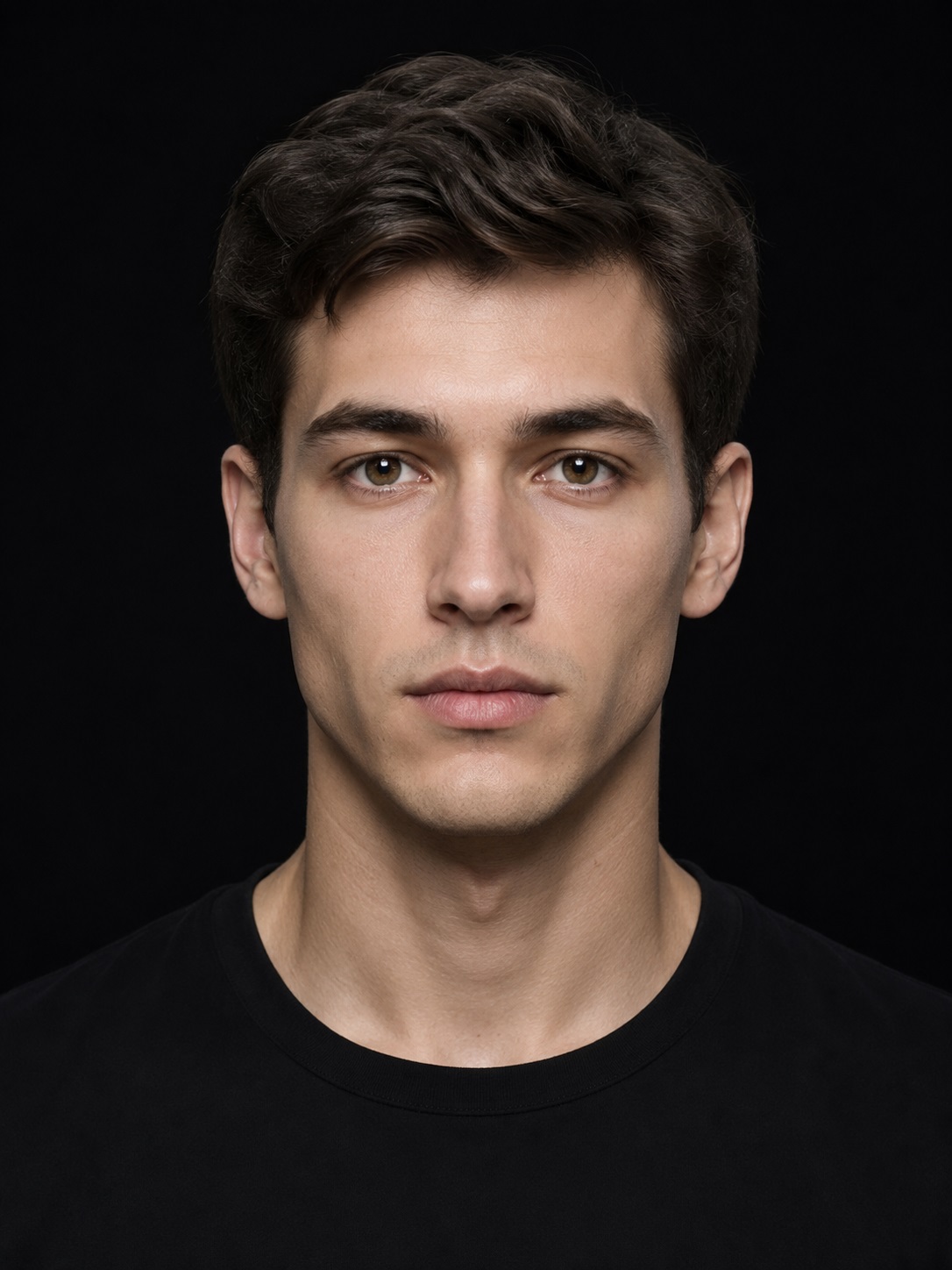
Front lighting places the source directly in front of the subject, level with the face. It minimizes shadows and reveals full facial detail. This is the go-to setup for beauty photography, passport photos, and corporate headshots.
For a front-lighting setup, position an ENCORE VLLA track light directly above the camera axis at 0° angle. The VLLA’s wide beam spread creates soft, wrap-around light that flatters symmetrical features.
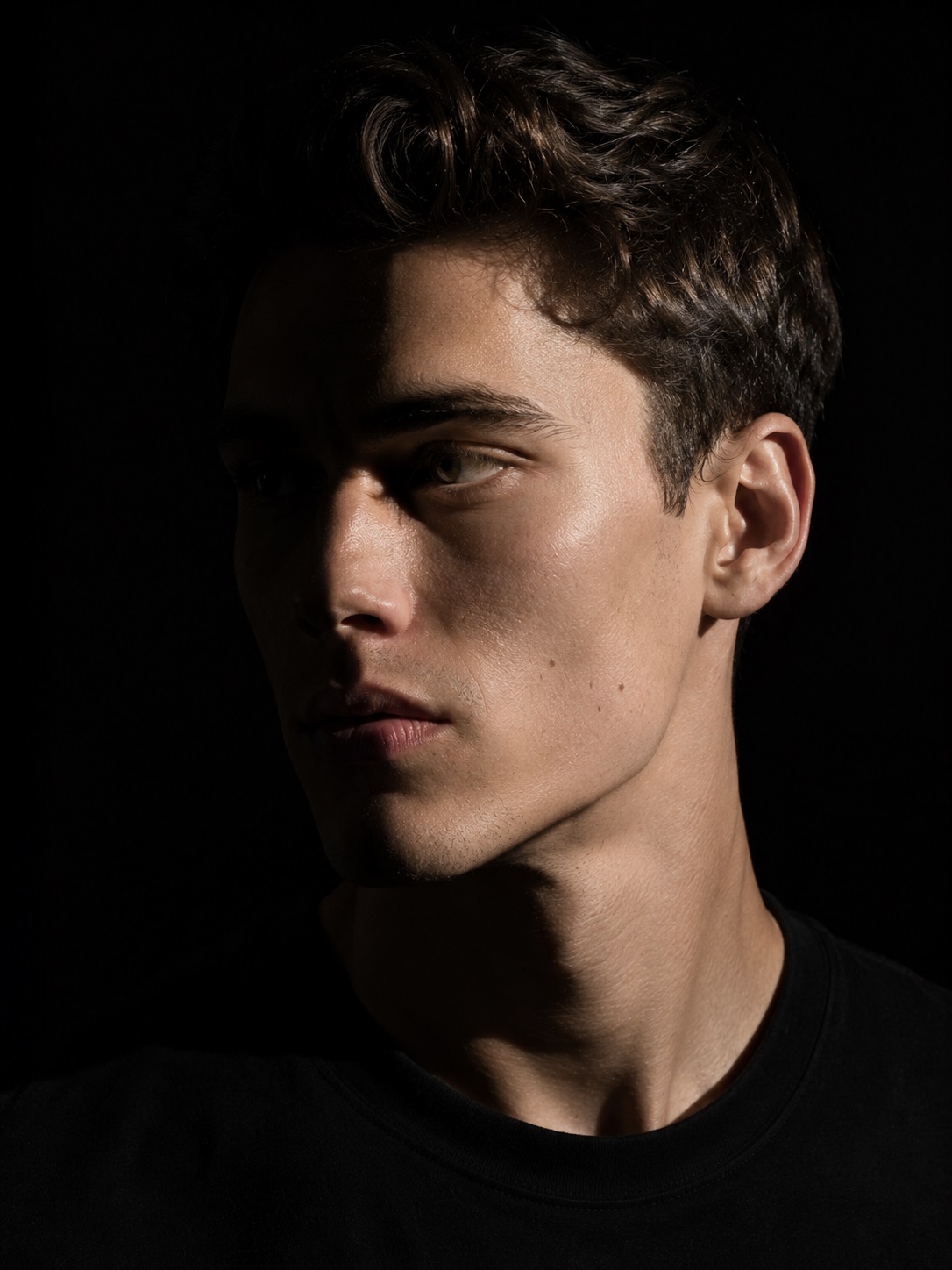
Side lighting places the source at 90° to the subject, splitting the face into light and shadow. It emphasizes texture —wrinkles, stubble, pores —and is widely used in film noir style portraits, male portraiture, and editorial fashion.
To achieve precise side lighting, mount an ENCORE FLEX track spotlight on a ceiling track and adjust the beam angle to 15°—5°. The FLEX series offers 90° swivel and 360° rotation, giving you micro-adjustable control over shadow placement.
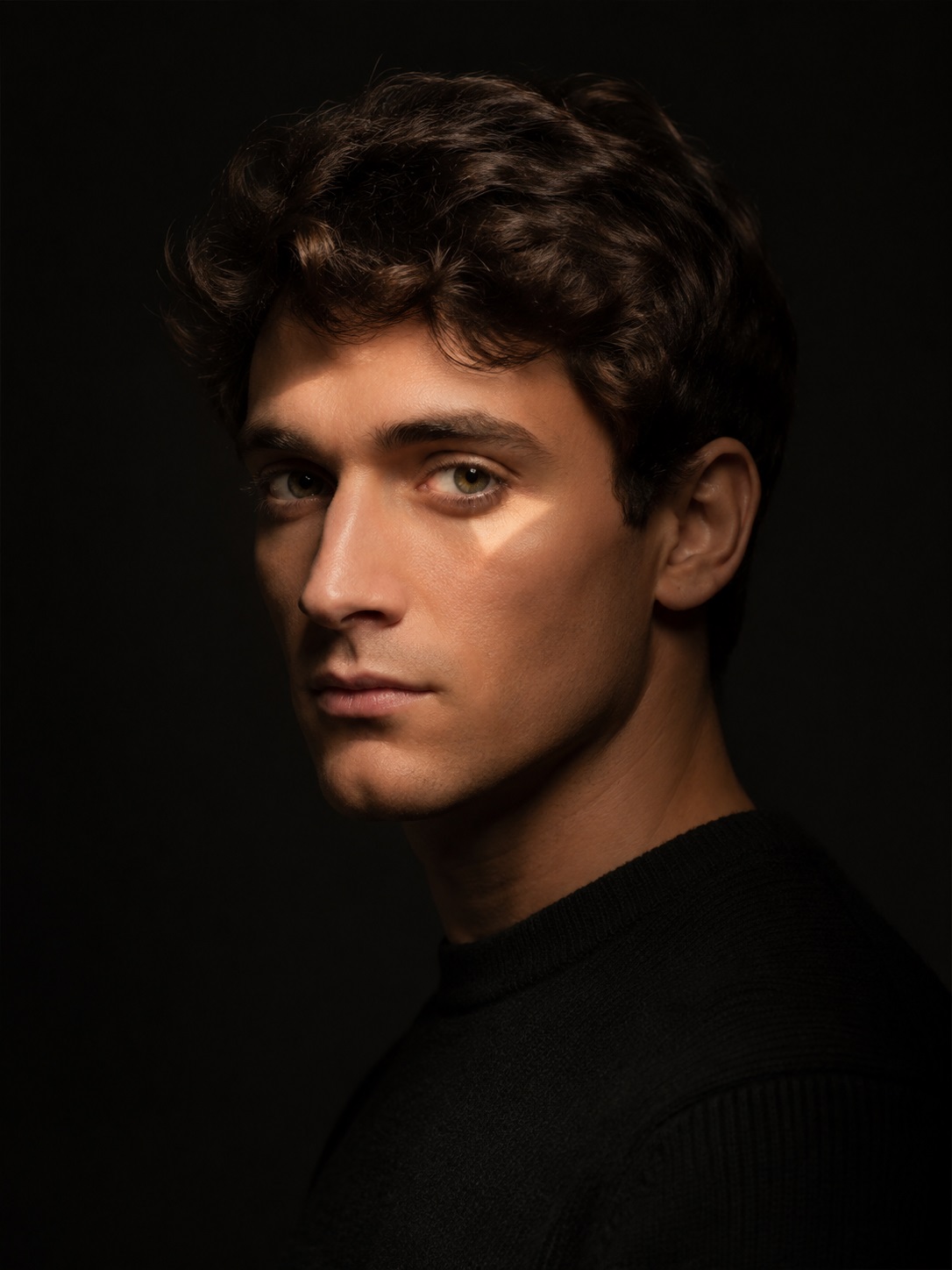
Named after the Dutch master, Rembrandt lighting places the key light at approximately 45° above and 45° to the side of the subject. The signature feature is a small triangle of light on the shadow side of the face, just below the eye.
This is the most flattering angle for most subjects. At ENCORE, we recommend the TLI-50 track light with barn doors to control spill and sharpen the Rembrandt triangle. The TLI-50’s precision optics let you dial in the exact cutoff between highlight and shadow.
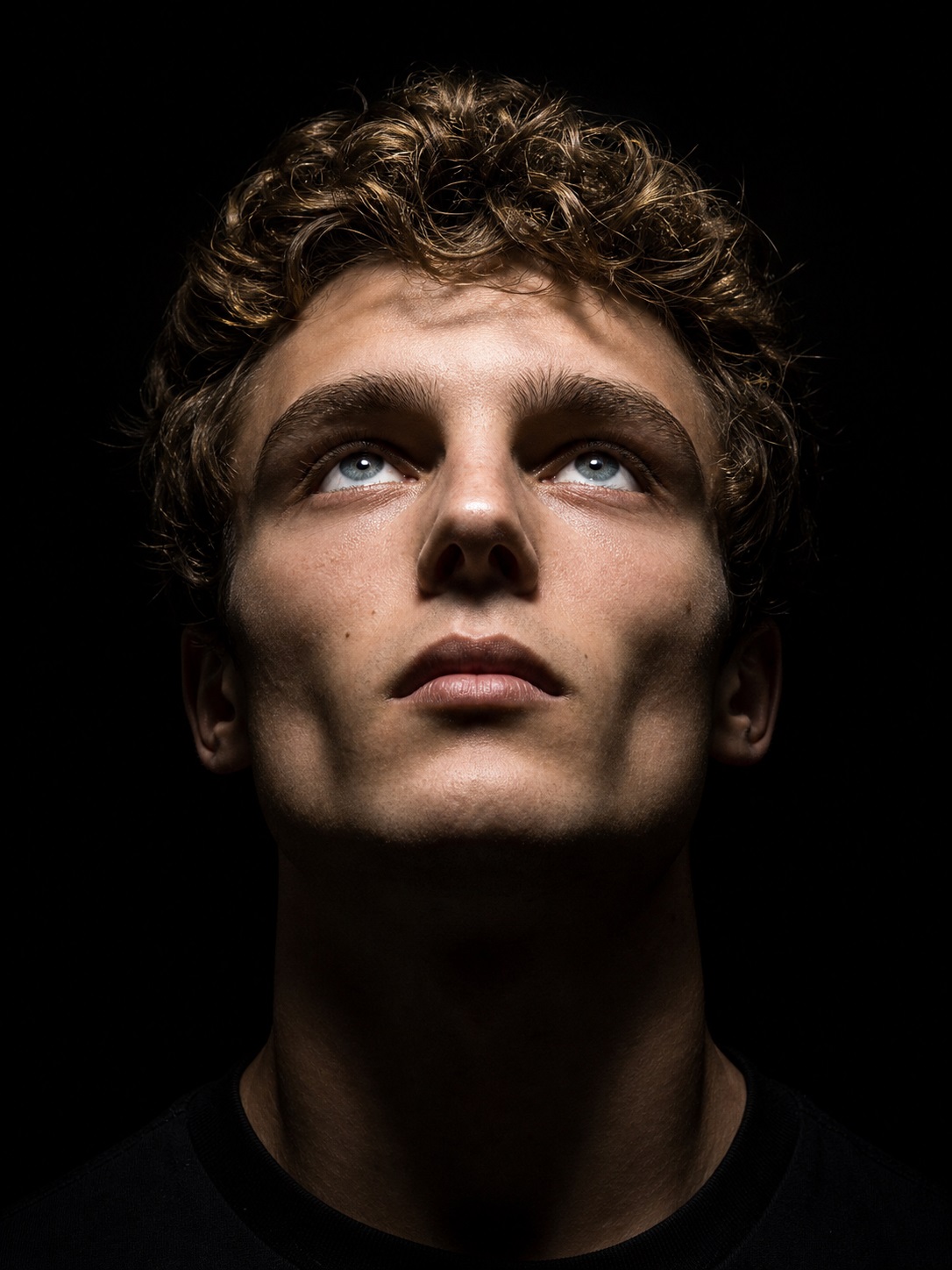
Top lighting places the source directly above the subject, pointing straight down or at a steep angle. It creates deep shadows in the eye sockets and under the cheekbones. This is a staple in theatrical and performance lighting.
ENCORE’s VL series track heads are popular in portrait photography studios for precisely this reason —the adjustable beam angle lets you control exactly how much shadow falls across the face.
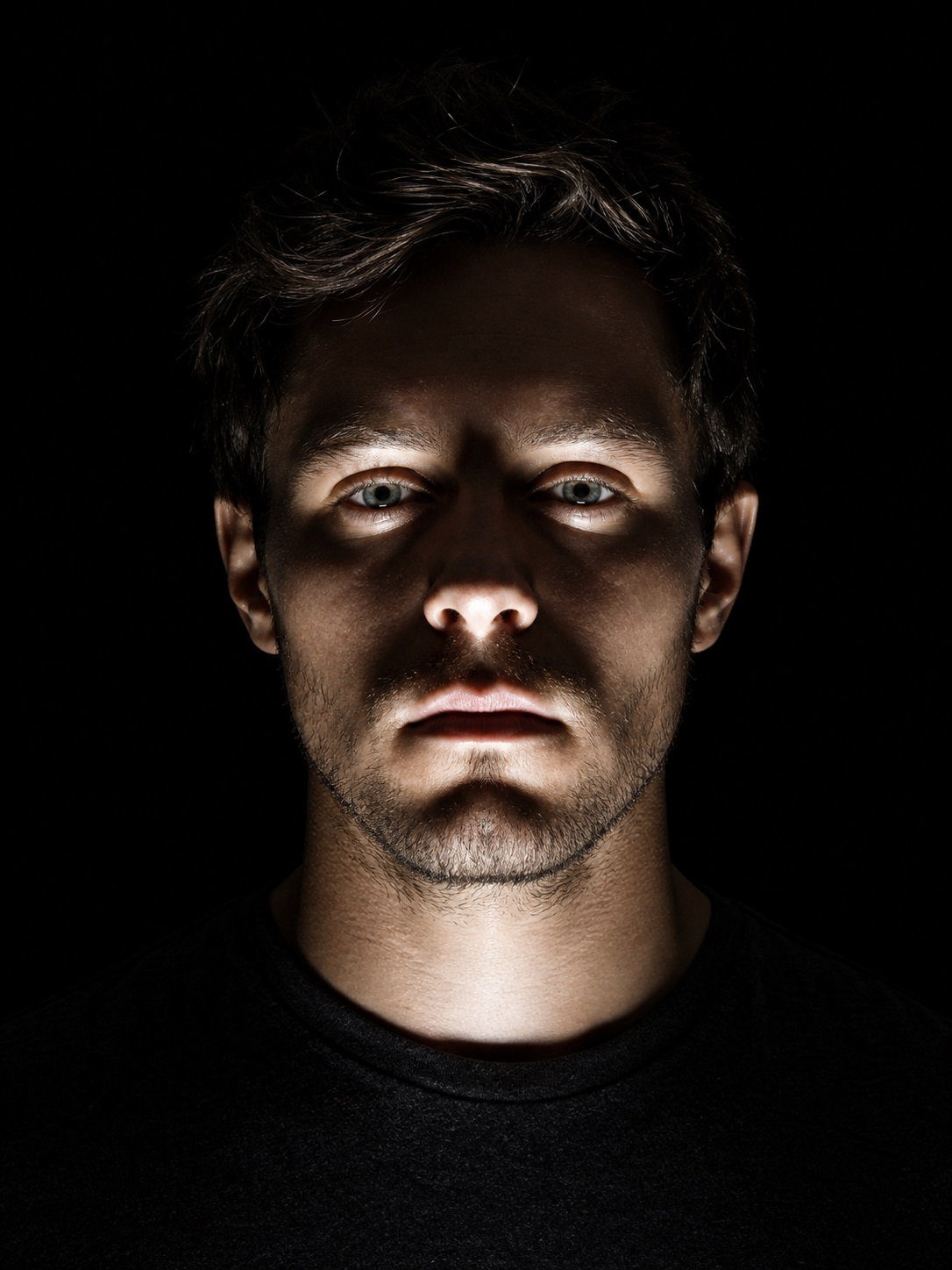
Bottom lighting places the source below face level, pointing upward. It reverses the natural lighting pattern we see in daily life (which comes from above), creating an unsettling, dramatic effect. This is the go-to for horror film posters and avant-garde fashion.
While bottom lighting is less common in standard portraiture, a flexible track system makes it easy to experiment. Mount an ENCORE FLEX track light low on a wall track or use a floor stand with our TLI-50 adjustable spotlight.
One size does not fit all in face lighting. Different facial structures respond differently to the same lighting angle.
Female portraiture often benefits from softer, more diffused lighting that smooths skin texture and emphasizes bone structure. Broad lighting —where the light hits the wider side of the face —is generally more flattering. A large modifier or a VLLA track light with a frosted lens creates the soft transition that female portraits typically require.
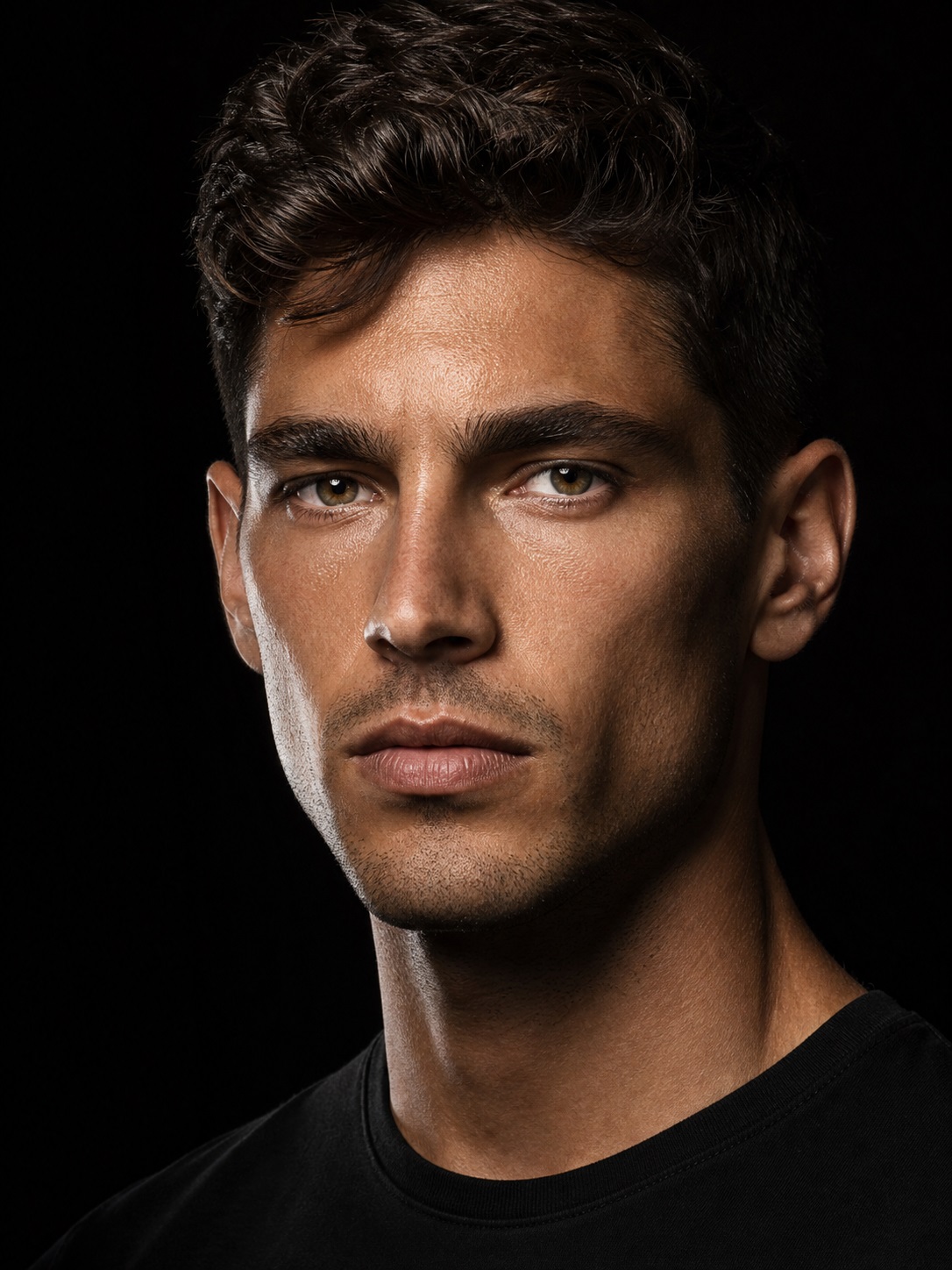
Male portraiture can handle —and often looks better with —harder, more directional light. Short lighting (light hitting the narrow side of the face) emphasizes masculinity and creates dramatic depth. A FLEX series spot with a 15° beam angle delivers the focused, crisp shadows that male portraits benefit from.
Round faces: Use side or Rembrandt lighting at 45° to create shadow that visually slims the face. Avoid wide front lighting that flattens round features.
Square faces: Front lighting with a soft source (like the VLLA with diffuser) softens angular jawlines. Side lighting can exaggerate squareness.
Oval faces: Virtually any angle works. Rembrandt lighting is particularly flattering on oval faces.
Heart-shaped faces: Lighting from slightly below center (15°—0° upward angle) fills in the chin area and balances the wider forehead.
With a flexible track lighting system from ENCORE, you can quickly adjust fixture height, angle, and beam width to suit any face shape —no relighting required.
Building your own face lighting reference library doesn’t have to be expensive. Start with these free resources:
Want to test lighting setups without a model? Try our free Face Lighting Simulator →(coming soon)