Address
304 North Cardinal
St. Dorchester Center, MA 02124
Work Hours
Monday to Friday: 7AM - 7PM
Weekend: 10AM - 5PM
Address
304 North Cardinal
St. Dorchester Center, MA 02124
Work Hours
Monday to Friday: 7AM - 7PM
Weekend: 10AM - 5PM
Magnetic track lighting has become one of the most requested lighting systems in modern homes and commercial spaces — and for good reason. Instead of screwing lamps into a fixed track, the fixtures simply snap onto the rail with magnets, powered through low-voltage conductors embedded in the profile. You can add, remove, slide, and re-aim heads in seconds, change the whole character of a room without touching the ceiling, and keep the hardware so slim it practically disappears into the plasterboard. The Illuminating Engineering Society (IES) offers guidance on recommended light levels to help you plan a balanced magnetic track layout. This complete guide to magnetic track lighting explains how the system works, the three core parts you need to buy, how it compares with traditional track, the track profiles and head types available, installation methods, and where the system shines — with product recommendations you can spec today. A slim magnetic track rail with adjustable heads — repositionable lighting without touching the ceiling What Is a Magnetic Track Lighting System? A magnetic track lighting system is a low-voltage lighting rail with built-in conductors, onto which light heads are attached by neodymium magnets instead of mechanical locks or clips. The track is typically an aluminum profile just 5-20mm thick, recessed flush into a plasterboard ceiling or mounted on the surface. Each light head carries its own magnet and spring-loaded contacts, so it locks onto the rail, receives power automatically, and can be slid or lifted off in seconds. How It Works The system runs on safe low voltage — most rails operate at 24V or 48V DC, supplied by a driver hidden above the ceiling. Power travels through two or more conductive copper strips inside the rail. When a magnetic head clicks into place, its contacts touch the strips and […]
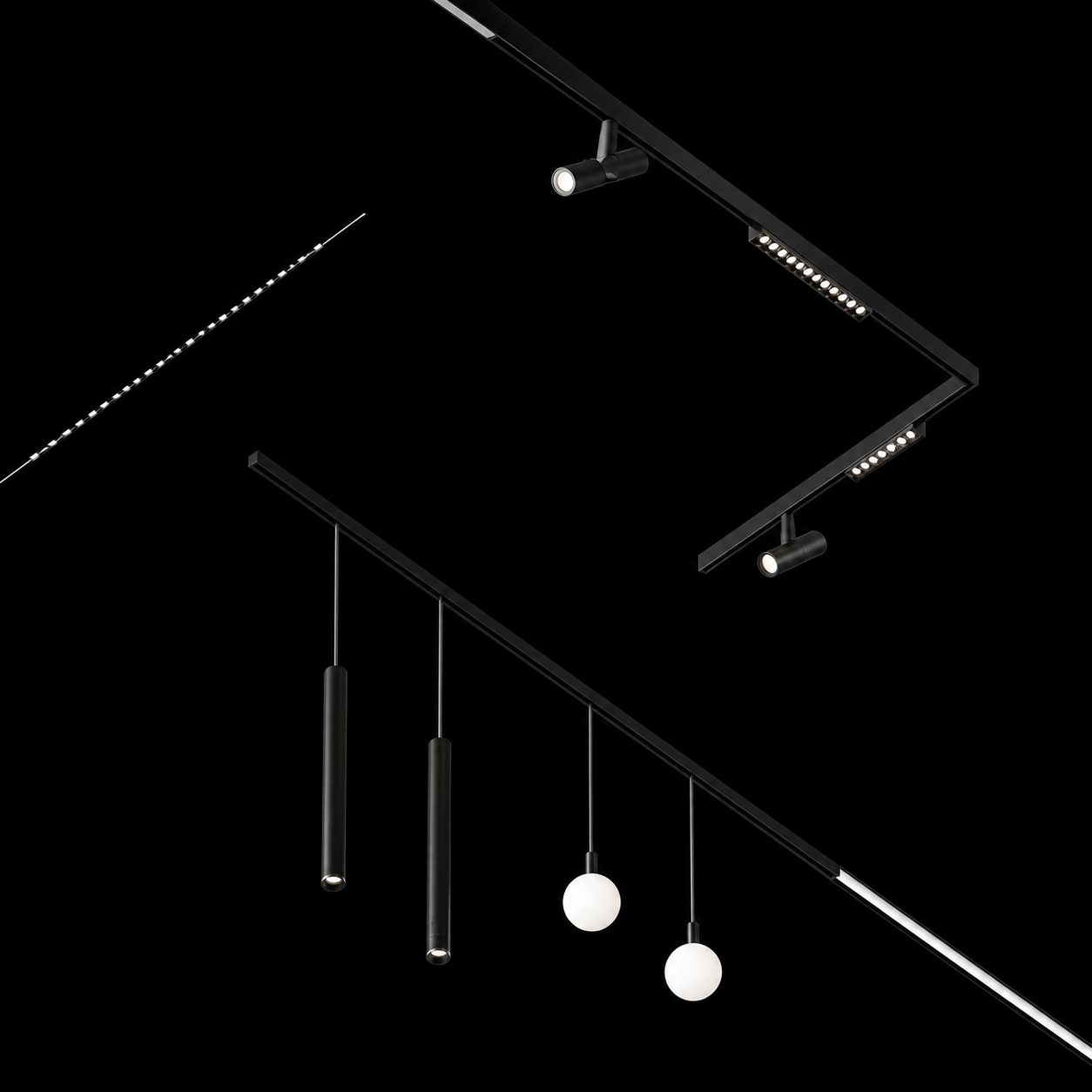
Magnetic track lighting has become one of the most requested lighting systems in modern homes and commercial spaces — and for good reason. Instead of screwing lamps into a fixed track, the fixtures simply snap onto the rail with magnets, powered through low-voltage conductors embedded in the profile. You can add, remove, slide, and re-aim heads in seconds, change the whole character of a room without touching the ceiling, and keep the hardware so slim it practically disappears into the plasterboard. The Illuminating Engineering Society (IES) offers guidance on recommended light levels to help you plan a balanced magnetic track layout.
This complete guide to magnetic track lighting explains how the system works, the three core parts you need to buy, how it compares with traditional track, the track profiles and head types available, installation methods, and where the system shines — with product recommendations you can spec today.

A magnetic track lighting system is a low-voltage lighting rail with built-in conductors, onto which light heads are attached by neodymium magnets instead of mechanical locks or clips. The track is typically an aluminum profile just 5-20mm thick, recessed flush into a plasterboard ceiling or mounted on the surface. Each light head carries its own magnet and spring-loaded contacts, so it locks onto the rail, receives power automatically, and can be slid or lifted off in seconds.
The system runs on safe low voltage — most rails operate at 24V or 48V DC, supplied by a driver hidden above the ceiling. Power travels through two or more conductive copper strips inside the rail. When a magnetic head clicks into place, its contacts touch the strips and the LED turns on. Because there is no mains voltage on the rail, the system is touch-safe, and heads can be added or moved without an electrician.
If you are deciding between a magnetic system and a conventional track, the comparison below covers the decisions that matter on a real project.
| Factor | Magnetic track | Traditional track |
|---|---|---|
| Mounting | Ultra-slim profile, recesses flush into plasterboard | Bulkier rail, usually surface-mounted or suspended |
| Adding / moving heads | Seconds, tool-free, no electrician needed | Twist-lock or clip, still simple but mechanical |
| Voltage | Low voltage (24V / 48V DC), touch-safe rail | Mains voltage (120-277V AC) |
| Head compatibility | Only heads from the same magnetic system family | Standard track (H/J/L) allows cross-brand heads |
| Head power range | Typically 5-30W per head | Typically 10-50W+, higher output available |
| Driver placement | Separate driver hidden above ceiling | Built into each head or rail |
| Typical cost | Higher per metre + driver cost | Lower entry cost |
| Best for | Design-led residential, retail, showrooms | Commercial, high-output, high ceilings |
For most modern interiors, the magnetic system wins on looks, flexibility and safety. Traditional track still earns its place for high-ceiling commercial spaces where you need 30W+ heads and the widest head ecosystem.
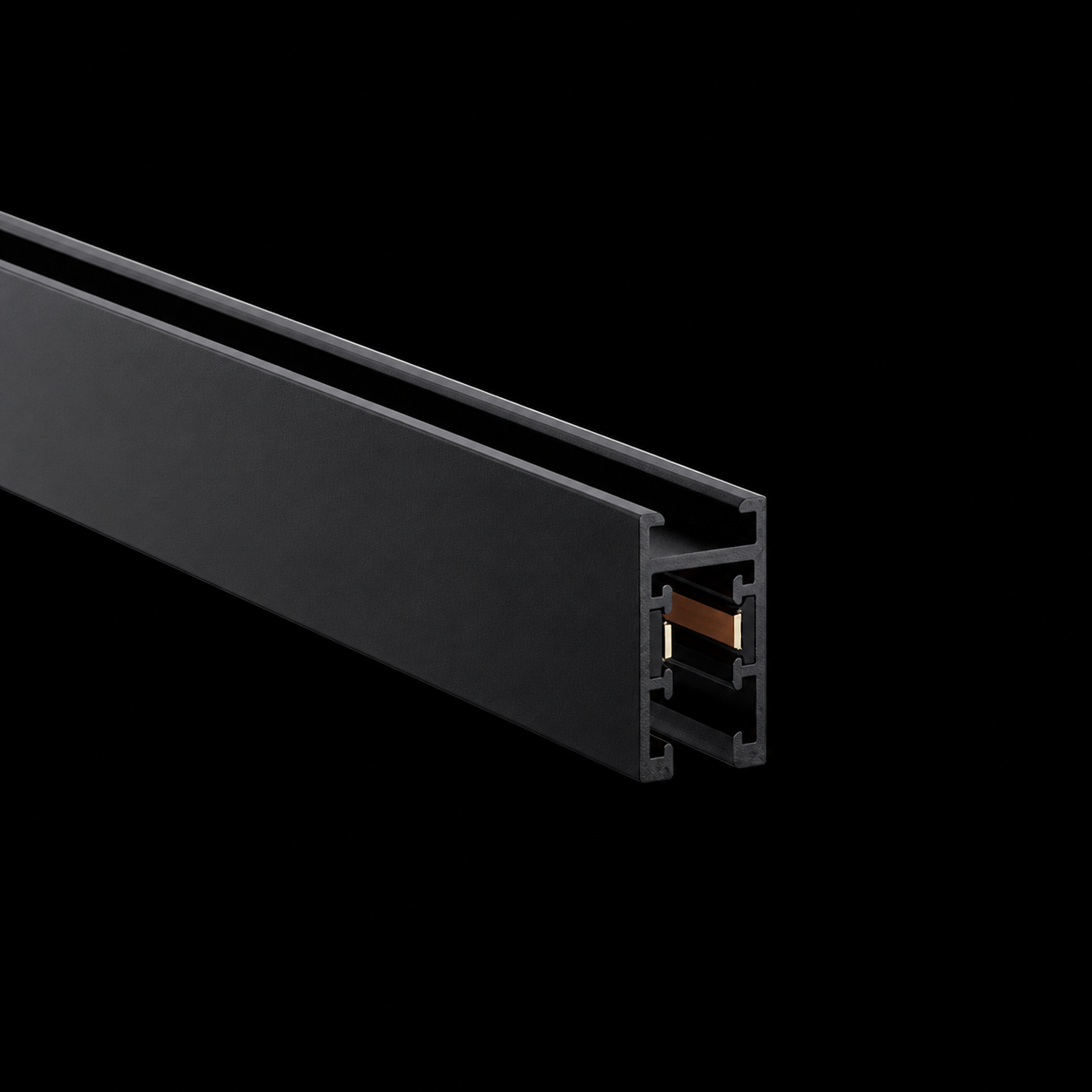
Magnetic track is not one product — it is a family of rails and heads, and the choices affect what you can install.
Track width determines how many conductors you get and how powerful the heads can be:
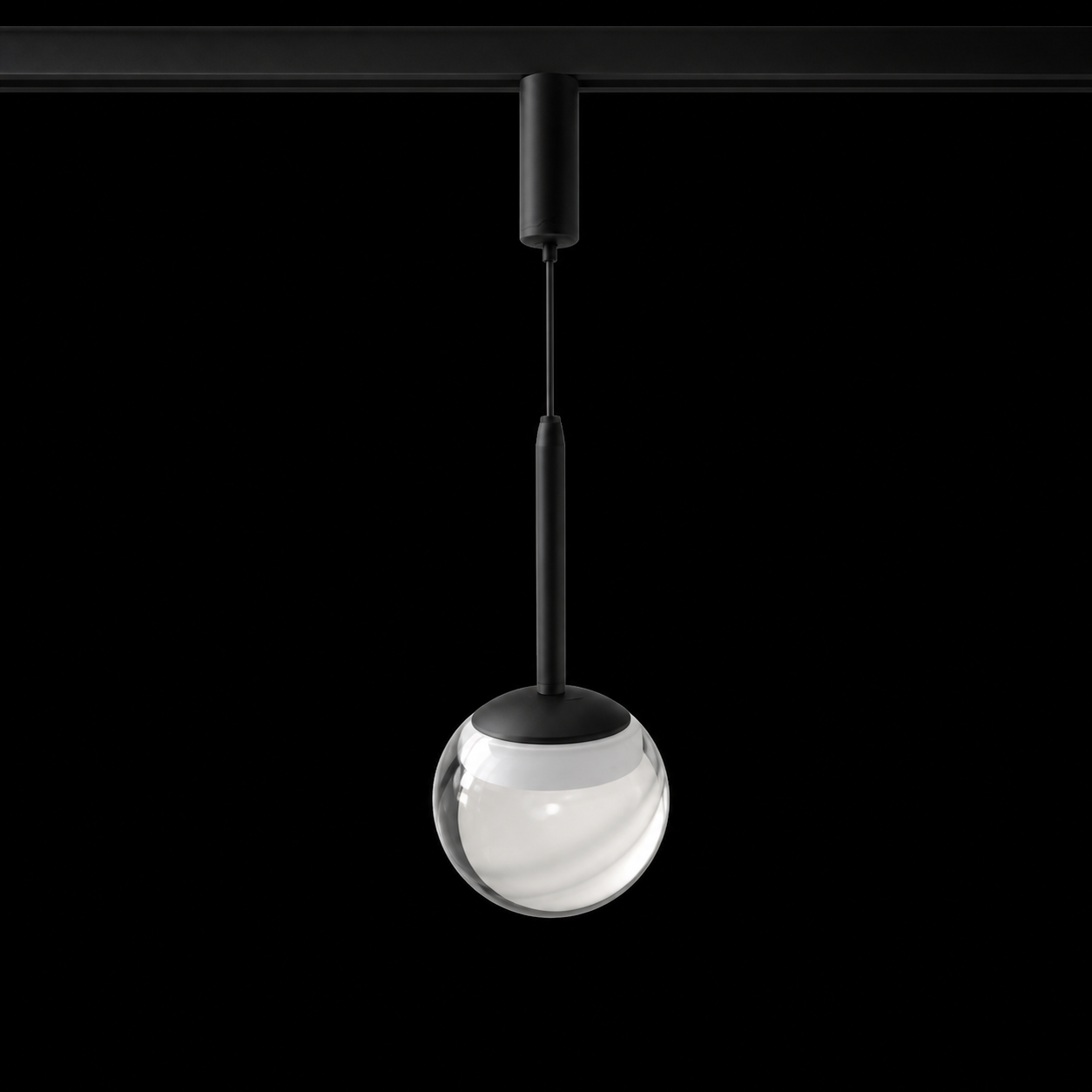
One rail, many personalities. The head is where you choose the light character:
Because heads are magnetic, you can start with a few spots and grow the system later — or swap a spot for a pendant when you redecorate. That modularity is the whole point.
Magnetic track installs three ways, and the choice depends on your ceiling and the look you want:
The rail is fixed into the plasterboard before finishing, so the track sits flush with the ceiling — only the slim slot remains visible. This is the signature look of magnetic track and the reason it feels “invisible.” Plan the layout and driver position before plastering.
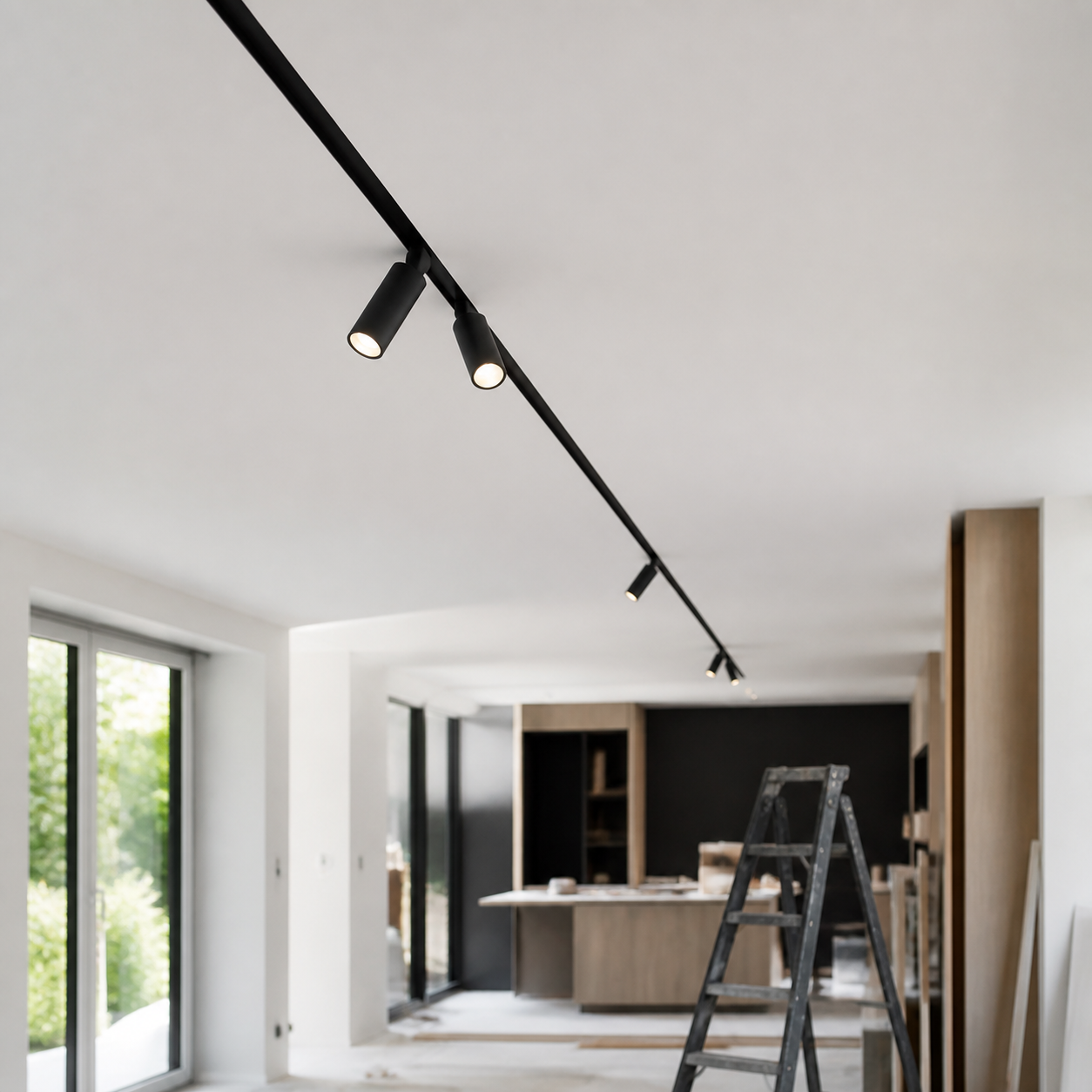
The rail mounts directly under the ceiling with clips. Ideal for concrete ceilings, renovations where you cannot cut channels, and industrial-style interiors where the rail becomes part of the design.

For high ceilings, the rail hangs on rods or cables at a working height — the same technique we covered in choosing between track and downlights, but now with magnetic heads you can re-aim from the floor.
Use a recessed 5mm or 15mm rail with a mix of spots and pendants: narrow beams on the sofa and coffee table, a pendant or two over a sideboard, and you can re-aim everything when the furniture moves. This is the application buyers search for most — browse the magnetic track range for living-room-ready kits.
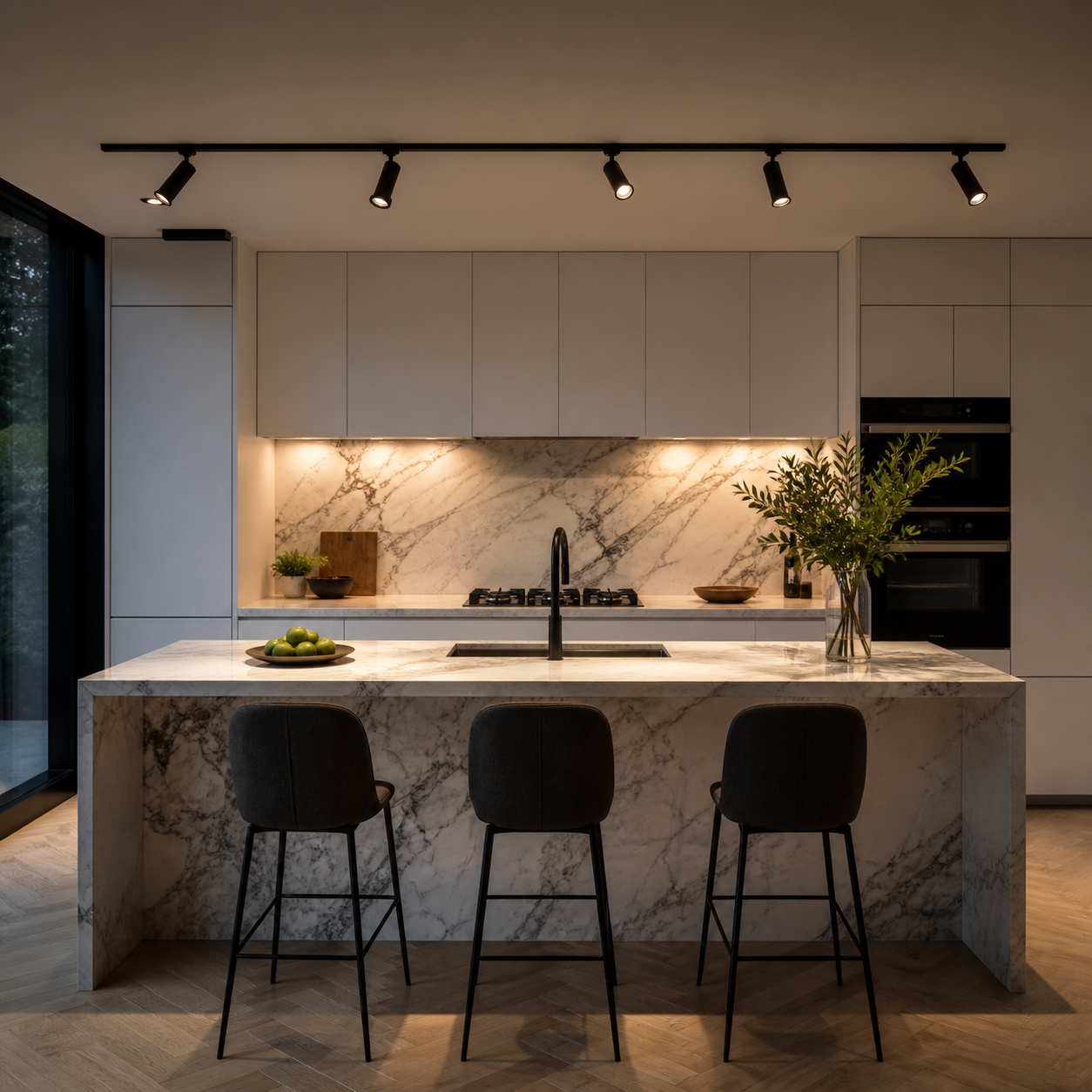
A 20mm rail over the island with adjustable spots beats fixed downlights: you aim the light exactly where you prep, and the low-voltage rail is safe near water vapor with the right driver placement.
Retailers love magnetic track because displays change constantly. Repositioning a head to highlight a new product takes two seconds, and the low-voltage rail makes frequent re-arrangements safe. The same logic drives the luxury retail installations we document in our Beijing SKP case study.

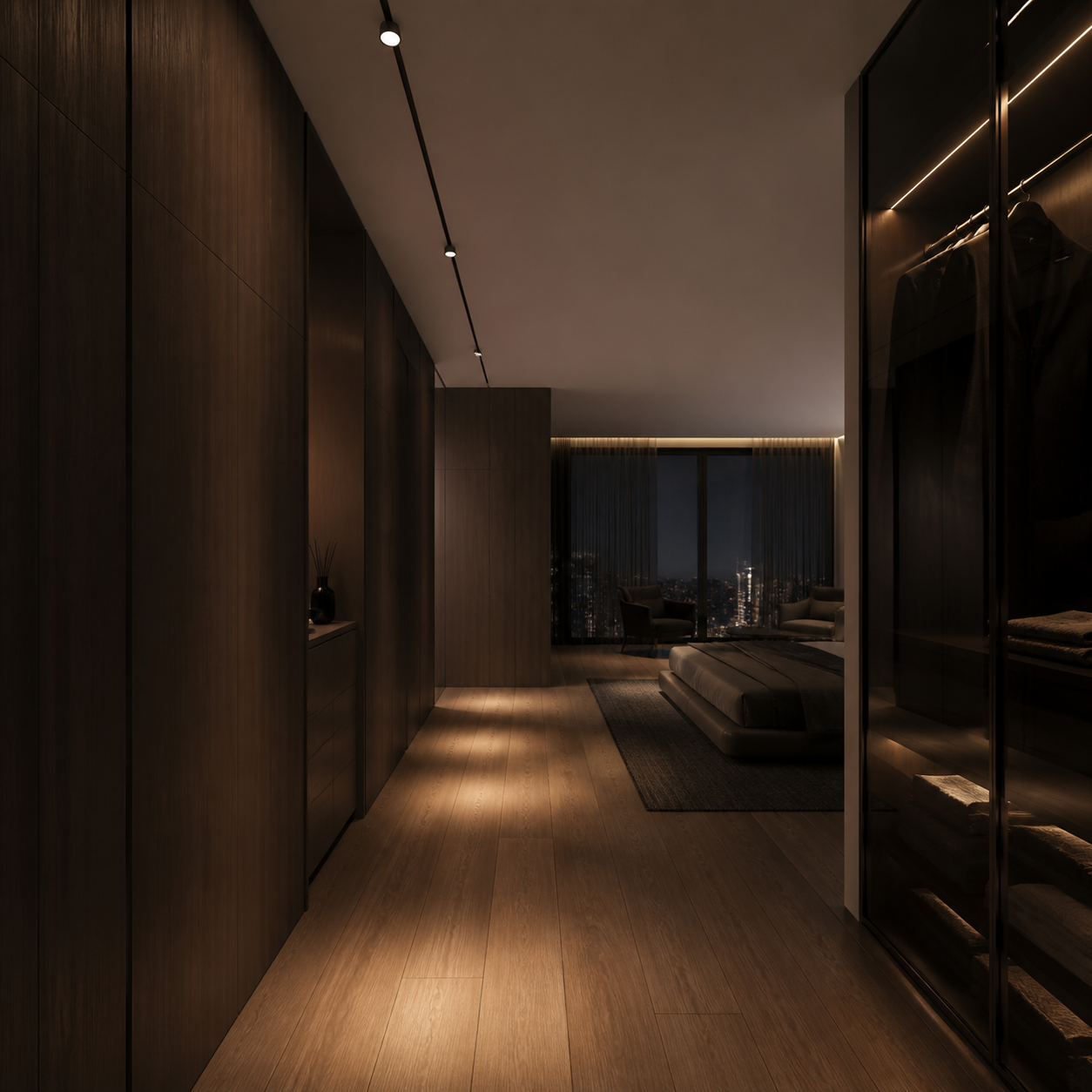
Wall washers and narrow-beam spots on a slim rail deliver gallery-quality accent light, and linear bars can wash a corridor evenly. Because heads are removable, you can change the beam character of a hallway between seasons.

Yes for design-led spaces: the ultra-slim recessed look, tool-free repositioning, and low-voltage safety justify the higher cost. For high-output commercial ceilings, traditional track is still more cost-effective.
Quality systems use strong neodymium magnets rated well above the head weight, and heads lock firmly onto the conductive strips. Heads are safe under normal use; always buy from a reputable manufacturer and follow the load specifications.
The rail wiring and driver connection should be installed by a qualified electrician. Once installed, adding, moving or swapping heads on the low-voltage rail is a safe DIY task — no tools required.
Most systems run at 24V or 48V DC low voltage, supplied by a driver. The rail is touch-safe because mains voltage never reaches the track itself.
Yes. Choose a dimmable driver and match it to your control: Triac for wall dimmers, 0-10V for simple zone control, or DALI for scenes and individual addressing. Our dimming protocol guide walks through the options.
A magnetic track lighting system is the right choice when you want a minimal ceiling, total layout freedom, and the ability to change the lighting whenever the room changes. Specify the rail profile to match the ceiling (5mm for pure minimalism, 20mm for power), choose heads for the light character you need, and pair the system with a dimmable driver from the start.
ENCORE’s magnetic track range covers 5mm and 20mm rails, spot, linear, wall-wash and decorative NOVA heads, and certified low-voltage drivers with Triac, 0-10V and DALI dimming options. Explore the magnetic track range, ask our team for a free layout with photometric calculation via the contact page, and for manufacturer selection guidance see our B2B factory checklist.
If you are still comparing systems, our track vs recessed guide and dimming protocols guide cover the adjacent decisions.