Address
304 North Cardinal
St. Dorchester Center, MA 02124
Work Hours
Monday to Friday: 7AM - 7PM
Weekend: 10AM - 5PM
Address
304 North Cardinal
St. Dorchester Center, MA 02124
Work Hours
Monday to Friday: 7AM - 7PM
Weekend: 10AM - 5PM
How ENCORE FLEX, VILLA and TLI-50 track lights deliver glare-free gallery lighting at the Irish National Gallery -- a museum lighting case study on accent, wall wash and high CRI.
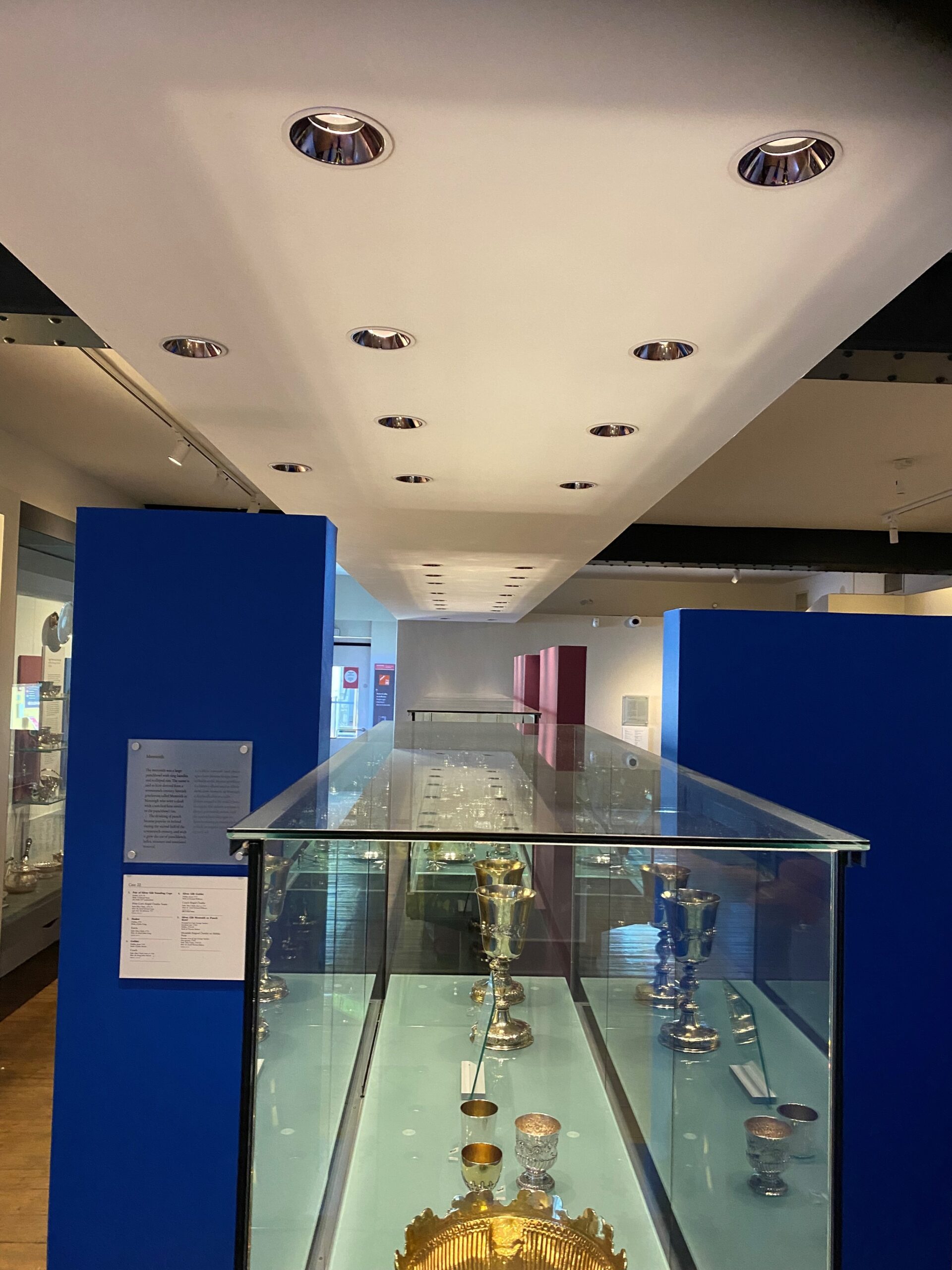
Lighting a national gallery is one of the hardest briefs in gallery lighting. You are asked to make Old Master paintings glow, sculptures read in three dimensions, and polished silver sparkle — all in the same room, without a single hotspot or stray reflection. This Irish National Gallery (Dublin) project shows how a layered track lighting for galleries scheme, built on ENCORE FLEX, VILLA and TLI-50 fixtures, delivers glare-free, high-CRI gallery lighting across very different collections.
| Project | Irish National Gallery, Dublin (National Gallery of Ireland) |
|---|---|
| Space types | Painting galleries, sculpture bays, silver/metalwork vitrines, period-room dioramas |
| Accent lighting | ENCORE FLEX & VILLA track lights, ENCORE TLI-50 spotlights |
| Ambient lighting | Trimless recessed downlights |
| Fixture families | FLEX track light, VILLA track light, TLI-50 track spotlight |
| Color temperature | 2700K / 3000K warm, 4000K neutral |
| Key goals | Glare-free art, high CRI, conservation-safe, adjustable |
A museum lighting scheme has to serve conflicting objects. A 400-year-old oil wants a tight, warm pool of picture light; a polished chalice wants a cool, neutral beam that keeps the metal crisp; a 1920s period room wants an intimate, candlelit wash. Do all three with one flat ceiling light and every object looks wrong. The answer used at the Irish National Gallery is layered gallery lighting design: a quiet ambient layer plus a flexible track lighting layer you can aim at whatever the wall holds.
None of the effects below comes from a single fitting. They come from three layers working together — and from choosing LED track lights that can be re-aimed as the collection changes.
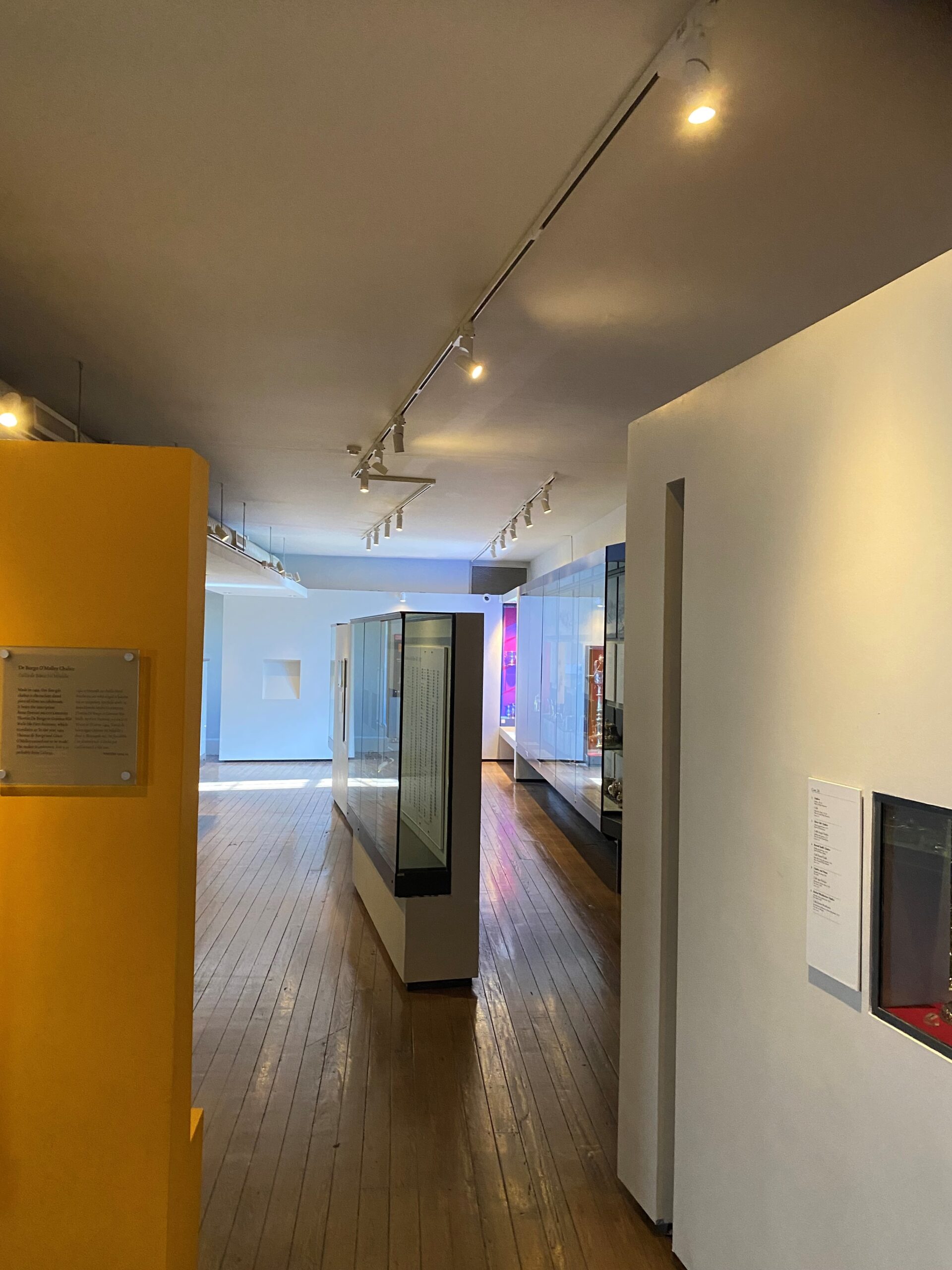
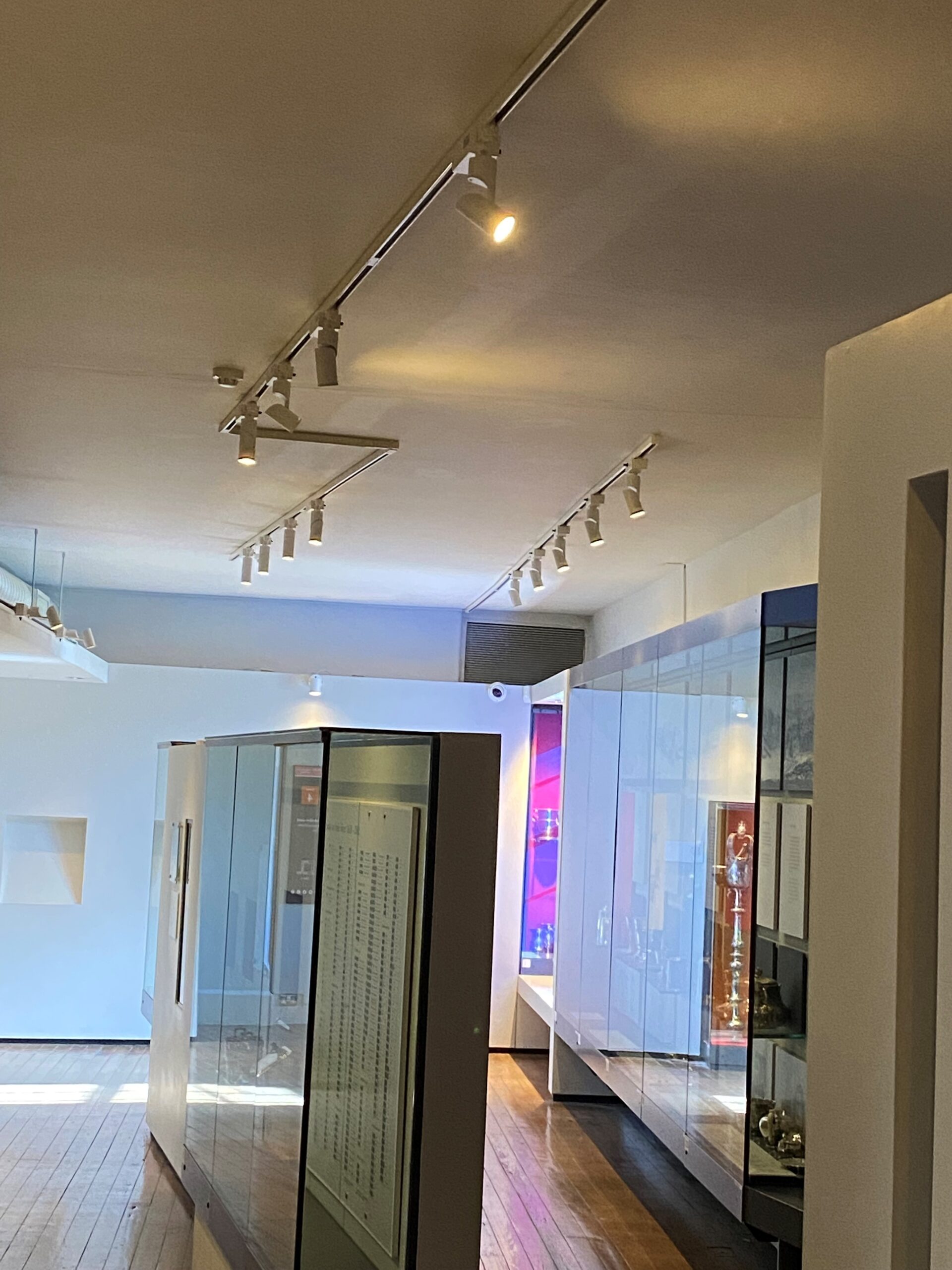
Down the main corridors, ENCORE FLEX track lights run as surface-mounted rails carrying adjustable track spotlights aimed at the silver and metalwork vitrines. The same track lighting for artwork logic drives the painting walls: each picture light is a small, deep-baffled head that puts a clean rectangle of light on the canvas and nowhere else. Because the heads clip into a track rail, a curator can re-aim a track light in seconds when a painting moves — no electrician, no new ceiling cut. That adaptability is exactly why track lighting for galleries has become the default for collecting institutions.
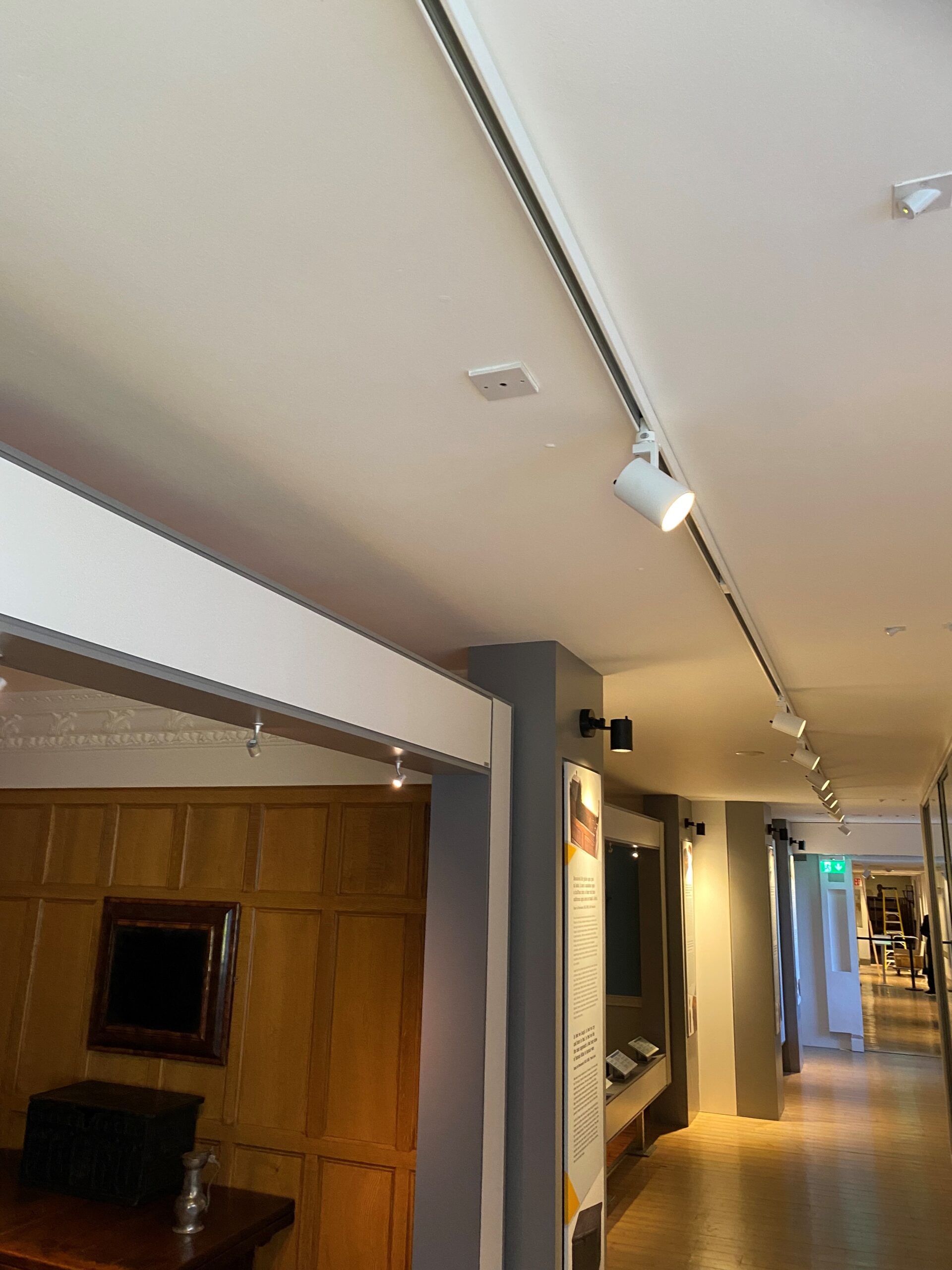
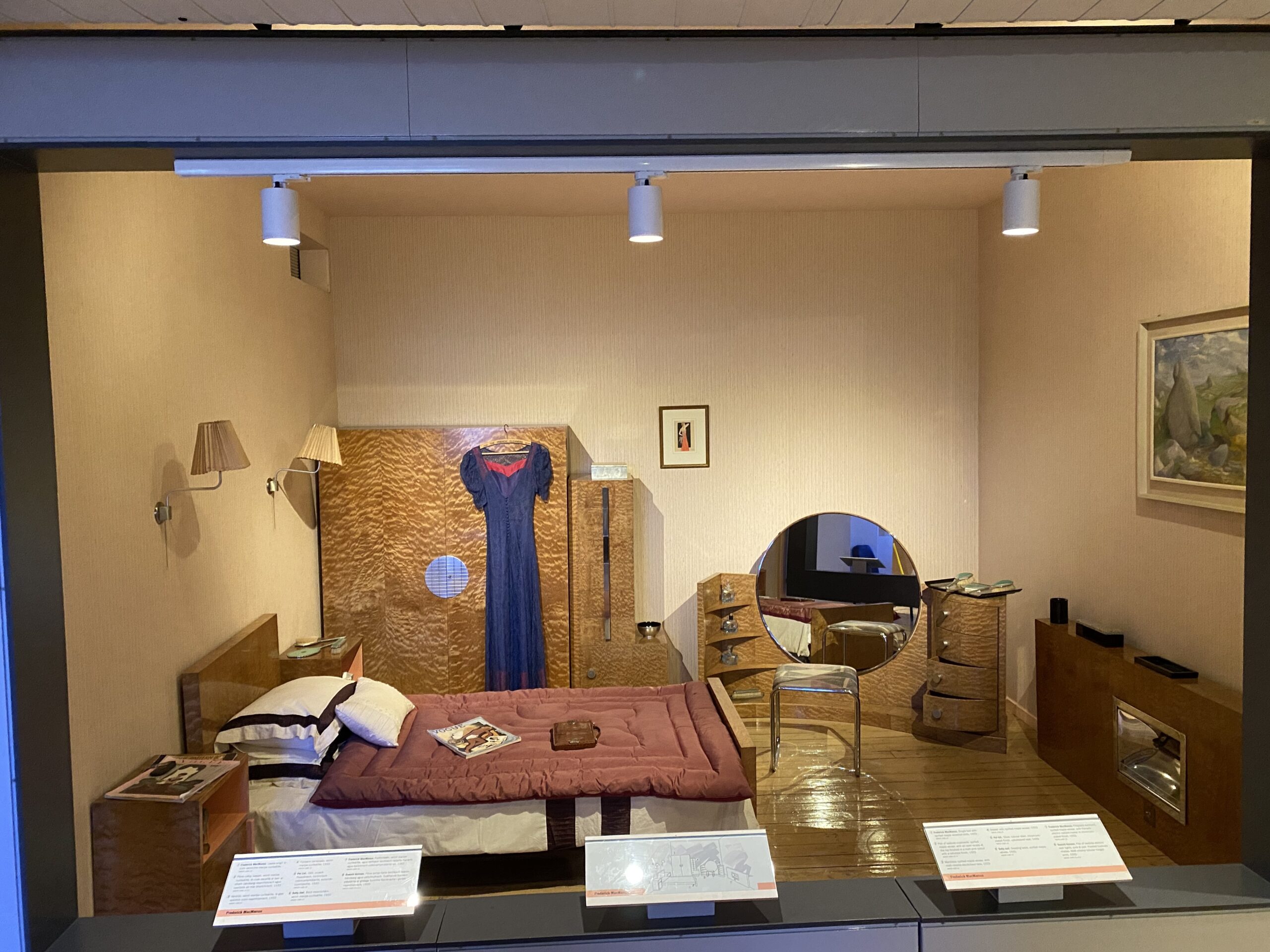
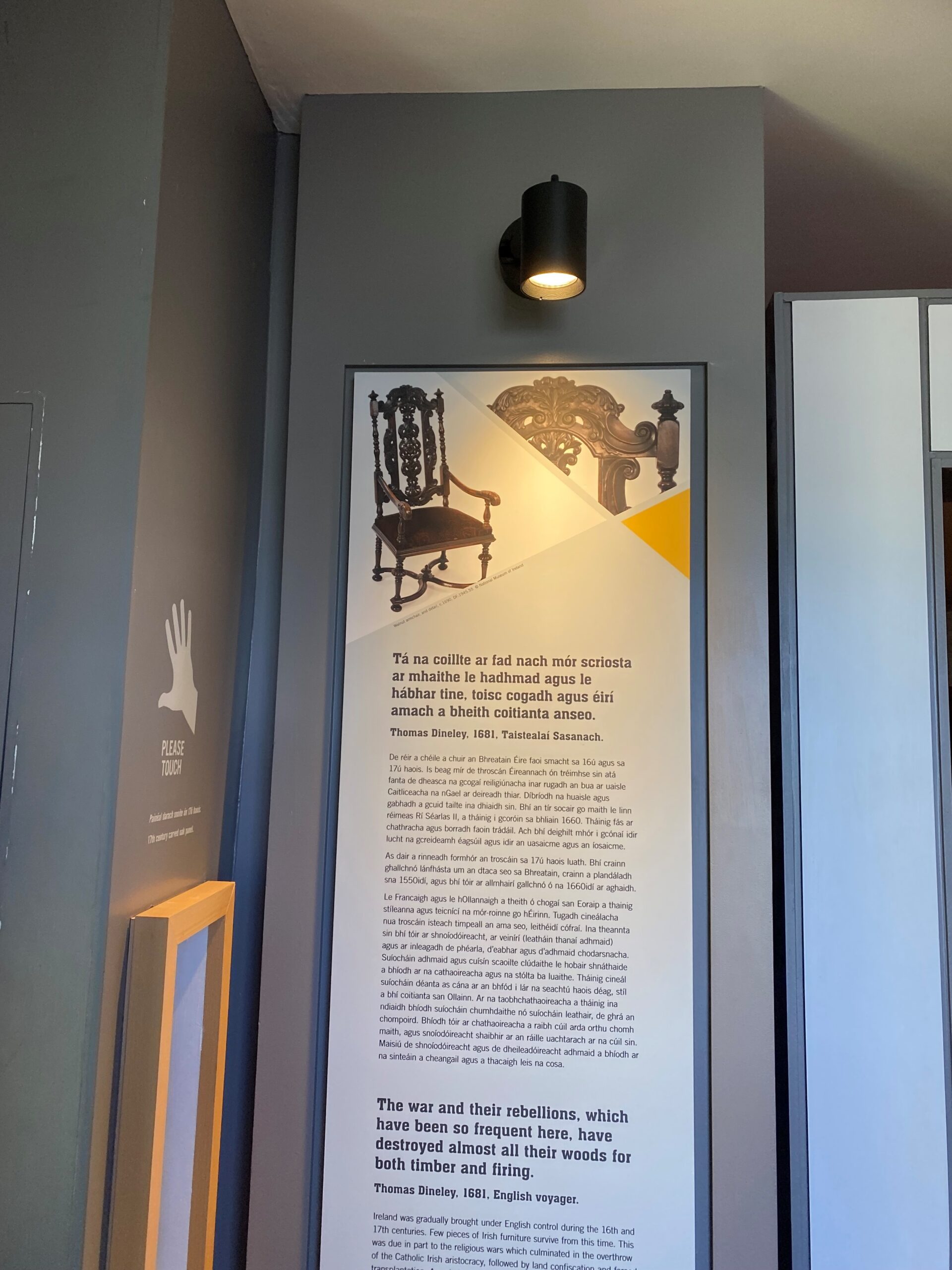
The period rooms need a different hand. Here, ENCORE TLI-50 spotlights — slim cylindrical track spotlights — wash wood panelling and pick out framed works and glass-enclosed dioramas. The optics are set deep inside the cylinder, so even when a visitor stands close to the glass, the lamp itself stays out of view. That is the heart of glare-free gallery lighting: the visitor sees the art, not the source. Tight beam angles keep the light on the object and off the adjacent wall labels.
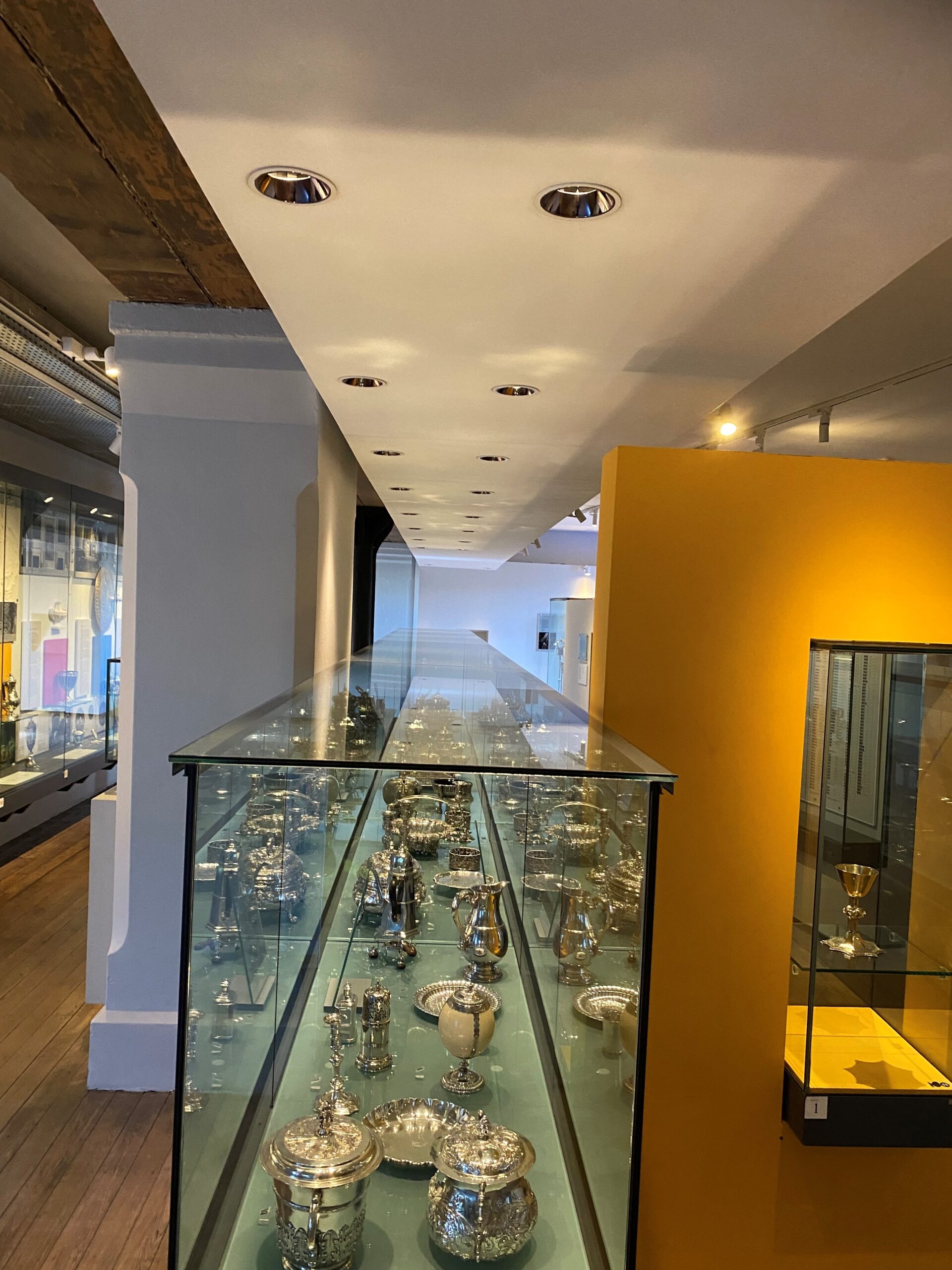
Accent alone leaves a room feeling like a spotlight in the dark. The Irish National Gallery balances it with wall washing and recessed downlights set into the same ceiling trough as the track. Trimless LED downlights give a soft, even ambient layer so the eye rests between artworks, while a wider track light spread grazes the walls. The result reads as one calm space — not a string of isolated pictures. For gallery lighting design, ambient fill is what separates a professional install from a retail one.
Color temperature does the quiet work of making each collection feel right. The Irish National Gallery runs warm 2700K–3000K in the wood-panelled and period rooms, where amber light flatters gilt frames and period textiles. The silver and blue Mannerism room shifts to a neutral 4000K so polished metal stays crisp and saturated colour holds true. Picking the right color temperature for art galleries by zone — rather than one global white — is one of the cheapest, highest-impact decisions in any art gallery lighting plan.
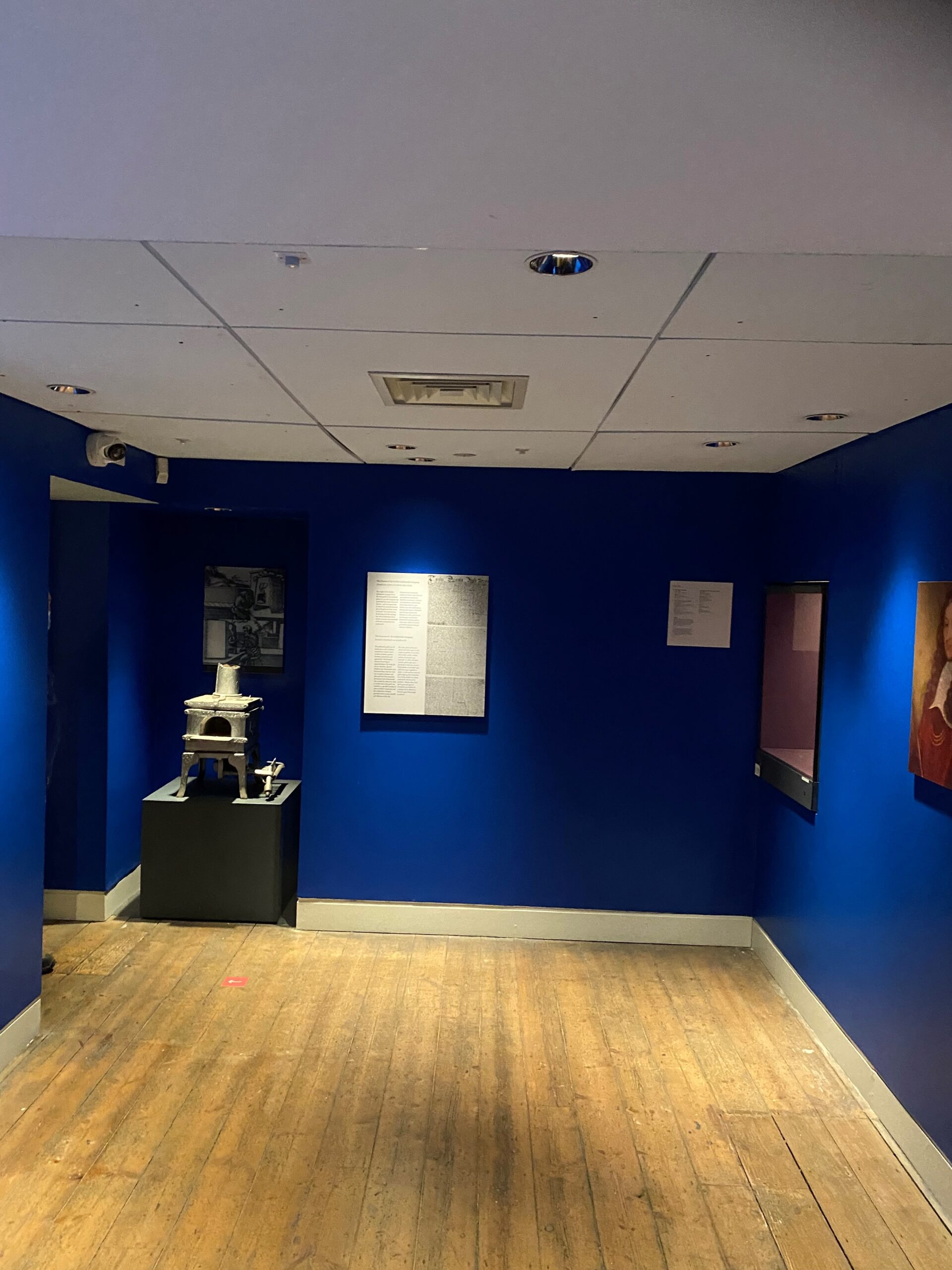
The portrait above shows the standard the whole scheme meets: a single, well-defined pool of ENCORE VILLA track light centred on the canvas, with no spill onto the frame and no hotspot on the paint. That is glare-free, conservation-safe gallery lighting in practice — deep baffles and cut-off optics keep viewers comfortable, while high CRI (Ra > 90) rendering means skin tones, sky and silver all read as the artist intended. For institutions, conservation lighting also means controlled intensity and, where needed, UV/IR filtering — and an LED track light system makes both easy to specify and dim.
For collecting institutions, ENCORE specifies a simple, repeatable kit: FLEX and VILLA track lights for accent and picture lighting, TLI-50 track spotlights for period rooms and dioramas, and trimless recessed downlights for ambient fill. It is the same logic behind our Sanxingdui museum lighting and Beijing SKP retail lighting work, and it is spelled out in our track lighting manufacturer buying guide. All fixtures are dimmable, high-CRI and built for low-glare, low-maintenance service — the three things every museum lighting spec asks for.
The illuminance bands and cumulative-dose approach used in this case study follow the general framework of the Illuminating Engineering Society (IES), with conservation guidance consistent with CCI on light-sensitive collections.
Whether you run a national museum, a commercial gallery or a private collection, the right gallery lighting design protects the art and sells the experience. Contact the ENCORE lighting team for a track-light-and-downlight layout sized to your rooms, or explore our museum and gallery lighting resources to start your plan. More art gallery lighting case studies and track lighting for galleries guides are on the way.
It depends on the material. Oil and tempera paintings are commonly held to 150–200 lx, works on paper and textiles to about 50 lx, and stone, metal and ceramic can take 300 lx or more. The illuminance is set by sensitivity, but the total annual dose — illuminance multiplied by lit hours — is what conservation actually tracks.
Because the collection rotates. A track system lets each head be re-aimed, re-angled and re-lamped as works move, while a recessed grid is fixed at the point of installation. Most galleries use both: track for accent and picture lighting, recessed downlights for the ambient layer that keeps the architecture from going black.
Aim for CRI 90 or higher and look at R9 as well, since a weak red channel flattens warm canvases and bronze. For colour temperature, 2700–3000 K suits period rooms and oil paintings, while 4000 K reads more neutrally on metal, silver and modern works. Zone it rather than running one CCT throughout.
Keep the sources out of the visitor’s line of sight and off the canvas surface. Deep-baffled, cut-off optics are the main tool, and aiming does the rest — a head angled away from both the eye and the specular angle of the surface removes most flare. For gallery interiors, UGR ≤ 16 is the useful target.
Yes, and dimming should be specified as a standard rather than an option. Reducing output cuts the cumulative light dose proportionally, and it also lets a curator lower illuminance during low-traffic hours. Confirm the dimming protocol — 0-10 V, DALI or mains — and that it holds a stable CCT as output falls.
Set the spacing from the pool width rather than from habit. Derive the pool from the drop distance and beam angle, then space the heads at one pool width where the pools should just touch, and wider where objects must stay isolated. As a rule of thumb a 2.3 m drop with 24° optics gives a 0.98 m pool, so adjacent works need roughly a metre of separation.