Address
304 North Cardinal
St. Dorchester Center, MA 02124
Work Hours
Monday to Friday: 7AM - 7PM
Weekend: 10AM - 5PM
Address
304 North Cardinal
St. Dorchester Center, MA 02124
Work Hours
Monday to Friday: 7AM - 7PM
Weekend: 10AM - 5PM
Glare-free lighting, worked out: how a UGR<19 limit turns into an aperture luminance ceiling, a solid angle and a lamp-to-eye distance. With the arithmetic.
Glare-free lighting is what happens when a space is designed so nobody has to look away. Not dim, not soft-focus, not “no downlights” — just a room where the bright surfaces stay out of the line of sight and the numbers that describe the light are chosen on purpose. The number that puts a figure on it is the Unified Glare Rating, and UGR < 19 is the limit most offices, classrooms and reading rooms are held to.
So this article answers one question honestly: what does UGR < 19 actually do to a space? Below the label there is arithmetic — a luminance ceiling, a solid angle, a lamp-to-eye distance — and that arithmetic turns into very concrete decisions about where heads get aimed, how deep a baffle has to be, and which seats in the room the layout has to protect. Every figure here is worked with the same formulas a specifier would use, so you can substitute your own numbers.

UGR is a single number, roughly 10 to 28, that predicts how often people will find a lighting installation uncomfortable. It does not describe brightness, colour or mood. It describes contrast between a bright source and its surround, as seen from a defined observer position, and it is built from four inputs:
Put together:
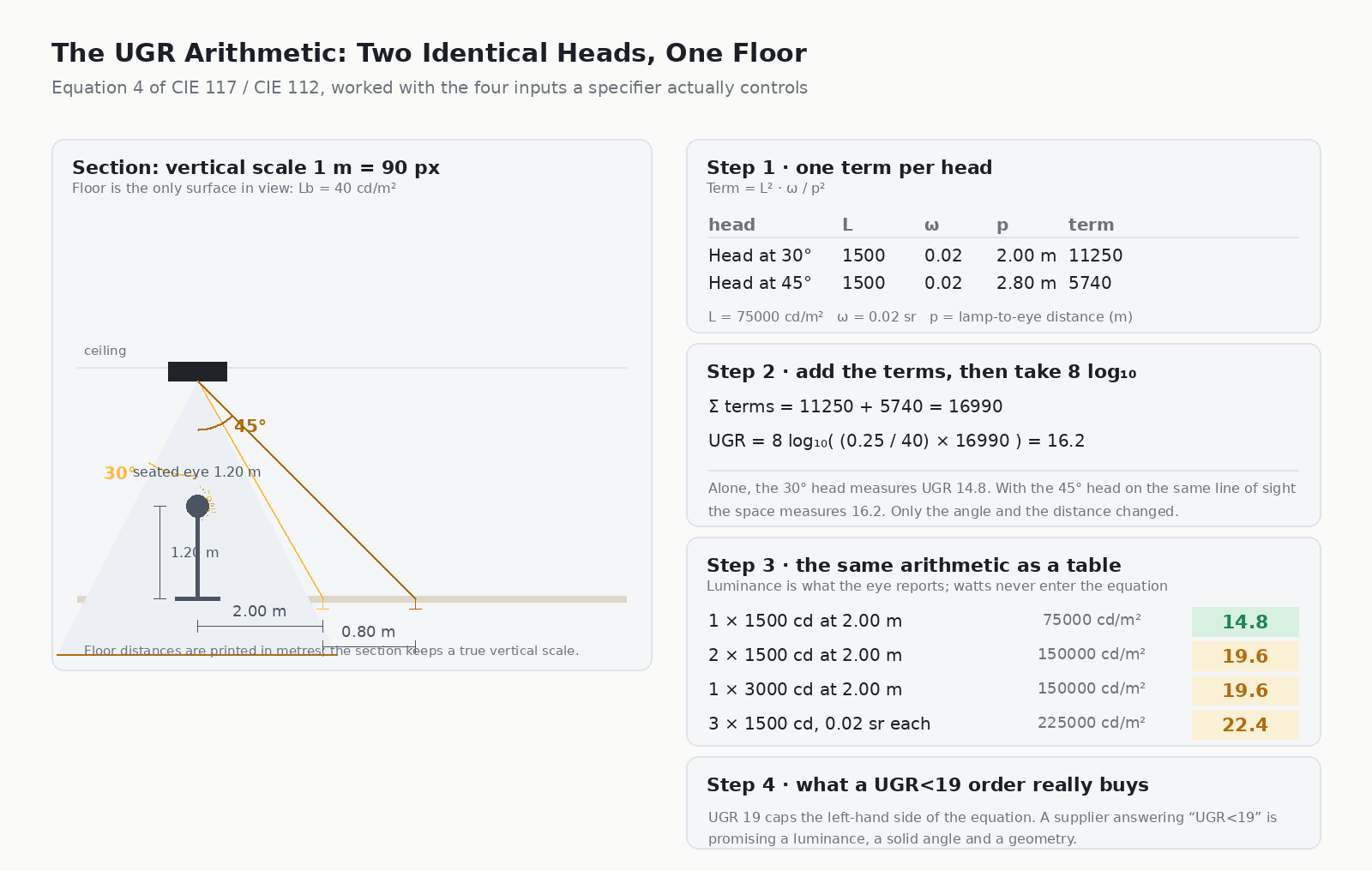
UGR = 8 · log10 ( 0.25 / Lb · Σ L² · ω / p² )
Two things follow immediately, and they are the whole reason this article exists. First, UGR is a function of geometry as much as of hardware — the same luminaire scores differently depending on where the observer sits. Second, the luminance term is squared, so a fixture that is twice as bright in the aperture contributes four times as much to the sum. UGR is not a property a luminaire “has”. It is a property of a room, a layout and a viewpoint, and the luminaire is only one of the inputs.
The practical consequence of that squaring is blunt: at any realistic lamp-to-eye distance, a bare lens cannot be made glare-free by aiming it better. It has to be made less bright to look at.
Take a 1,500 cd head with a 0.02 m² aperture. That is a luminance of 75,000 cd/m², which at 2.00 m produces a term of 11,250. A second head on the same line of sight, 2.80 m away, adds 5,740. The sum is 16,990, and against a floor background of 40 cd/m² that lands at UGR 16.2 — inside the limit, with two heads in view.
Now push the luminance instead. Keep one head and one observer, and change only the aperture:
| Aperture luminance | Aperture area | UGR at 2.00 m | What it tells you |
|---|---|---|---|
| 4,500 cd/m² | 0.02 m² | 14.8 | A shielded, low-luminance aperture clears the limit with room to spare |
| 75,000 cd/m² | 0.02 m² | 22.4 | A small bright aperture already fails — at the same lumen output |
| 75,000 cd/m² | 0.06 m² | 26.9 | Making the glowing area larger makes it worse, because ω grows too |
| 7,500 cd/m² | 0.06 m² | 16.9 | Spread the same light over more low-luminance area and it works |
Read that table once more, because it is the sentence most lighting brochures avoid: UGR < 19 is a luminance ceiling, and 19 is the ceiling for a room of that size and reflectance. The aperture has to be around or under 7,500 cd/m² in a 2.70 m room with a dark floor; raise the background luminance with a lit wall and the ceiling moves up a little, which is why wall washing is one of the cheapest glare fixes there is. Dim to hit the number and you have dark rooms that still glare; shield, aim and raise the background, and you keep the light where you need it.
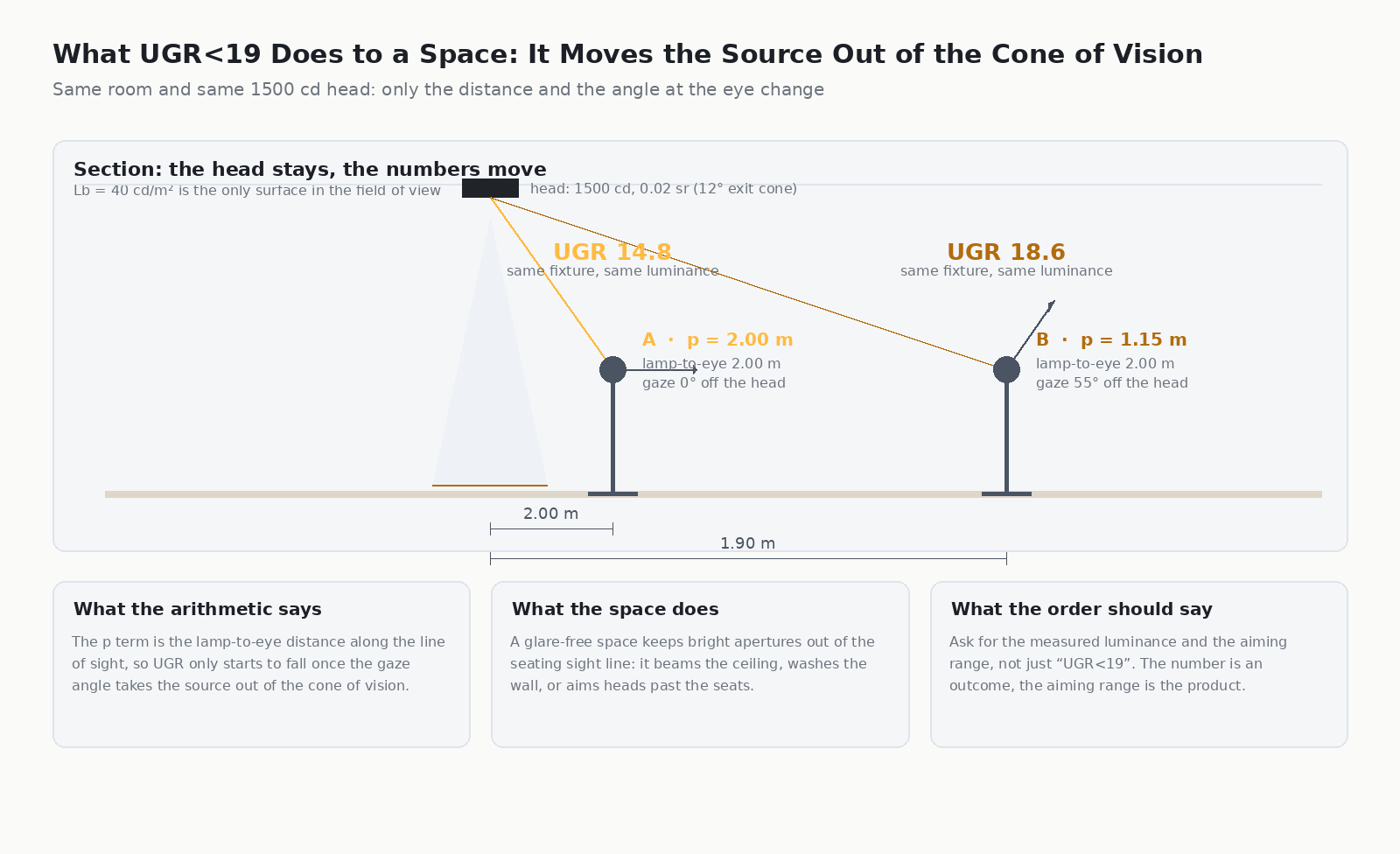
The arithmetic above stops being abstract the moment you put seats in the plan. UGR is evaluated from a defined observer position, and the same fixture scores differently from every chair.
Working through those two seats with the same 1,500 cd head, a 0.02 m² aperture and a ceiling at 3.00 m:
Both seats clear the limit, but seat B is on the edge — with a 45° gaze instead of 55° it would be over. That is the design lesson in one line: the seat that fails is usually not directly under the fixture, it is the seat off to the side, looking at the fixture across the room. A layout that only checks the seat under the head will pass the drawing and fail the space.
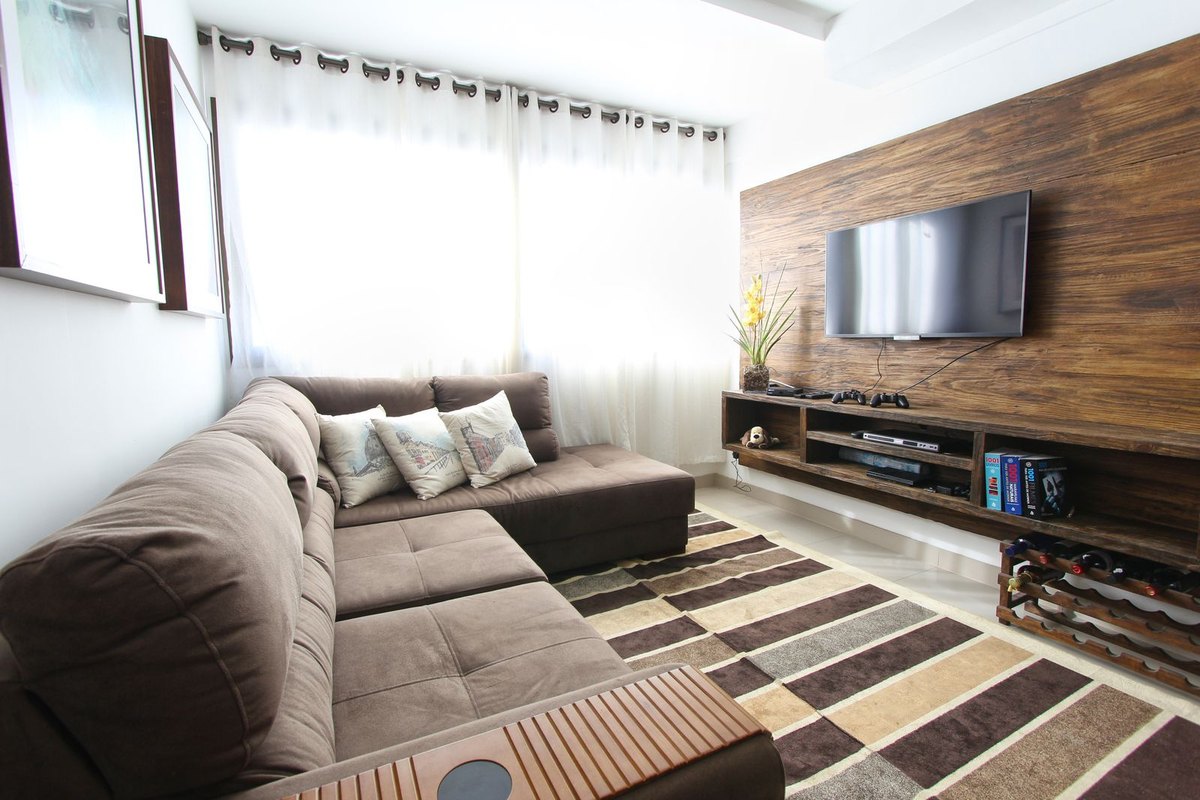
A living room usually wants ambient light rather than a target. The design that hits UGR < 19 without thinking about it is the one that beams the ceiling or washes the wall, so the brightest surface in the room is large, low-luminance and above the seated eye height. Perimeter heads aimed at the wall stay out of the seating sight line entirely. What you avoid is the ring of heads over the sofa, each with a bare lens, angled out into the room.
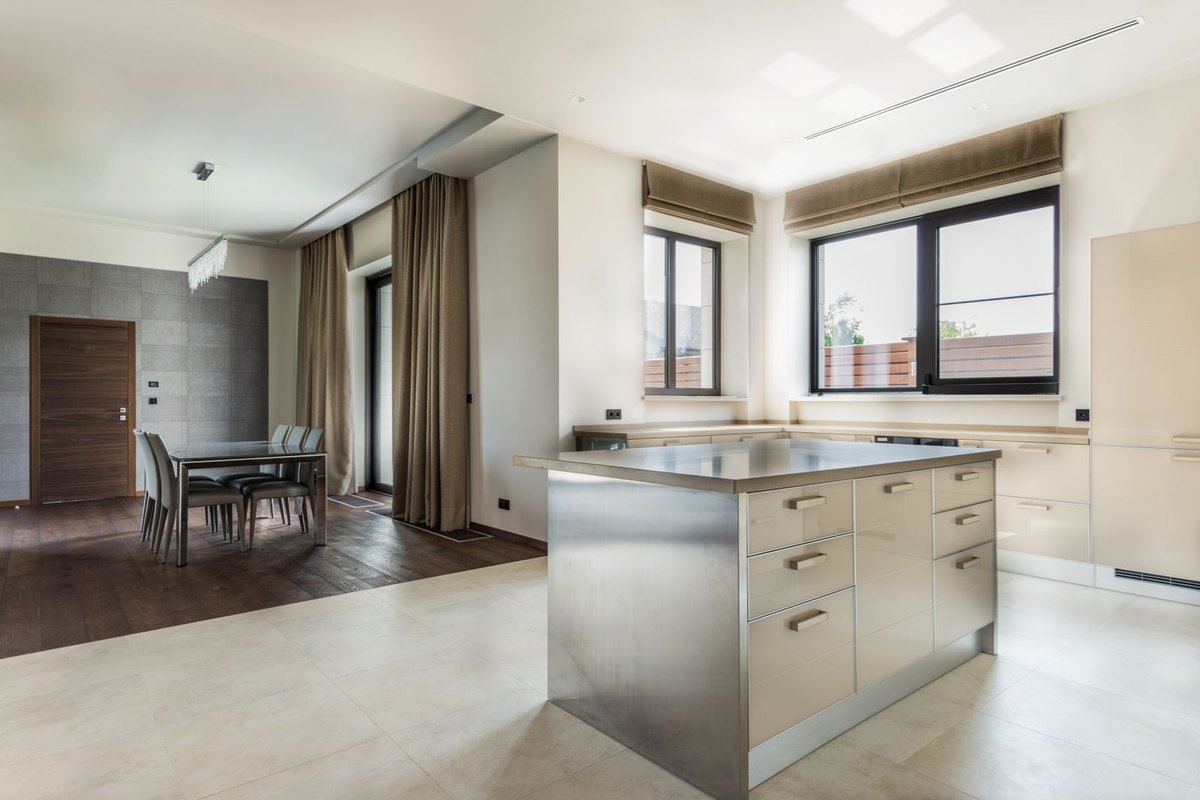
A dining room can carry a headline pendant and still be glare-free, because the eye is below the shade: you see the diffuser at an angle where its projected area is small and its luminance is modest. The same luminaire moved to the kitchen island, where you stand and look across a reflective stone worktop, becomes the classic glare source. Two head designs change that: deep baffles that hide the source from shallow angles, or a shallow, wide, low-luminance exit. Both are about ω as much as about L.
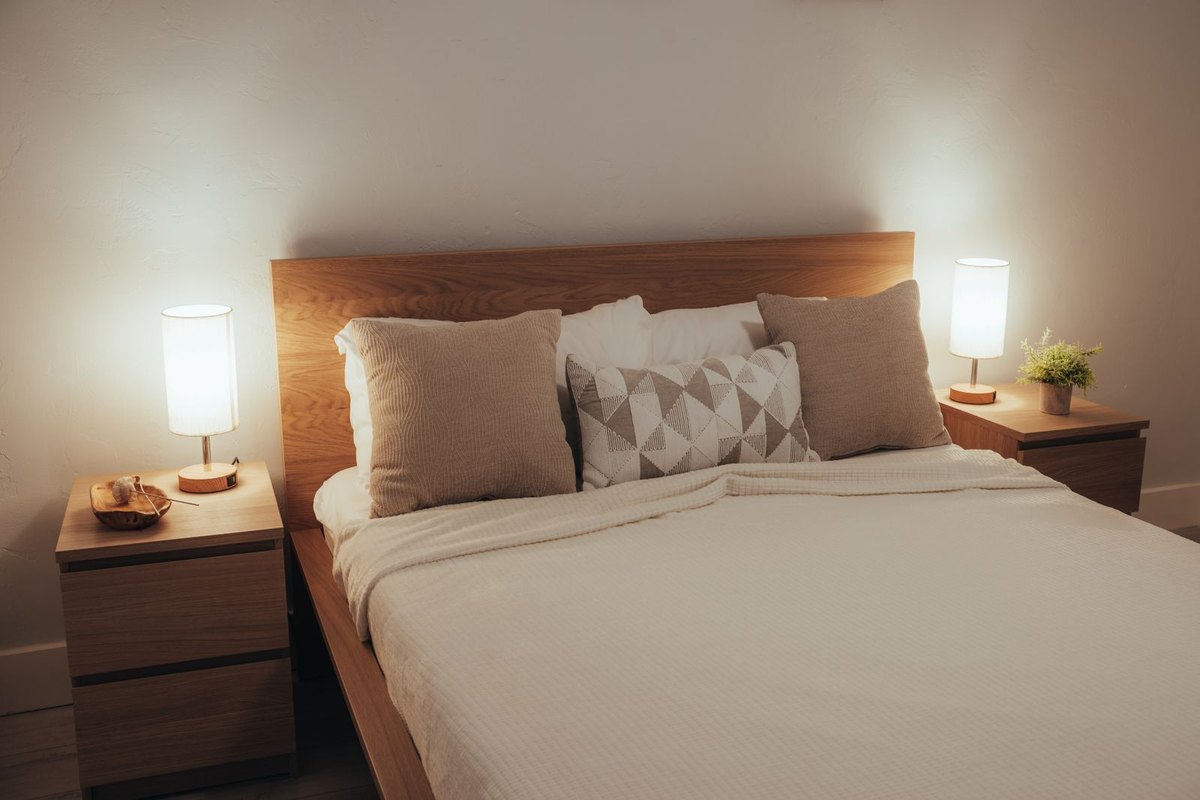
Reading in bed is the most demanding glare position in a home, because the eye is horizontal and the ceiling source is directly in its upward field of view. UGR < 19 guidance here translates into behaviour rather than hardware: task light at the page, head aimed behind the reader’s shoulder, and nothing with a visible lens in the plane the reader’s gaze crosses when they look up.
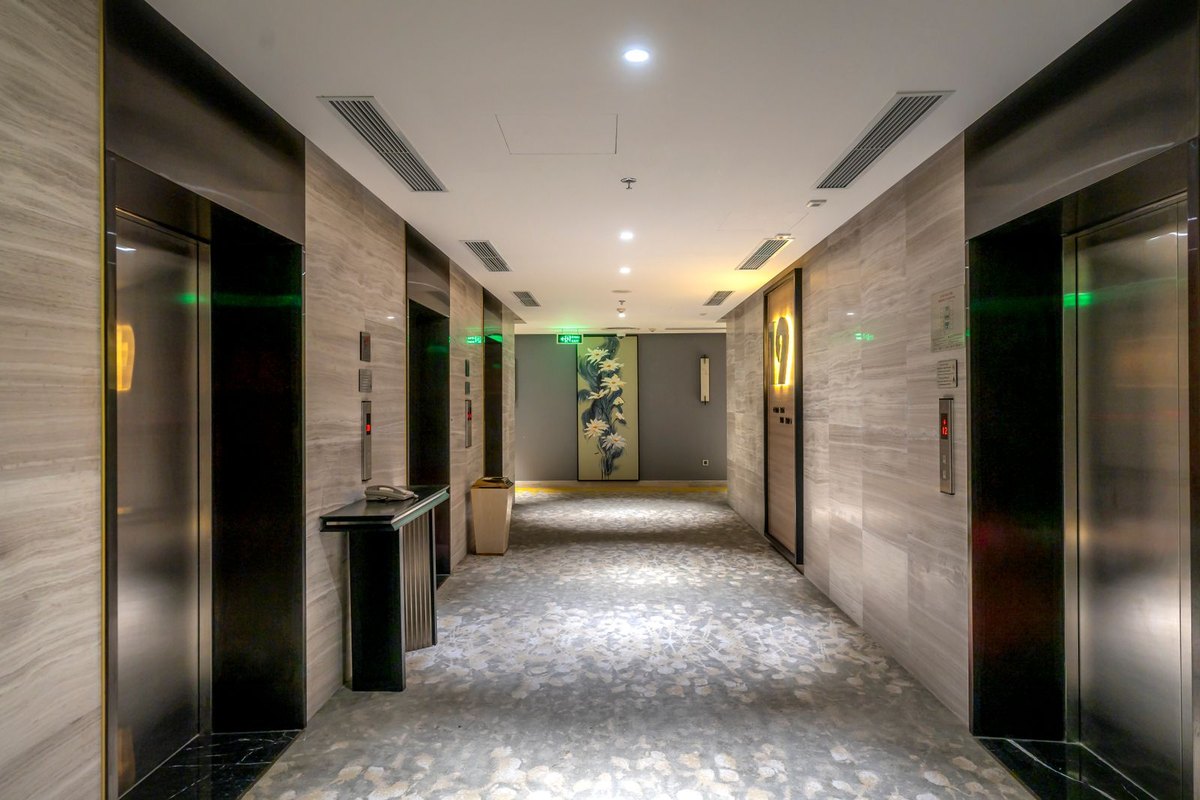
In a long corridor or a circulation gallery, every ceiling source sits inside the sight line by definition, so the room has no seating position that protects it. Here UGR < 19 has to come from the hardware: low-luminance apertures, real shielding, and a head count that does not add four squared luminance terms to the same viewpoint. This is also the only place where dense spacing genuinely hurts, because the distance term grows while the number of visible sources grows faster.
The figure 19 is not a marketing number. It comes from the glare limits in EN 12464-1, the European standard for indoor workplace lighting, which sets a maximum UGR per task and activity. The pattern is worth knowing before you write a specification, because the limit changes with the job being done rather than with the room’s name.
| Space and task | UGR limit | Why that value |
|---|---|---|
| Circulation, corridors, storerooms | 25 | Transient occupation; nobody reads or works there |
| Industry, rough and medium work | 25 | The task tolerates a lower visual comfort level |
| Industry, fine work and inspection | 22 | Higher visual demand for the same duration |
| Offices, writing, reading, data processing | 19 | The benchmark case: sustained near work at a desk |
| Classrooms and lecture halls | 19 | Reading at distance, with the board in the sight line |
| Retail, hospitals, waiting areas | 22 | Comfort matters, but the task is not sustained reading |
| Drawing offices and precision technical work | 16 | The tightest common limit; the task itself is high contrast |
Two conclusions. First, a UGR limit is attached to a task, not to a building — a kitchen island where someone chops vegetables is a different case from a corridor that people walk through. Second, 19 is where most of the volume is, which is why it reads like a brand. If your project needs 16, the same levers apply with a tighter budget; if it only needs 25, you have a lot more freedom in aperture luminance and spacing.
There are only four levers, and each one corresponds to a term in the equation. Work them in this order; it is the cheapest order.
This is the p term and the position index together, and it is free. Heads that beam a ceiling or wash a wall never enter the field of view. Heads aimed past the seating positions do the same job from the other direction. If the plan can remove a bright source from the sight line, no specification work is needed at all.
Ask for wall luminance in the seating sight line, not watts. A deep anti-glare cell or a recessed baffle gets you there; a bare lens head cannot. The deep anti-glare downlight is the shape this lever takes in a ceiling, and it exists because luminance is the term UGR squares.
A tighter beam puts the same lumens into a smaller solid angle, which raises peak candela and raises apparent luminance, but only for the narrow band of viewers on axis. A wider exit spreads the same flux over a larger low-luminance area. The choice depends on which seat you are protecting. The beam angle guide covers that trade-off in detail.
Lb sits in the denominator. Wash a wall, light a ceiling, keep some brightness in the room, and every source inside the sight line costs less. This is the one lever people forget, and it is often the cheapest — an aimable track head turned on the wall does more for visual comfort than removing two heads from the ceiling.
Here is the same set of decisions drawn with the numbers attached. Panel A uses one head at 600 cd/m² on a 0.021 m² aperture — a comfortably shielded downlight — and three seats in one room. Panel B holds the seat constant and swaps the aperture for a bare lens. Panel C is the equation, annotated with the lever behind each term.
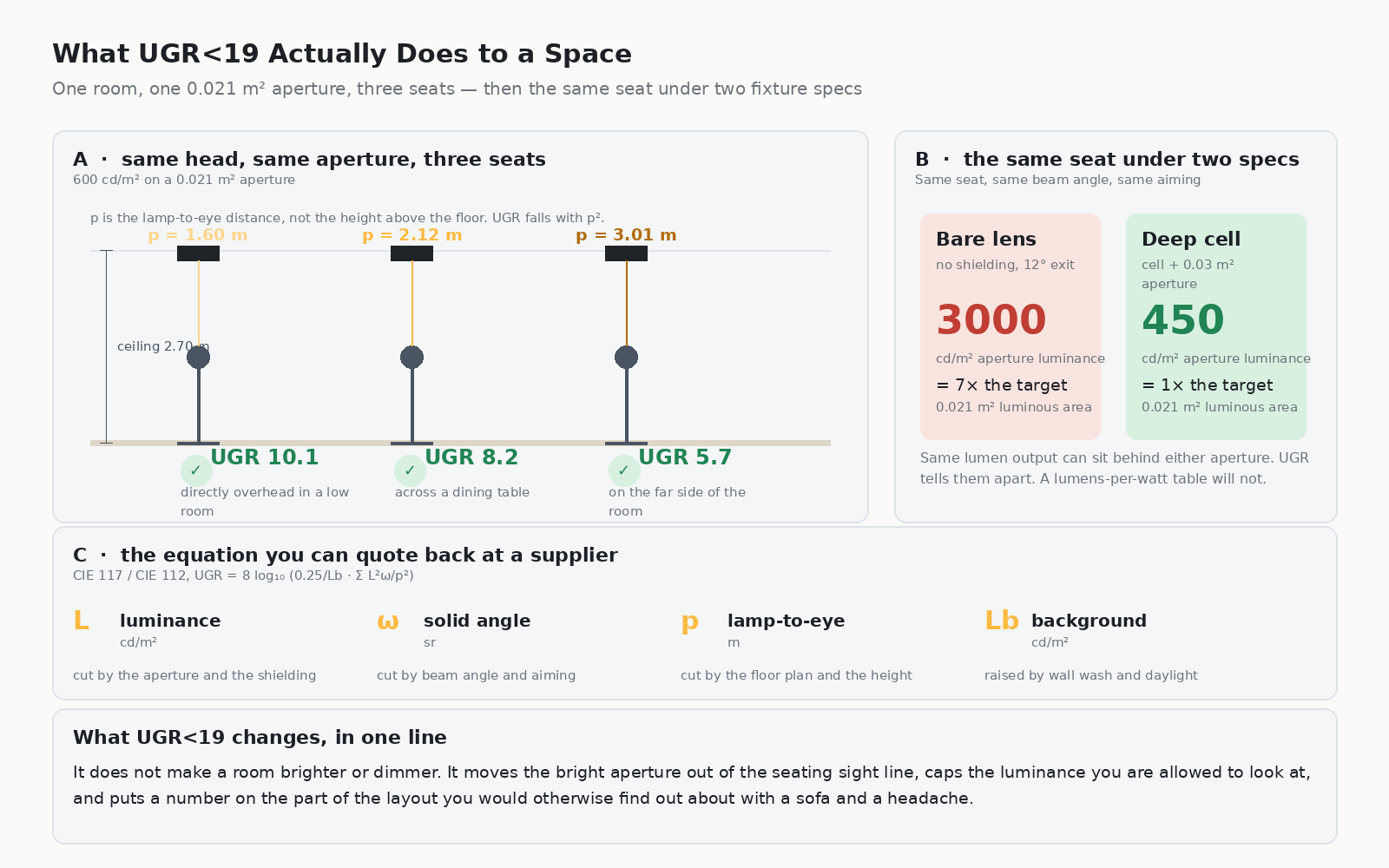
The important thing in panel A is the direction of travel: as the seat moves further from the head, UGR falls, because p grows faster than the position index. In panel B the aperture luminance difference is a factor of seven, and the squared term turns that into a difference between passing and failing. Neither panel is a product recommendation; both are the arithmetic that decides whether a room is comfortable.
A “UGR < 19” sticker on a box is close to meaningless, because UGR is not a fixture property. What you can ask for:
If a supplier cannot produce any of the four, treat the claim as a description of a good intention. The relevant standards are published by the Illuminating Engineering Society and mirrored in CIE technical reports; Energy.gov maintains a plain-language summary of how LED performance is measured and reported.
No. UGR scores discomfort glare from the lighting installation as seen from defined positions. Glare-free lighting in a broader sense also covers reflected glare off screens and worktops, veiling reflections, daylight glare and the contrast between the room and the outside view. A room can measure UGR 14 and still be unpleasant if the worktops are polished or the screens are positioned badly.
Not at all — it means they are not bright to look at. UGR is built from aperture luminance, solid angle and geometry, none of which is lumen output on a surface. A room with generous, well-shielded light on low-reflectance surfaces can be both bright to work in and comfortable to look around, which is the whole reason the metric is written the way it is.
Only up to a point, and usually at a bad cost. Dropping the output lowers lumen output, but the aperture luminance of a small bare source stays high, so the squared term keeps contributing. You end up with dark rooms that still catch the eye. Shielding and aiming lower luminance far more effectively than dimming does.
Because two of the four inputs are properties of the room and the viewer, not the luminaire. p depends on where people sit relative to the head, and the position index depends on where they look. Background luminance changes with wall reflectance, daylight and the other layers in the scheme. Redistribute the furniture and the UGR number moves.
Residential projects are not usually specified to EN 12464-1, but the number is still a useful budget. Rooms where people read, work or watch screens for long periods behave like offices, so 19 is a sensible target. Circulation, storage and outdoor-covered areas can go higher without anyone noticing.
Say both what the room has to achieve and how it will be proven: the maximum aperture luminance in the seating sight line, the ceiling and wall reflectances, the aiming range of the heads, and a requirement that the supplier provide an IES photometric file so the layout can be verified in design software before it is installed.
Glare-free lighting is not a fixture category, and UGR < 19 is not a badge. It is a luminous ceiling on what the eye is allowed to look at, expressed through four numbers that a specifier controls: the luminance of the aperture, the solid angle it presents, the distance and angle from the eye, and the background luminance of the room around it. The practical effects in a space are easy to list — bright sources get moved out of the seating sight line, baffles get deeper, walls get washed, and the seat off to the side stops being an afterthought.
Get those four numbers right and the result is a room that does not ask people to look away. If you are specifying a space and want the layouts checked against the glare limit before anything is ordered, browse the shielded track light range, look at the low-luminance downlights, or send us the plan and we will work the UGR arithmetic with you.