Address
304 North Cardinal
St. Dorchester Center, MA 02124
Work Hours
Monday to Friday: 7AM - 7PM
Weekend: 10AM - 5PM
Address
304 North Cardinal
St. Dorchester Center, MA 02124
Work Hours
Monday to Friday: 7AM - 7PM
Weekend: 10AM - 5PM
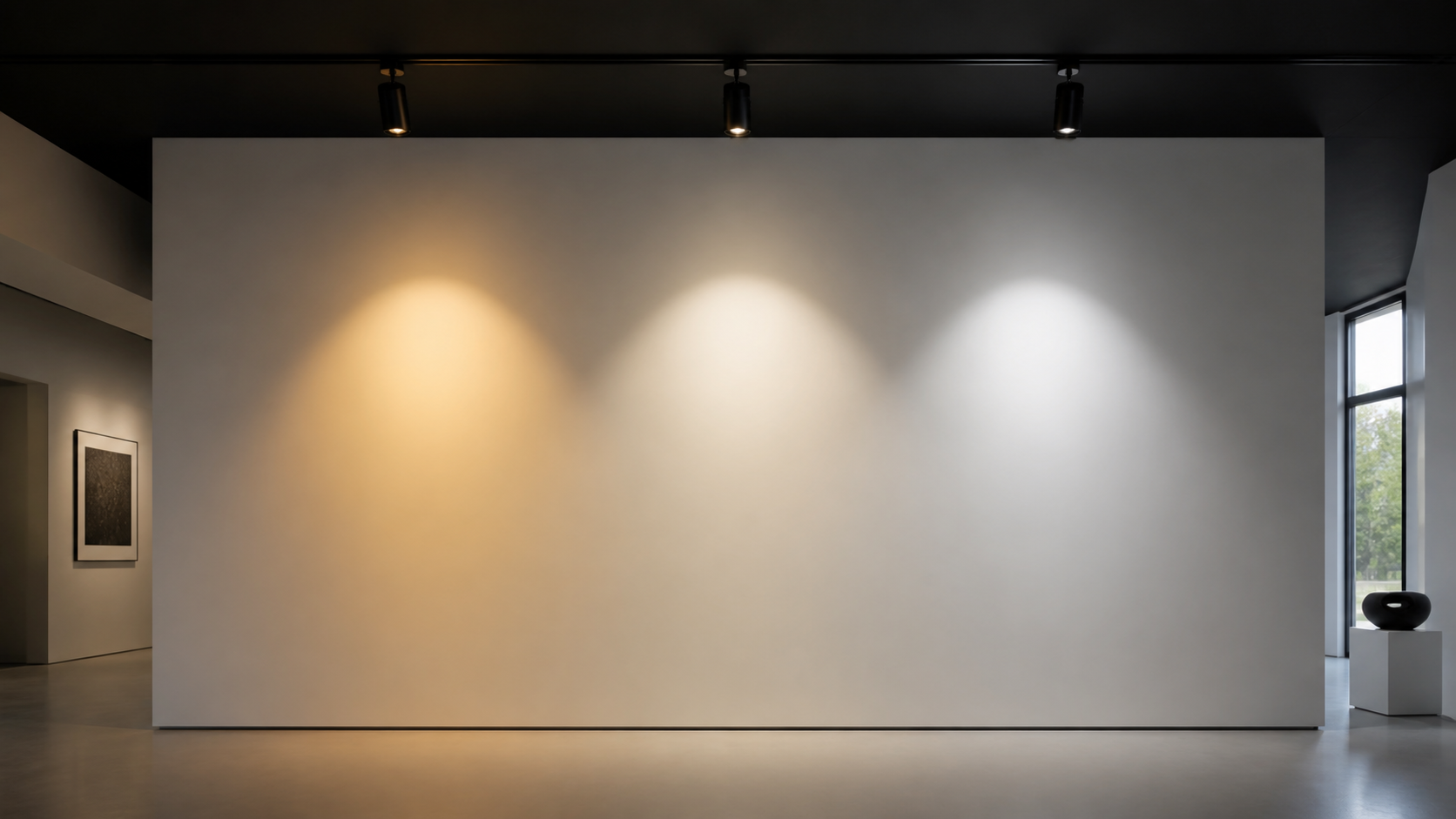
On a track system, colour temperature is not a single site-wide decision — it is a per-circuit one. Because every head can be aimed independently, each position can also carry a different Kelvin, and the ratio of warm to neutral across one rail is what actually determines whether a room reads as layered or as mismatched. This guide is written for that specific problem: choosing and specifying colour temperature for track lighting, where heads are mixed, aimed, and dimmed rather than installed as a uniform grid.
The wavelength mechanics are covered in our general colour temperature guide, which walks the full 2700 K–4000 K spectrum room by room for residential readers. What follows is the specifier’s version: which Kelvin suits which layer of a track installation, how colour temperature interacts with CRI and R9, what happens to both when you dim, and the mixing rules that keep a multi-head rail looking deliberate.
Color temperature measures the visual warmth or coolness of a light source, expressed in Kelvin (K). For professional guidance, the Illuminating Engineering Society (IES) publishes recommended colour temperature ranges for each space type. A lower number means warmer, more amber light; a higher number means cooler, more blue-white light. This is not about heat—it is about how our eyes perceive the color of “white” light.
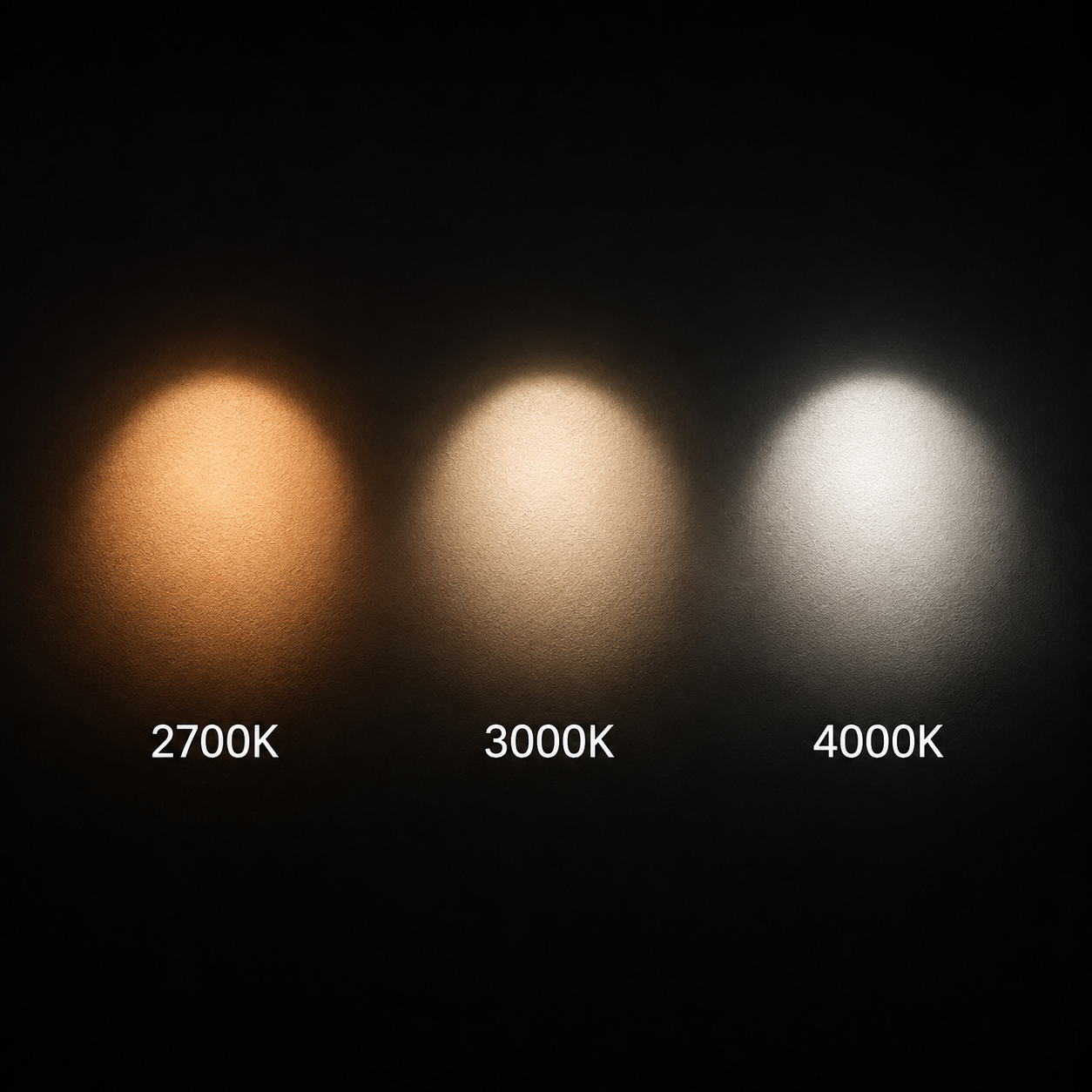
| Kelvin Rating | Light Quality | Best Spaces | CRI Recommendation | Vibe |
|---|---|---|---|---|
| 2700K | Warm amber / soft glow | Residential, hospitality, bedrooms, dining | CRI 90+ preserves warmth | Cozy, intimate, luxurious |
| 3000K | Neutral warm white | Galleries, museums, upscale retail, restaurants | CRI 95+ shows artwork true-to-life | Inviting, curated, refined |
| 4000K | Cool crisp white | Commercial retail, offices, showrooms, kitchens | CRI 85+ for clean functional light | Clean, energetic, focused |
2700K mimics the golden quality of incandescent and candlelight. It is the warmest option in the Kelvin spectrum and creates an immediate sense of comfort and relaxation.
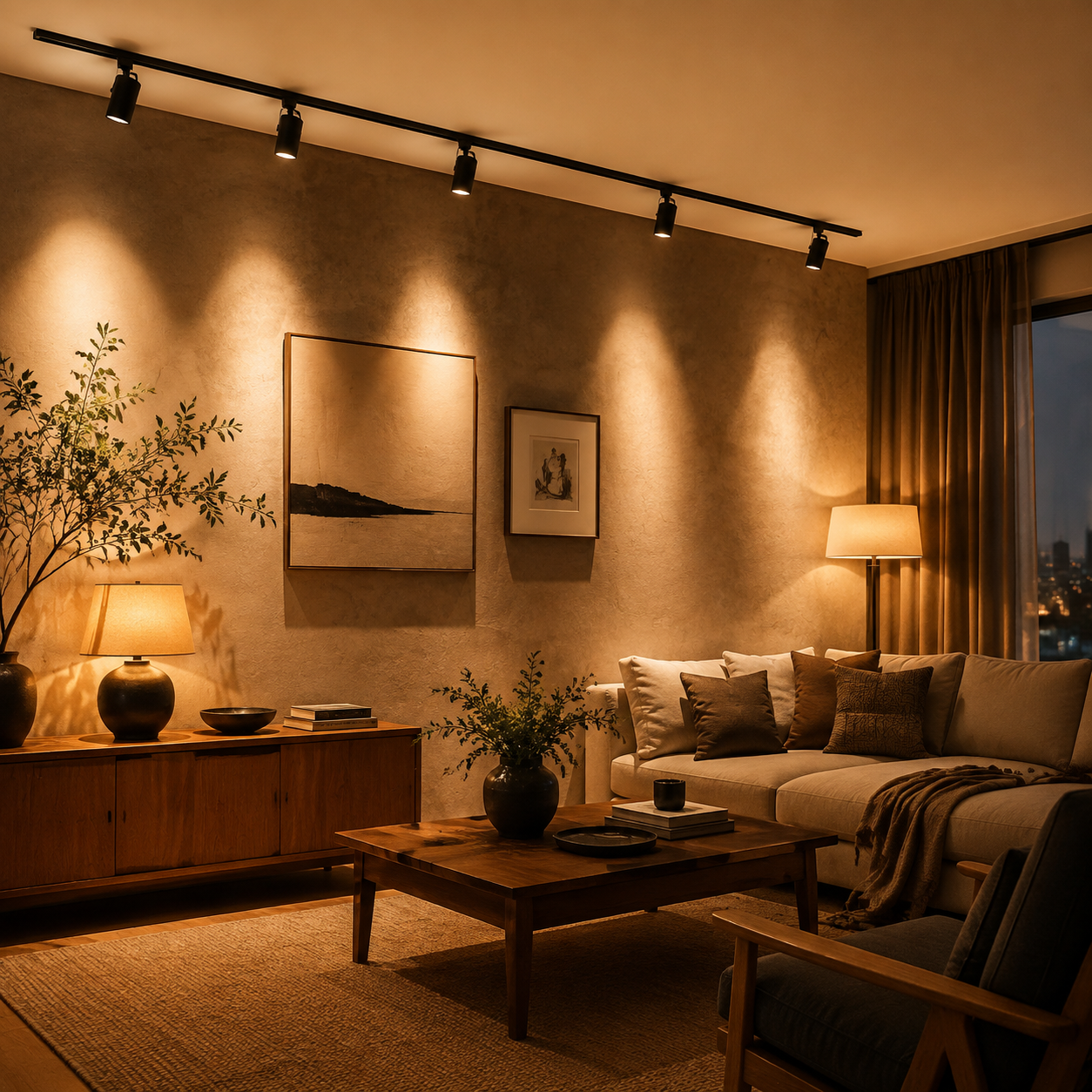
Why 2700K works in residential settings:
Use 2700K track lighting in bedrooms, living rooms, dining areas, boutique hotels, and high-end residential projects. Pair with dimmable drivers for adjustable ambiance from full brightness to evening warmth.
3000K sits at the sweet spot between warmth and neutrality. It preserves the authenticity of interior colors without the clinical edge of cooler temperatures—making it the industry standard for museum and gallery lighting.
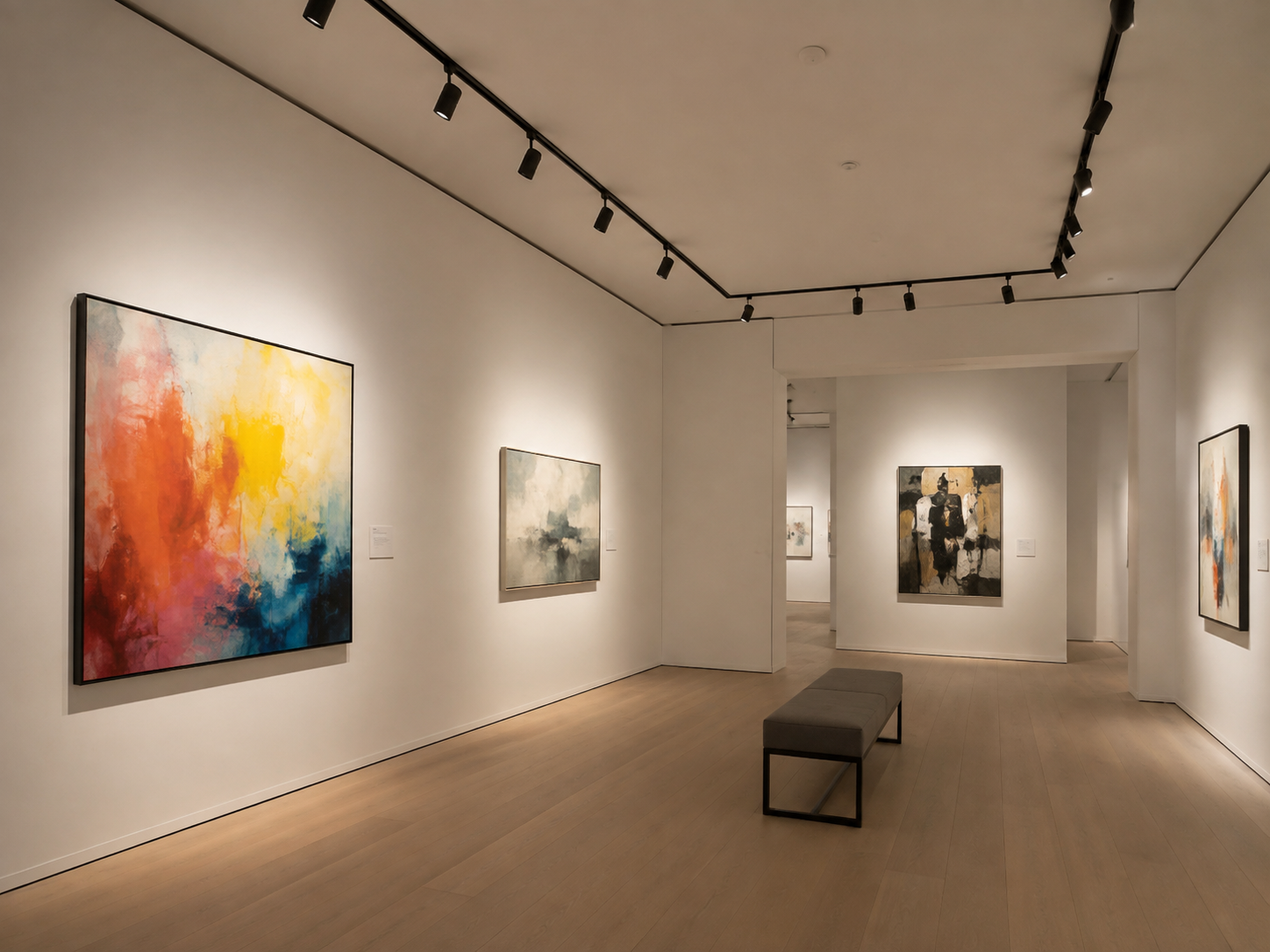
Why museums and galleries prefer 3000K:
3000K is also the go-to choice for upscale restaurants, boutique hospitality, and luxury retail—anywhere you want the space to feel curated and refined without feeling cold.
4000K produces a clean, energetic white light that is ideal for task-oriented and commercial environments. The slight blue cast is not a flaw—it is a feature that promotes alertness and visual clarity.

Where 4000K excels:
Note: 4000K is generally not recommended for bedrooms or hospitality unless used intentionally for a stark, contemporary aesthetic. The cooler tone can make warm interior colors (wood, terracotta, amber) appear muted or grayish.

Color temperature and CRI measure two different things:
A 4000K track light with CRI 80 will make colors look flat and washed out. A 3000K track light with CRI 97 will make the same space feel warm and vivid. Always check both specs—Kelvin sets the mood, but CRI determines whether that mood looks good.
For architectural track lighting projects:

Modern LED track lighting increasingly offers tunable white or bi-color capability—a single fixture that can shift from 2700K to 4000K via a wall control, app, or voice command. This gives interior designers maximum flexibility:
When specifying tunable white track systems, confirm the driver supports the full Kelvin range and that the control protocol (DALI, 0-10V, Casambi) is compatible with your building management system.

Use this decision framework to select the right color temperature for your project:
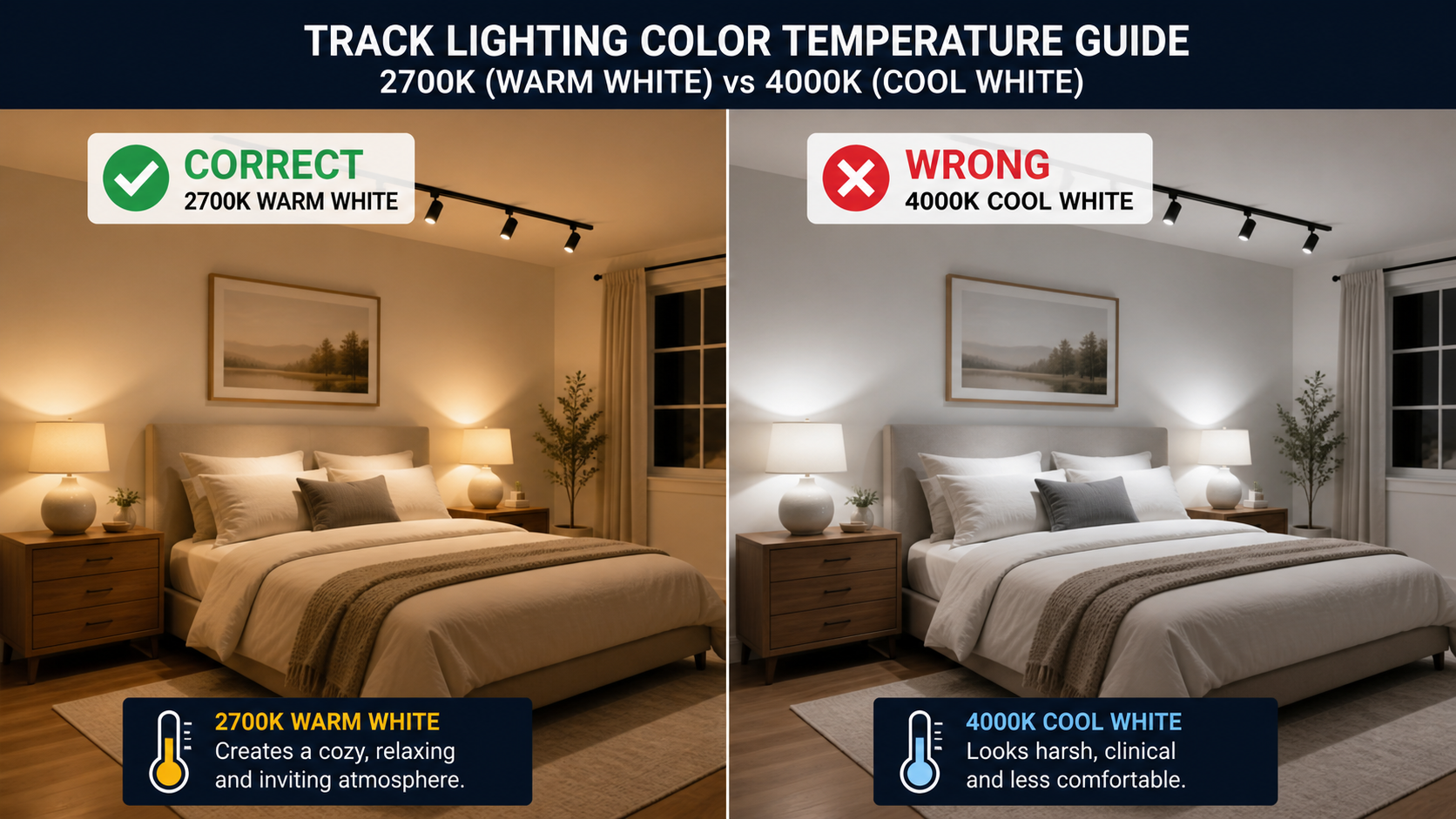
Yes—layering 2700K accent lights with 3000K general lighting can create beautiful depth. The key rule: avoid placing adjacent fixtures at opposite ends of the Kelvin spectrum in the same visual field. A 500K difference (e.g., 2700K + 3000K) reads as natural variation; a 1300K jump (2700K + 4000K) looks like a lighting mistake.
For artwork and museum-grade lighting, 3000K with CRI 95+ is the professional standard. Lower color temperatures (2700K) add an amber warmth that alters the perceived color of paintings; higher temperatures (4000K+) introduce a blue cast that flattens depth and texture. See our guide to gallery lighting case studies for real-world examples.
No—color temperature is a visual characteristic of LED light, not a power setting. A 20W track light at 2700K uses the same energy as the same fixture at 4000K. Energy savings come from wattage, driver efficiency, and dimming strategies, not Kelvin selection.
Kitchens benefit from a layered approach: 4000K for task lighting over counters and cooking zones (clarity and alertness), 2700K or 3000K for accent lighting over dining areas (warmth and ambiance). Many homeowners now specify tunable white systems precisely for this reason.
Yes—4000K in a bedroom can suppress melatonin production and make the space feel clinical rather than restful. For master bedrooms and guest rooms, stick to 2700K or 2200K (ultra-warm). Use 4000K only in bathrooms and vanity areas where accurate mirror reflection is the priority.
If you are specifying for a single-use space (e.g., a dedicated gallery), 3000K fixed is the most reliable and cost-effective choice. If the space hosts multiple functions or needs to adapt across day and evening (e.g., a boutique restaurant), tunable white is worth the investment. Contact our specification team for custom project recommendations.
Choosing the right color temperature is one of the highest-impact decisions in any architectural lighting specification. The Kelvin rating shapes how people feel in the space—long before they consciously notice the fixtures.
ENCORE offers a full range of architectural track lighting systems in 2700K, 3000K, and 4000K options, with CRI ratings up to 97 for color-critical environments. Our team provides project-level specification support for museums, galleries, retail environments, and high-end residential projects worldwide.